
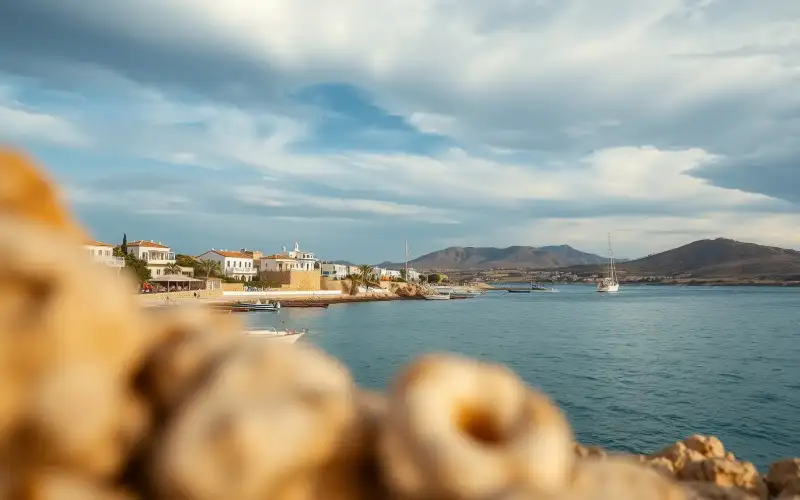
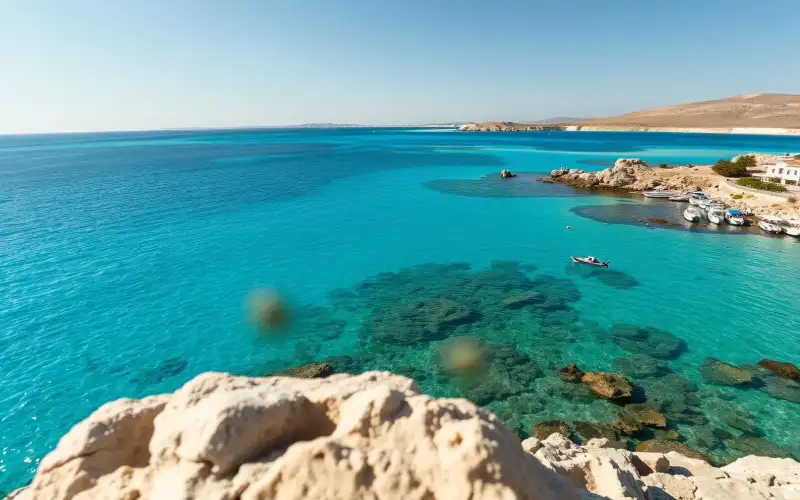
I arrived at Akamas on a May morning in 2019, expecting the usual Cyprus tableau of tourist infrastructure and manicured beaches. What I found instead was something altogether wilder—a landscape that felt genuinely untamed, where the peninsula's limestone ridges tumbled toward turquoise water and the only sounds were goat bells and wind through pine scrub. Seven years later, Akamas remains stubbornly resistant to overdevelopment, though the pressure mounts annually. This guide is written for those who want to experience it properly, not as a checkbox on a holiday itinerary.
Akamas occupies roughly 230 square kilometres of northwestern Cyprus, stretching from Coral Bay in the south to the rocky headland of Cape Arnauti in the north. It is, by any measure, the island's last significant wilderness—a designation that carries both romance and responsibility. The peninsula's ecology is fragile. Loggerhead and green sea turtles nest on its beaches. Endemic plant species cling to rocky outcrops. Carob and olive groves, some centuries old, still dot the interior. This is not a place for reckless tourism, and the Cypriot authorities have, to their credit, imposed genuine restrictions that most visitors respect.
Understanding Akamas: Geography and Access
The peninsula is accessible from two directions: via Polis to the east and via Paphos to the south. Most visitors approach from Paphos, following the coast road toward Coral Bay, where the tarmac ends and the serious terrain begins. The drive from Paphos takes roughly 45 minutes to the Coral Bay car park, where most organised tours begin. A handful of rough tracks penetrate the interior, but private vehicle access is restricted—a policy worth celebrating, not resenting.
The landscape divides into distinct zones. The southern reaches, from Coral Bay to Cape Drepano, are more accessible and heavily visited. Here you'll find the Baths of Aphrodite trail and easier jeep routes. The central plateau, at elevations between 300 and 450 metres, is more remote and rewards those with time and energy. The northern coast, particularly around Cape Arnauti, is nearly inaccessible except by boat or serious hiking, which is precisely why it remains pristine.
In 2026, access remains largely unchanged from previous years, though the Cypriot government has increased patrols to monitor compliance with conservation zones. The Akamas National Park designation, formally proposed in 2019 and finally implemented in 2024, has brought clearer regulations about where vehicles can travel and where hiking is permitted. These restrictions are not bureaucratic nuisance—they're the difference between Akamas remaining wild and it becoming another exhausted tourist commodity.
The Akamas Jeep Safari: Which Tours Deliver
Jeep safaris dominate the Akamas experience for most visitors, and for good reason. The terrain is genuinely challenging—rocky, rutted, and steep enough to demand proper vehicles. A standard sedan or hire car will not manage it. This is where the tour operators earn their fee.
The standard route, offered by virtually every operator in Paphos, runs from Coral Bay south through the Fontana Amoroza area, then inland toward the Baths of Aphrodite trail head. The journey takes roughly four hours, including a swimming stop at either the Blue Lagoon or Lara Beach (depending on the operator). Prices in 2026 range from €45 to €85 per person for group tours, with private hire starting around €200 for a vehicle accommodating up to six passengers.
I've tested several operators over the years, and the differences are material. The better ones—and I'd recommend Akamas Safari Tours and Eco-Tours Polis—employ drivers with genuine local knowledge who understand the terrain's ecology and history. They stop at viewpoints that matter, not just at photo opportunities. They explain the conservation zones clearly and enforce the rules without hectoring. The cheaper operators treat it as a simple shuttle service, racing through the landscape to maximise passenger turnover.
What to expect: the ride is bumpy and dusty. Bring sunscreen, a wide-brimmed hat, and water—at least two litres per person. Wear proper shoes with ankle support; sandals are inadequate. The vehicles are open-sided or canvas-topped, offering no protection from sun or occasional rain. In May and September, when temperatures are moderate, this is pleasant. In July and August, it's arduous. Bring a light scarf or neck covering if you're prone to sunburn.
The best tours depart early—ideally before 8 a.m.—to avoid the midday heat and the afternoon influx of coaches. Most operators offer morning and afternoon departures; the morning slots are always superior. Book directly with the operator or through your hotel, but verify the group size. Tours with more than eight passengers in a single vehicle become chaotic and diminish the experience significantly.
Avakas Gorge: The Serious Hike
Avakas Gorge is not a casual stroll. It is a genuine mountain gorge, roughly 3.5 kilometres long and narrowing to barely two metres wide in places, with vertical limestone walls rising 30 metres or more. The gorge cuts through the interior of Akamas and emerges at a small pebble beach on the north coast. The full traverse takes between four and five hours, depending on fitness and pace.
The hike begins near the village of Avakas, which sits inland from Polis. From Paphos, allow roughly 75 minutes driving time to reach the trail head. The path descends steeply at first, dropping 200 metres in the opening kilometre, then follows the gorge floor itself. In spring, water flows through sections of the gorge, creating small pools. By summer, the stream is usually dry, though the canyon provides shade—a genuine blessing in July heat.
This hike demands preparation. Wear proper hiking boots with good ankle support and grip; the limestone is sharp and the terrain uneven. Bring at least three litres of water per person, electrolyte supplements, and high-energy snacks. A head torch is useful for the darker canyon sections, though not essential. The path is not technically difficult—there's no scrambling or rock climbing—but it is relentless and exposure is minimal, which means disorientation is unlikely but exhaustion is real.
The gorge is most rewarding in May or September, when temperatures are moderate and spring flowers bloom along the upper reaches. June through August, it becomes a furnace. I completed the full traverse in early June once; the experience was less transcendent hike and more endurance test. The emergence at the north coast beach is genuinely dramatic—you round a final bend and suddenly the gorge opens onto a remote pebble cove with turquoise water and no visible human infrastructure. It's worth the effort.
Most visitors tackle Avakas as a guided hike through one of the Polis-based operators. Expect to pay €35–€55 per person. Guides are essential if you're unfamiliar with the terrain; the path is marked but not always obvious, and navigation errors in a gorge are potentially serious. Solo hiking is permitted but inadvisable unless you're experienced and carrying proper navigation equipment.
The Baths of Aphrodite Trail: Myth and Accessibility
The Baths of Aphrodite represents Akamas at its most accessible and, frankly, its most commercialised. The site sits on the northwestern coast, roughly 40 minutes' drive from Coral Bay, and consists of a small cove with a freshwater spring, surrounded by vegetation and rocky outcrops. The mythology is irresistible: according to legend, Aphrodite bathed here, and mortals who swam in the waters gained her favour. The reality is considerably more modest.
The trail itself is straightforward—a 1.5-kilometre loop walk through scrubland and pine trees, descending gradually to the cove. The path is well-marked and takes roughly 45 minutes to complete. The
Comments (4 comments)