
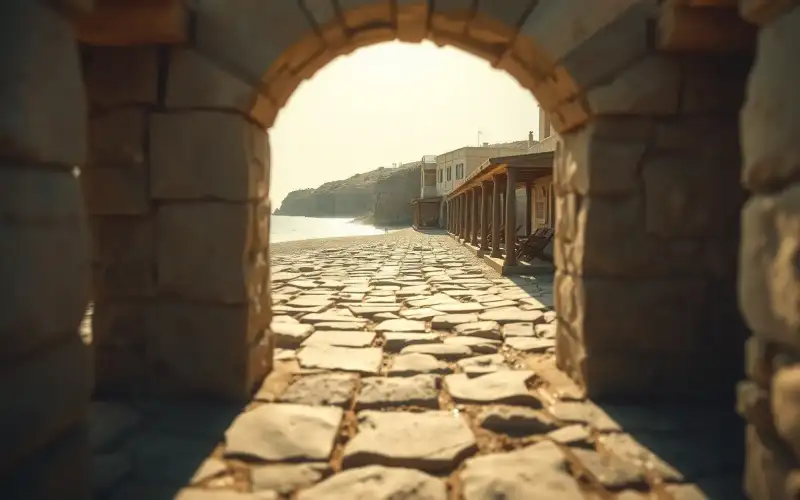
I still remember the morning I first drove inland from Paphos towards the Troodos Mountains—the coastal haze lifted like a curtain, and suddenly I was in a landscape that felt utterly un-Cypriot. Pine forests, stone villages with red-tiled roofs, the smell of woodsmoke. After twelve years here, I've learned that the real Cyprus lies not on the beaches but in the interior, waiting to be explored in a single day's drive. This handbook covers the fifteen finest excursions from Paphos, each reachable within two hours, each worth the journey.
The Mountain Monasteries: Kykkos and Beyond
Kykkos Monastery sits at 1,140 metres above sea level, roughly 90 minutes' drive from Paphos town centre via the B4 and D9 roads. The distance is 65 kilometres, but the altitude gain transforms the journey. You'll climb from sea-level heat into crisp mountain air, passing through villages like Pano Panagia where locals still dry tobacco in the traditional way.
The monastery itself dates to 1100 AD, founded by Byzantine Emperor Alexios I Komnenos. The katholikon, or main church, houses a 12th-century icon of the Virgin Mary attributed to Saint Luke—pilgrims have venerated this image for nearly nine centuries. The gold leaf covering the interior walls can be overwhelming; I've watched visitors stand speechless in the narthex, their eyes adjusting to the sheer luminosity. Admission is free, though donations are expected. Opening hours run 10 am to 4 pm daily (closed Mondays in winter). Modest dress is required: covered shoulders and knees.
The monastery's museum contains ecclesiastical treasures—vestments, manuscripts, silver vessels—and offers context for Byzantine religious practice. Allow two hours for the main complex. The surrounding gardens and viewpoints over the Pitsilia valley are equally rewarding; on clear days you can see all the way to the Akamas Peninsula.
Difficulty: Easy to moderate (paved roads, minimal walking). Best season: April to May, September to October (summer temperatures above 30°C at this altitude are still intense). Drive time: 90 minutes one way.
Machairas Monastery, 45 kilometres southeast, offers a quieter alternative. Founded in 1148, it nestles in a ravine and feels less touristy than Kykkos. The drive takes 75 minutes via Pano Panagia. The monastery is smaller but architecturally more intimate, and the surrounding forest walks are excellent. The same dress code applies.
Wine Villages of the Troodos: Omodos and the Commandaria Route
Omodos village sits at 650 metres, 50 kilometres from Paphos (65 minutes via the B4). The village clusters around a central square dominated by the Church of the Holy Cross, built in 1926 on the site of a medieval monastery. The interior contains a fragment of the True Cross, housed in an ornate reliquary—a claim shared by dozens of Orthodox churches across Cyprus, but the devotion here feels genuine and unforced.
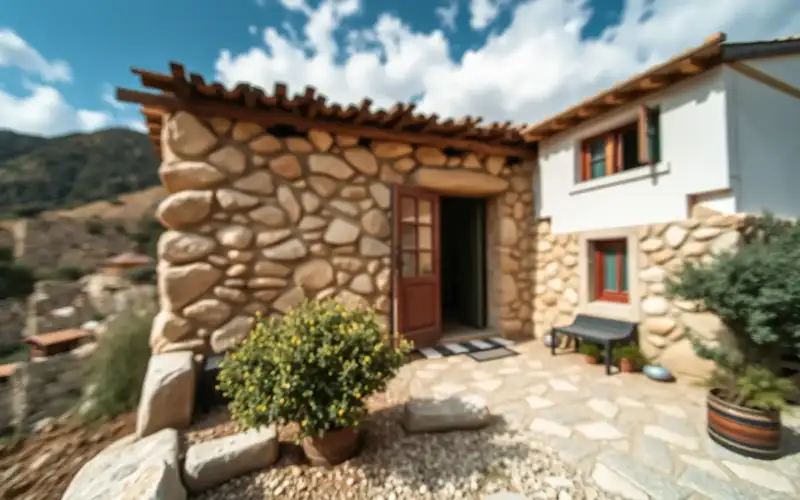
The square itself is the real draw. Stone buildings with wooden shutters line narrow streets; a handful of tavernas serve meze and local wine from plastic carafes. I've spent entire afternoons here watching the light change on the church's whitewashed walls, while locals played backgammon in the shade. The village wine museum, housed in a restored traditional building, displays old presses, amphorae and photographs of harvest scenes from the 1950s. Entry is €3 and opening hours are 10 am to 5 pm (closed Mondays). The wine itself—Commandaria wine, named for the surrounding region—is Cyprus's most famous export. It's a fortified red, naturally sweet, and has been produced here since the Middle Ages. A bottle costs €8 to €15 in village shops.
The drive from Omodos to the Commandaria wine villages takes 20 minutes. Laneia, Kyperounta and Koilani are the main producers. Many have small tasting rooms; ask at Omodos's central taverna for recommendations. The landscape here is dramatic—steep vineyards clinging to hillsides, with views across the Limassol district to the sea.
Difficulty: Easy (paved roads, flat village walking). Best season: September to October (harvest season; villages are lively). Drive time: 65 minutes one way to Omodos.
Ancient Choirokoitia: Cyprus's Oldest Settlement
Choirokoitia lies 30 kilometres east of Paphos, near Larnaca, roughly 50 minutes' drive via the A3 motorway. The site dates to 7000 BC—that's 9,000 years old—making it one of the earliest known Neolithic settlements in the Mediterranean. Walking among the reconstructed stone foundations feels like stepping into prehistory.
The settlement was excavated in the 1930s and again in the 1980s, revealing round stone houses with conical roofs. A museum on-site explains the daily life of these early inhabitants: they farmed wheat and barley, hunted deer, and created pottery with geometric designs. The site was mysteriously abandoned around 5700 BC, likely due to climate change or invasion. UNESCO designated Choirokoitia a World Heritage Site in 1998, recognising its significance for understanding early Mediterranean civilisation.
The modern visitor centre (admission €4.50) has informative displays and a short film. Allow 90 minutes total. The site is open 9 am to 5 pm daily. The setting is windswept and austere—there's little shade—so visit in spring or autumn. Summer heat makes the exposed site uncomfortable.
Difficulty: Easy (flat terrain, marked paths). Best season: March to May, September to November. Drive time: 50 minutes one way.
Kourion: Greco-Roman Theatre and Mosaics
Kourion sits dramatically on a clifftop 40 kilometres west of Paphos, 45 minutes' drive via the A6 towards Limassol. The ancient city was occupied from the 12th century BC until the Arab raids of the 7th century AD. What survives is extraordinary: a Greco-Roman theatre carved into the hillside, a Byzantine basilica, and the House of Achilles with its intact floor mosaics.
The theatre, built in the 2nd century AD, seats 3,500 and faces the Mediterranean. On summer evenings, it hosts performances—I attended a production of Sophocles' Electra here in 2019, and the acoustics were flawless. The mosaics in the House of Achilles show scenes from Homer's Iliad: Achilles recognising Patroclus among the daughters of Lycomedes. The craftsmanship is stunning—tiny tesserae creating flesh tones and fabric folds with remarkable subtlety.
The site is open 8 am to 5 pm daily (extended hours in summer). Admission is €4.50. Allow two hours. There's a small café with basic refreshments. The clifftop location offers panoramic views; on clear days you can see across the Akamas Peninsula. The site can be crowded in peak season (July-August), so arrive early or visit in shoulder months.
Difficulty: Easy to moderate (uneven terrain, some steep paths, but no climbing). Best season: April to May, September to October. Drive time: 45 minutes one way.
Akamas Peninsula: Coastal Wilderness and Lara Beach
The Akamas Peninsula juts into the Mediterranean northwest of Paphos, a protected area of limestone cliffs, hidden beaches and endemic flora. The drive to the main entry point at Lara Beach takes 40 minutes via the coastal B6 road. The final 10 kilometres are unpaved but passable in a standard car (though an SUV is preferable after rain).
Lara Beach is famous for loggerhead and green turtle nesting. Between May and August, females come ashore at night to lay eggs in the sand. A small visitor centre (admission €2.50) explains the conservation efforts; the beach itself is off-limits during nesting season (May-August) to protect the hatchlings, but the centre offers evening viewing programmes. Outside nesting season, the beach is accessible and utterly pristine—no buildings, no vendors, just sand and turquoise water.
The peninsula also offers hiking. The Blue Lagoon Trail (6 kilometres, 2-3 hours) descends to a secluded cove with transparent water ideal for swimming. The route is marked but rocky; proper footwear is essential. Spring wildflowers—purple sage, yellow rockrose—make April and May particularly beautiful.
Difficulty: Easy (beach), moderate to hard (hiking trails). Best season: April to May for hiking and wildflowers; June to August for turtle viewing. Drive time: 40 minutes one way.
Pafos Castle and the Harbour District
Pafos Castle sits in the old harbour, just 2 kilometres from Paphos town centre. Dating to the 13th century (rebuilt after earthquakes), it's a compact limestone fortress that once guarded the harbour from pirates. The interior houses a small museum of Byzantine and Ottoman artefacts. Admission is €4.50; opening hours 8 am to 5 pm daily.
The real pleasure here is the setting. The castle overlooks a working fishing harbour where boats land their catch each afternoon. Tavernas line the waterfront; sit with a cold beer and watch the light change on the water. I've spent many afternoons here with a book, watching tourists and locals mingle, the castle's crenellated walls softening in the golden hour light.
Difficulty: Easy (flat, minimal walking). Best season: Any (though October-March are less crowded). Drive time: 5 minutes from town centre.
Maa-Palaeokastro: Bronze Age Fortification
Maa-Palaeokastro lies 8 kilometres north of Paphos, a 10-minute drive via the B7 road towards the Akamas. This Late Bronze Age fortification (1200-1050 BC) sits on a rocky promontory overlooking the sea. It's one of Cyprus's least-visited archaeological sites—you may have it to yourself.
The site consists of defensive walls and the remains of a settlement that likely served as a refuge during the upheavals of the Late Bronze Age collapse, when sea peoples threatened Mediterranean civilisations. The views are exceptional: cliffs dropping 50 metres to turquoise water, with the Akamas Peninsula stretching northward. There's no visitor centre or admission fee; the site is freely accessible. A rough path descends to the ruins (20 minutes on foot).
Difficulty: Moderate (rocky terrain, steep descent). Best season: October to April (summer heat is intense on the exposed promontory). Drive time: 10 minutes one way.
Petra tou Romiou: Aphrodite's Birthplace
Petra tou Romiou (the Rock of the Greek) lies 30 kilometres east of Paphos, 35 minutes' drive via the A6. This dramatic limestone sea stack rises 30 metres from the water, framed by a crescent beach. Greek mythology claims that Aphrodite, goddess of love, emerged from the sea foam here. The name actually refers to a Byzantine hero, Digenis Akritas, who allegedly threw the rock at Arab invaders—but the Aphrodite legend is far more romantic.
The beach itself is pebbly and can be crowded in summer, but the setting is undeniably beautiful. The rock formations create natural swimming pools in the shallows. There's a small taverna at the top of the beach with basic refreshments. Swimming is safe year-round; the water temperature ranges from 15°C in winter to 27°C in August.
Difficulty: Easy (beach access, minimal walking). Best season: May to September (swimming); April-May and September-October for fewer crowds. Drive time: 35 minutes one way.
Lempa: Neolithic Village and Pottery Centre
Lempa village sits 15 kilometres northeast of Paphos, a 20-minute drive via the B7. The village is known for traditional pottery—families have produced ceramics here for generations, and several workshops remain active. The Lempa Experimental Pottery Workshop (admission €3, open 10 am to 4 pm, closed Mondays) demonstrates ancient Neolithic techniques using reconstructed kilns and hand-forming methods.
The workshop sits on the site of a 7000 BC Neolithic settlement, contemporary with Choirokoitia. Excavations have revealed pottery, stone tools and evidence of early agriculture. The setting is humble—a few buildings and open ground—but the continuity is striking: people have lived and worked pottery in this exact location for 9,000 years.
The village itself has a handful of traditional tavernas serving local meze. The pottery workshops sell functional ware—bowls, plates, jugs—at reasonable prices (€10-30 per piece). It's a quiet, authentic experience far from the tourist trail.
Difficulty: Easy (flat terrain, village walking). Best season: Any. Drive time: 20 minutes one way.
Latchi Harbour and the Akamas Coastal Path
Latchi is a small fishing village 35 kilometres north of Paphos, 45 minutes' drive via the B7. The harbour is working and modest—no resort development, just fishing boats and waterfront tavernas. The village serves as the gateway to the Akamas Peninsula's northern coast.
The Akamas Coastal Path begins here, a scenic 7-kilometre walk along limestone cliffs to Lara Beach (3-4 hours one way). The path is marked and mostly flat, though occasionally rocky. Spring brings wildflowers—purple sage, yellow rockrose, pink cistus. The views are magnificent: cliffs dropping to turquoise water, with the Turkish Kyrenia Range visible across the water on clear days.
Latchi's tavernas serve fresh fish daily. The village has a relaxed, unhurried atmosphere; locals outnumber tourists. It's an excellent base for a half-day excursion combined with a clifftop walk.
Difficulty: Easy (village) to moderate (coastal path). Best season: April to May, September to October. Drive time: 45 minutes one way.
Polis and the Chrysochous Valley
Polis town sits 40 kilometres north of Paphos, 50 minutes' drive via the B7. It's a working town rather than a resort—locals shop at the supermarket, children walk to school, the rhythm is unhurried. The town centre has a small archaeological museum (admission €2) displaying finds from nearby Marian, an ancient city-kingdom that flourished here until the Arab raids.
The real draw is the surrounding Chrysochous Valley, a fertile agricultural region producing citrus, avocados and vegetables. The landscape is green and unspoilt—a stark contrast to the coastal development. Several villages in the valley—Prodromi, Argaka, Asprokremnos—offer authentic tavernas and traditional hospitality.
From Polis, a scenic drive south along the B7 passes through these villages, with views across the valley to the Akamas Peninsula. The total circuit (Paphos-Polis-valley villages-Paphos) takes 4-5 hours. It's an excellent half-day excursion for those seeking rural Cyprus.
Difficulty: Easy (paved roads, village walking). Best season: Any. Drive time: 50 minutes one way to Polis.
Stavrovouni Monastery: Panoramic Heights
Stavrovouni sits at 750 metres near Larnaca, roughly 80 kilometres southeast of Paphos, 90 minutes' drive via the A3 motorway. The monastery crowns a rocky peak with 360-degree views across the Larnaca district to the sea. On clear days you can see the Turkish coast.
The monastery was founded in 327 AD by Saint Helena, mother of Constantine, who brought a fragment of the True Cross from Jerusalem. The current buildings date to the 18th century, rebuilt after Ottoman raids. The main church is small and intimate, with an icon of Saint Helena above the altar. The climb to the summit (100 metres, 15 minutes) is steep but manageable.
The setting is austere and spiritual—there's little commercialism here. Monks still inhabit the monastery and maintain the gardens. Modest dress is required. Opening hours are 8 am to noon and 3 pm to 5 pm (closed Mondays). Admission is free but donations are expected.
Difficulty: Moderate (steep climb, 750-metre altitude). Best season: April to May, September to October. Drive time: 90 minutes one way.
Kolossi Castle: Crusader Stronghold
Kolossi Castle sits 40 kilometres east of Paphos near Limassol, 50 minutes' drive via the A6. This Crusader fortress dates to the 13th century and was occupied by the Knights Hospitaller, who used it as a stronghold for their sugar-cane plantations. The castle's keep rises 30 metres and is remarkably intact.
The interior can be climbed (steep, narrow stairs) for views across the surrounding plain. The castle's history is dramatic: it was destroyed and rebuilt multiple times, damaged by earthquakes, and briefly occupied by Ottoman forces. The archaeological museum on-site explains this complex history. Admission is €4.50; opening hours 8 am to 5 pm daily.
The surrounding landscape is agricultural—vineyards and orchards stretch to the horizon. The castle feels less touristy than Kourion, with fewer crowds and a more authentic sense of history.
Difficulty: Easy to moderate (tower climb required for full experience). Best season: April to May, September to October. Drive time: 50 minutes one way.
Tillyria: Mountain Villages and Forest Walks
Tillyria is a remote mountainous region northwest of Paphos, accessible via the B7 and forest roads. The drive to the main village, Kritou Terra, takes 60 minutes and winds through pine forests at 600-800 metres altitude. The landscape is wild and sparsely populated—you'll pass through villages with populations under 100, where tourism is virtually unknown.
Kritou Terra and neighbouring Skoulli offer traditional tavernas and simple hospitality. The surrounding forests have excellent walking trails, with routes ranging from 2 to 8 kilometres. Spring brings wildflowers; autumn offers golden light through the pines. The air is crisp and cool—a refreshing contrast to the coast.
This region is ideal for those seeking authentic, undeveloped Cyprus. The roads are paved but narrow; an SUV is preferable, though a standard car is manageable in dry weather. Allow a full day for this excursion.
Difficulty: Moderate (mountain roads, forest walking). Best season: April to May, September to October. Drive time: 60 minutes one way.
Bonus Tip: Seasonal Considerations and Practical Advice
Cyprus's climate shapes the ideal timing for each excursion. Summer (June-August) brings temperatures of 35-38°C at sea level, rising to 30°C even in the mountains. Mountain sites like Kykkos and Stavrovouni are more comfortable in summer, but the exposed archaeological sites (Choirokoitia, Kourion) become punishing. Spring (April-May) and autumn (September-October) offer the ideal balance: warm enough for swimming and comfortable walking, cool enough for mountain exploration, and wildflowers (spring) or golden light (autumn) enhance the experience.
Winter (November-March) brings rainfall and occasional snow in the mountains, but the landscape is verdant and tourist numbers drop dramatically. Many tavernas close or reduce hours. Spring is my personal preference—the light is clear, the landscape is green, and the heat is manageable.
Practical matters: hire a car rather than relying on public transport (buses are infrequent outside major towns). Fill your petrol tank before heading inland—fuel stations are sparse in mountain regions. Bring water, sun protection and sturdy footwear for any walking. Many tavernas don't accept cards; carry cash. Download offline maps (Google Maps works but can be unreliable in remote areas). Most sites close by 5 pm in winter, 6 pm in summer—plan accordingly.
Conclusion: The Interior Awaits
These fifteen excursions scratch the surface of what Cyprus offers beyond its beaches. Each journey inland reveals layers of history—Neolithic settlements, Byzantine monasteries, Greco-Roman theatres, Crusader castles—stacked like geological strata. The landscape shifts from coastal limestone to mountain pine forests; the pace slows from resort hustle to village rhythms. After twelve years here, I still discover new routes and hidden villages. The interior of Cyprus rewards exploration, and Paphos offers an ideal base for accessing it all within a day's drive. Pack your curiosity, fill your water bottle, and head inland.
Comments (4 comments)