
Last October, I watched a British couple attempt to descend the coastal path to Aphrodite's Rock in leather-soled dress shoes. They made it forty metres before turning back, muttering about false advertising. Twenty minutes later, they were buying postcards from the clifftop café, having seen nothing but a distant limestone mass through sea spray. This scene repeats itself roughly 8,000 times daily during peak season—and it encapsulates why Petra tou Romiou requires serious planning.
Aphrodite's Rock is Cyprus's most recognisable natural monument and, paradoxically, one of its most misunderstood. Yes, it's worth visiting. No, you cannot simply park, snap a photo, and leave satisfied. The mythology is genuine. The swimming is possible but risky. The crowds are real. And the parking situation in summer 2026 has deteriorated to the point where arriving after 10 a.m. means circling like a seagull for twenty minutes.
This guide separates fact from romance and provides distinct strategies for three visitor types: couples seeking a romantic evening, families with young children, and solo travellers hunting the perfect shot.
Understanding the Geography and Mythology
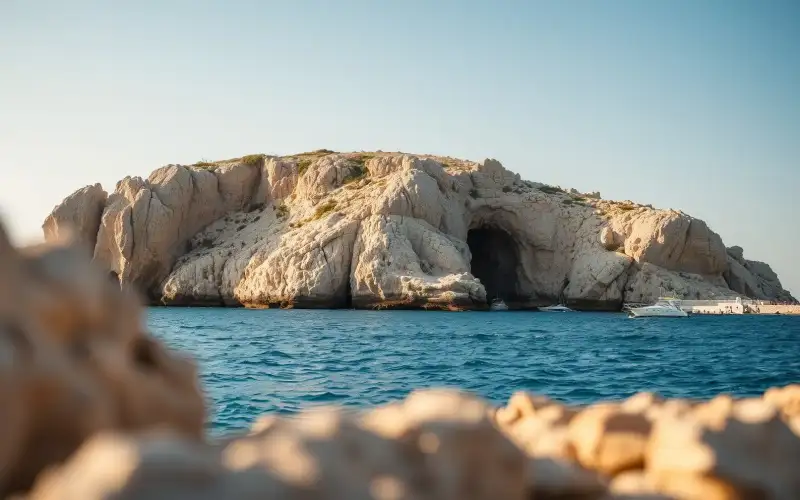
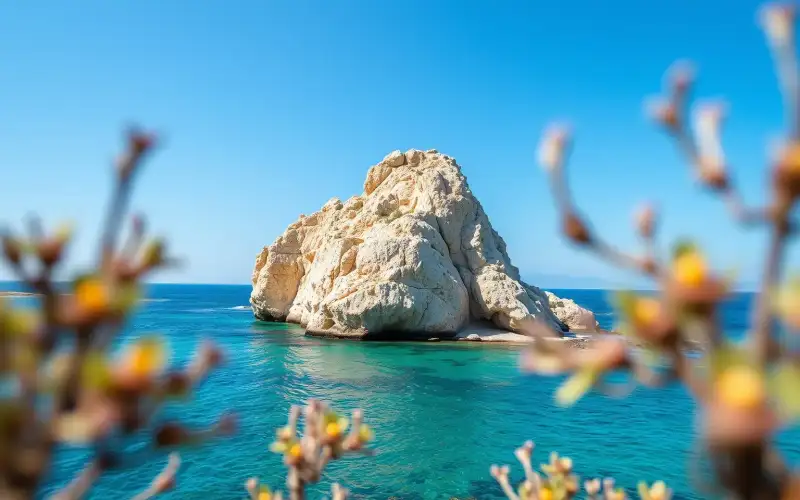
Petra tou Romiou—literally "the Rock of the Greek"—sits on the southwestern coast between the villages of Kouklia and Geroskipou, roughly 25 kilometres south of Paphos town. The rock itself is a pale limestone outcrop, approximately 105 metres across at its widest point, rising from a small sandy beach flanked by dramatic cliffs.
The mythology claims Aphrodite, goddess of love, emerged from sea foam here around this spot, born fully formed and ready to trouble mortals with desire. Ancient sources vary—some place her birthplace on this beach, others on the island of Cythera. The Cypriot version has commercial and spiritual weight. Pilgrims have visited for millennia, and the site achieved formal UNESCO protection as part of the broader Paphos archaeological region in 1980.
The rock itself contains two natural sea caves accessible only by boat or, in calm conditions, by experienced swimmers. Local fishermen occasionally venture inside, but the currents are unpredictable and the passage narrow. Most visitors never enter—and that's sensible.
The surrounding area includes a small beach (roughly 100 metres of sand), a clifftop car park (capacity: 180 vehicles, frequently full by 11 a.m. in summer), a basic café serving overpriced coffee and souvlaki, and a pebbled area ideal for wading. There is no formal museum, no entrance fee, and no lifeguard service. The site is technically open 24 hours, though the car park is gated and closes at sunset.
Option A: The Romantic Couples' Experience
Best Times and Light
Couples visiting Aphrodite's Rock typically arrive with one goal: a sunset photograph that justifies the Instagram caption. The logistics are straightforward but require discipline. From late May through August, sunset occurs between 8:15 and 8:45 p.m. From September through April, it shifts to 5:00 to 6:00 p.m. Plan to arrive 90 minutes before sunset—earlier if crowds concern you.
The light in the final 30 minutes before sunset transforms the rock from pale grey to burnished gold. The sea takes on a deep amber tone, and the cliffs behind you glow rust-red. This is when the site justifies its reputation. The light is also forgiving for handheld photography; you'll rarely need a tripod. If you're arriving in July or August, expect 200-300 other couples with identical intentions. The car park will be full. Plan accordingly.
Winter visits (November through February) offer a quieter experience with equally dramatic light, though sunset occurs earlier and the weather is less predictable. Rain is possible, wind is common, and the beach becomes less inviting. However, a sunset visit in January with only a handful of other visitors has a different, almost melancholic beauty.
Practical Logistics for Two
Drive from Paphos town centre via the A6 motorway toward Limassol. Exit at the Petra tou Romiou junction—the signage is adequate, though GPS is essential for first-time visitors. The journey takes 30-35 minutes from Paphos seafront. Parking is free but chaotic. The main car park is accessed via a narrow entrance; if it's full, you'll be directed to an overflow area roughly 400 metres uphill. This is not ideal when carrying camera equipment or wearing heels.
A practical tip: arrive at 4:30 p.m. even if sunset is at 6:15 p.m. You'll secure parking, explore the beach, and have time to compose yourselves before the light turns golden. The site feels less crowded in the early evening, and you'll have space to move around without colliding with tour groups.
The descent to the beach takes 8-10 minutes via a concrete path. It's steep but manageable in trainers. The path has handrails in most sections, though they're corroded in places. Avoid flip-flops or anything with minimal grip. The final 20 metres involve uneven steps carved into the rock—here, careful footing matters.
Once on the beach, the rock dominates the view. You can wade into the shallows (more on safety below), but most couples simply position themselves on the sand or pebbles for photographs. The beach is small enough that you'll find a quiet spot even in peak season—move 50 metres to either side of the main landing area, and you'll be largely alone.
Swimming and Water Safety for Couples
Swimming at Aphrodite's Rock is technically possible but requires caution. The water temperature ranges from 16°C in winter to 27°C in August. The seabed shelves gradually, so you can wade to waist-depth within 20 metres. The currents are moderate under normal conditions but can strengthen during wind or after storms.
Local authorities do not recommend swimming. There is no lifeguard, no rescue equipment, and the nearest medical facility is in Paphos town (35 minutes by car). If you do swim, do so in daylight, avoid the area immediately around the rock (currents are stronger there), and never venture out beyond your depth. The water clarity is excellent—you'll see the seabed clearly—but this can be deceptive about depth and distance.
For couples, wading to knee-depth and photographing each other is the sensible compromise. It provides the romantic imagery without the risk. Bring a waterproof phone case or a compact camera if you want in-water shots.
Dining and Nearby Amenities
The clifftop café serves basic refreshments: coffee, soft drinks, beer, and simple food. A souvlaki costs €8-10, a coffee €3.50-4.50, and a beer €4-5. The quality is functional rather than memorable. If you're planning a proper dinner, eat before arriving or drive to Kouklia village (8 kilometres inland), where several tavernas offer traditional Cypriot food at reasonable prices. Taverna Ionis in Kouklia serves excellent lamb kleftiko and local wine for €25-35 per person.
There are no other facilities at the site itself. The nearest petrol station is in Paphos town. If you're planning an evening visit, fill your tank beforehand.
Option B: The Family Experience with Children
Age Considerations and Timing
Families with children under ten face specific challenges at Aphrodite's Rock. The site offers no formal attractions—no playground, no interactive displays, no child-specific activities. The beach is small and pebbly. The descent involves steep steps. The mythology, while fascinating to older children, means little to toddlers.
That said, families with children aged 8-16 often find the visit rewarding if properly framed. Position it as a "treasure hunt" to find the rock where a goddess was born. Bring binoculars so children can spot the sea caves. Make the descent an adventure rather than an obligation.
Timing matters enormously. Arrive mid-morning (9:00-10:00 a.m.) when the site is less crowded and the light is neutral. Avoid peak afternoon hours (12:00-3:00 p.m.) when heat, crowds, and tired children converge. A 2-3 hour visit is optimal for families—enough time to explore without boredom setting in.
Practical Arrangements for Families
Parking is easier in the morning. The main car park is usually half-full by 9:30 a.m., even in summer. The path down is manageable for children aged 6+, though younger children may struggle with the final steep section. Consider bringing a child backpack carrier if you have a toddler; the path is too narrow and uneven for pushchairs.
Water safety is paramount with children. The beach shelves gradually, which is good, but there is no lifeguard and no warning system. If children swim, they must wear buoyancy aids and stay within 10 metres of the shore. Many families simply let children paddle in the shallows while adults supervise. The water is clear enough that you can see the seabed, which provides some reassurance.
Bring sun protection: high-factor sunscreen, hats, and a beach umbrella if possible. The site offers no shade except the small café area. Dehydration is a real risk for children in summer. Bring at least 2 litres of water per person. The café sells bottled water for €2 per litre (overpriced but necessary).
Making It Engaging for Children
Share the mythology in age-appropriate language. Tell younger children that a goddess was born in the sea here, and she was so beautiful that everyone fell in love with her—even today, people come to see where she appeared. Older children (10+) will appreciate more detail: Aphrodite emerged from sea foam, fully grown and powerful, and the ancient Greeks believed she controlled love and beauty.
Bring binoculars or a camera with zoom. Children enjoy spotting the sea caves in the rock face. Point out the different rock colours and textures. If you're visiting in summer, look for fishing boats or swimmers in the distance. The beach itself is interesting geologically—the pebbles are smoothed limestone, and the sand is fine and pale.
Allocate time for free play. Let children explore the beach, collect pebbles, and wade. The structured experience (the rock, the mythology) lasts 20 minutes. The unstructured play (beach time) sustains engagement for another hour.
Food and Rest
The café is adequate for basic needs but not for a family meal. A souvlaki and soft drink will cost €15-20 for two children. Consider eating beforehand or bringing packed food: sandwiches, fruit, and snacks. There is a small seating area outside the café with shade, but it fills quickly in summer.
Plan a rest period mid-visit. Sit on the beach, let children play, and adults can read or simply observe. The site's pace is naturally slow—there's nothing to "do" except observe and swim, so working against this rhythm causes frustration.
Option C: Solo Travellers and Photography
Photography Timing and Technique
Solo travellers, particularly those with serious camera equipment, should treat Aphrodite's Rock as a multi-visit location. Sunrise and sunset are optimal, but the light quality varies dramatically by season. In summer (June-August), sunrise occurs around 5:30 a.m., and the light is soft and golden for 45 minutes. Sunset occurs around 8:30 p.m., and the golden hour extends from 7:45 p.m. onward.
Sunrise visits are dramatically quieter. The car park opens at 5:00 a.m., and you'll often be alone on the beach until 7:00 a.m. The light is cooler (more blue and silver) than sunset, which appeals to some photographers. The rock casts a long shadow across the beach, creating compositional opportunities.
For sunset, the light is warmer and more dramatic, but you'll have company. Arrive 90 minutes before sunset and position yourself away from the main landing area. Move 100 metres along the beach—either direction—and you'll have significantly more space for composition.
Technical considerations: the rock is backlit at sunset, which creates exposure challenges. If you're shooting with a camera (not a phone), use exposure compensation or manual mode. Bracket your exposures (take three versions: one darker, one normal, one brighter) to ensure you capture the light correctly. A polarising filter reduces glare and deepens the sky colour. A neutral density filter allows slower shutter speeds, which can blur the water for a dreamy effect.
Composition and Framing
The rock itself is visually simple—a large pale mass. The compositional challenge is making it interesting. Foreground matters enormously. Include beach texture, rocks, or a figure (yourself, if you're using a self-timer) to provide scale and interest. The cliffs behind the beach are dramatic and should be included in wide-angle shots.
Experiment with different focal lengths. A wide-angle lens (16-35mm equivalent) captures the full scene and emphasises the cliffs. A 50mm lens isolates the rock and creates a more intimate framing. A telephoto lens (70-200mm) compresses the scene and makes the rock appear larger relative to the surroundings.
The water is a compositional element. Include it in the foreground (shallow wading shots), midground (the beach and rock), and background (the horizon). Vary the ratio of sky to land—sometimes the sky should dominate (dramatic sunset colours), sometimes the land should (detailed rock texture).
Practical Solo Logistics
Parking is straightforward for solo visitors. You need only one space, and you can arrive at off-peak times. Sunrise visits (5:30-7:00 a.m.) are nearly empty even in summer. Mid-week visits are quieter than weekends. If you're flexible, visit on a Tuesday or Wednesday rather than Friday-Sunday.
Safety considerations for solo visitors: the site is generally safe, but avoid isolated visits after dark. The car park closes at sunset, and walking the path in darkness is hazardous. If you're photographing sunset, ensure you can leave before the car park gates close (typically 30 minutes after sunset). In summer, this is around 9:15 p.m.
Bring adequate water, sun protection, and a fully charged battery. There is no power source at the site. A small backpack is ideal—you'll have your hands free for camera work and hiking.
Consider visiting multiple times during your stay. Paphos is a reasonable base (30 minutes away), and repeat visits allow you to explore different light conditions, compositions, and perspectives. Some of the best photographs come from the second or third visit, when you're less focused on simply documenting the rock and more focused on creating interesting images.
Comparison Table: Visitor Experience by Type
| Aspect | Couples | Families | Solo Travellers |
|---|---|---|---|
| Best Time to Visit | Sunset (90 mins before) | Mid-morning (9-11 a.m.) | Sunrise or off-peak sunset |
| Duration | 2-3 hours | 2-3 hours | 2-4 hours (multiple visits ideal) |
| Parking Difficulty | High (peak times) | Moderate (morning visits easier) | Low (off-peak times) |
| Swimming Safety | Wading only; no lifeguard | Paddling with supervision; buoyancy aids recommended | Minimal risk if experienced swimmer |
| Key Amenity | Café for refreshment | Beach for free play | Quiet space for photography |
| Cost | Free entry; €10-15 refreshments | Free entry; €20-30 refreshments/food | Free entry; minimal spending |
| Physical Demand | Moderate (steep descent) | Moderate (steep descent; children age 6+) | Low to moderate (flexible pace) |
Practical Information and Recommendations
The site is open year-round. The car park is gated and closes 30 minutes after sunset. Entry is free. Parking is free. The nearest petrol station is in Paphos town (25 kilometres). The nearest hospital is Paphos General Hospital (35 kilometres, roughly 45 minutes by car).
In summer 2026, the car park frequently reaches capacity by 11:00 a.m. Arriving before 10:00 a.m. or after 3:00 p.m. significantly improves parking availability. The site is exposed to wind—the western coast is the windiest in Cyprus. In winter and spring, strong winds can make the beach unpleasant and swimming dangerous.
Mobile signal is adequate. There is a small café serving basic food and drinks at inflated prices. No formal restaurant, no museum, no visitor centre. The mythology can be researched beforehand using guidebooks or online sources; there is no interpretive signage at the site itself.
Swimming is possible but unsupervised and at your own risk. The water temperature ranges from 16°C (January-February) to 27°C (August). Currents are generally moderate but can strengthen during wind or after storms. Never swim alone, and always inform someone of your plans.
The surrounding area includes the villages of Kouklia (8 kilometres) and Geroskipou (12 kilometres), both offering traditional tavernas and basic services. Paphos town (25 kilometres) provides full amenities: restaurants, shops, hotels, and medical facilities.
For most visitors, Aphrodite's Rock is worth a single visit, planned carefully to match your interests and schedule. It's not a destination requiring an entire day, but it's not a 15-minute snapshot either. Three hours allows you to explore the beach, absorb the mythology, and capture decent photographs without rushing. The rock itself is visually simple, but the setting—the dramatic cliffs, the clear water, the sense of historical significance—elevates it beyond a mere geological curiosity. Whether you arrive as a couple seeking romance, a family teaching children about ancient mythology, or a solo photographer chasing light, the experience is shaped entirely by your expectations and preparation.
Comments (4 comments)