
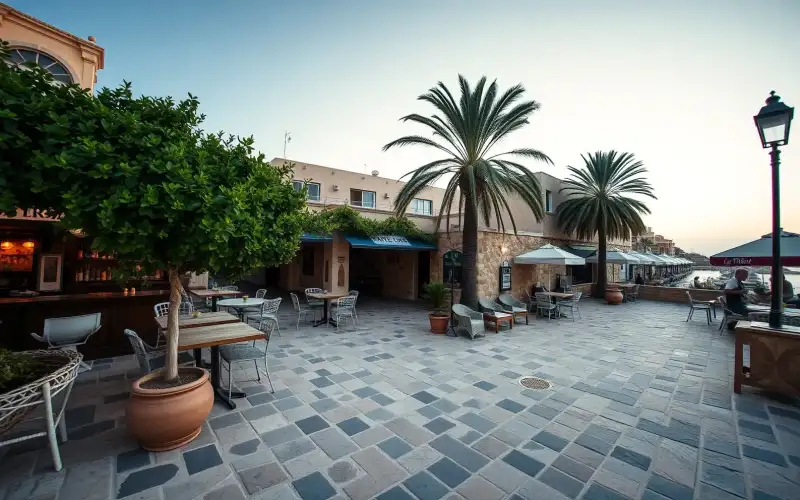
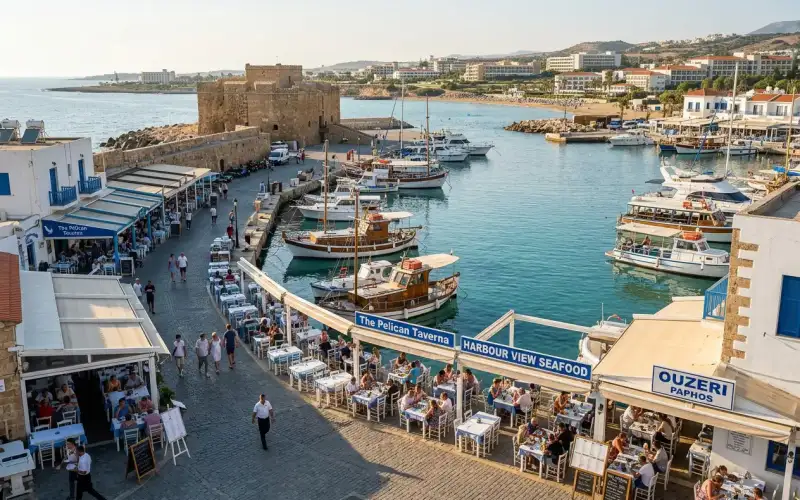
Three years ago, I watched an elderly couple from Surrey sit down at one of the harbourside restaurants near Paphos Castle, order a "traditional meze," and receive a plate of frozen saganaki and tinned dolmades for €32. The woman's face told me everything. She'd been sold the postcard version of Cyprus dining, not the real thing. That moment crystallised something I'd been noticing for over a decade living here: the restaurant landscape in Paphos has split into two almost parallel universes.
One universe caters to tourists with deep pockets and shallow patience. The other feeds the people who actually live here—Cypriot families, long-term expats, and the occasional visitor who's stumbled onto something genuine. The gap between them has widened considerably since 2020, and if you're planning a trip to Paphos in 2026, understanding this divide could save you money, time, and disappointment.
The Problem: Why Paphos Dining Has Become a Tale of Two Cities
Let's start with the uncomfortable truth: the harbourside restaurants around Paphos Harbour and the Old Town have become increasingly expensive and formulaic. A grilled fish plate that cost €18 in 2015 now costs €28–€35. Meze sets that should feature fresh, seasonal vegetables arrive with the same tired selection year after year. Wine markups have become comical—a bottle you'd buy at Carrefour for €8 costs €28 in these establishments.
The economics are straightforward. Harbourside real estate is expensive. Tourist footfall is predictable and high-volume. Restaurant owners have learned that visitors often don't return, so the incentive structure rewards volume over reputation. A tourist eating once won't complain to friends back home the way a local would. The business model has shifted from "build a place people want to return to" to "extract maximum revenue per cover."
Meanwhile, in the residential neighbourhoods—Paphos Town proper, Kato Paphos, Emba, even the quieter stretches of Chlorakas—a different ecosystem survives. These are family-run places where the owner's mother is still in the kitchen, where regulars have been coming for fifteen years, and where the menu changes with what's at the farmers' market that morning. These tavernas operate on thin margins, relying on repeat business and word-of-mouth. Their customers are locals, British residents who've learned the ropes, and the occasional tourist who's willing to venture off the beaten path.
The irony is this: the "hidden" tavernas offer better food, better value, and a more authentic experience—yet they're harder to find, less polished in their presentation, and often don't have English menus. They're not invisible by accident. They're invisible because they don't need to advertise to tourists.
Why This Distinction Matters More Than You'd Think
If you're visiting Paphos for a week, dining out every night, the difference between a €28 harbourside fish plate and a €12 local taverna fish plate adds up quickly. A couple spending two weeks here could easily save €200–€300 by eating where locals eat, and eat significantly better food in the process.
But it's not just about money. There's a quality-of-life dimension that matters, especially for the 40–70 demographic that dominates Paphos tourism. Many of you are retired, on fixed incomes, or visiting annually. You've probably noticed that Cyprus—particularly Paphos—has become noticeably more expensive since 2020. The pound-to-euro exchange rate hasn't helped. Eating strategically isn't penny-pinching; it's sensible travel.
There's also the matter of authenticity. You didn't fly to Cyprus to eat the same standardised meze you could get in a Turkish chain restaurant in London. You came for something genuine: the taste of Cypriot home cooking, the experience of sitting in a room full of Greek-speaking families, the sense of eating where real life happens. The harbourside restaurants offer theatre and views. The neighbourhood tavernas offer truth.
Finally, there's the practical consideration of your health and digestion. Restaurants serving high-volume tourist meals often cut corners with frozen ingredients, reheated components, and heavy oils. Smaller, family-run places typically cook to order, use fresher ingredients, and cook the way Cypriot home cooks do—which means food that's easier on the stomach and more nutritious. If you're over 60 and have a sensitive digestive system, this matters.
How to Spot a Tourist Trap Before You Sit Down
The good news: spotting a tourist trap is straightforward once you know what to look for.
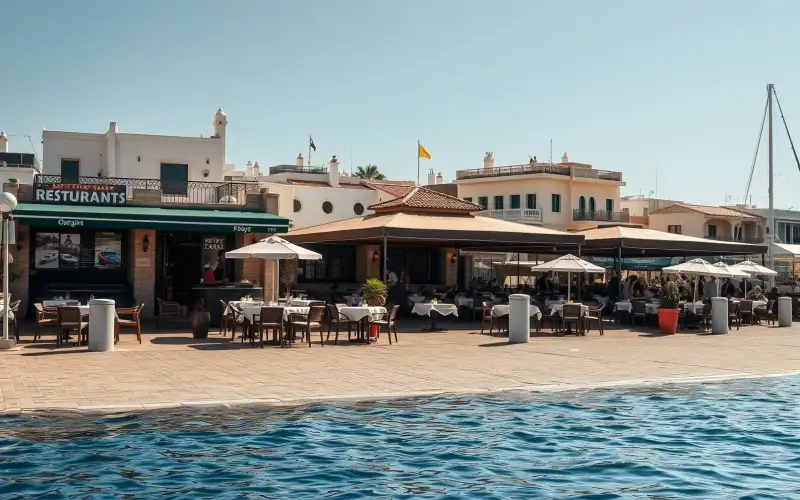
Location and foot traffic. If a restaurant is directly on the harbour, has a large A-frame sign in four languages, and staff are actively trying to seat you as you walk past, it's a tourist trap. Legitimate restaurants in Paphos don't need to hustle. They have regulars. They have reservations. They don't need your walk-in business.
The menu presentation. Tourist traps use laminated menus with photos. Often glossy, often with descriptions in broken English. A proper taverna has a printed menu, sometimes just a chalkboard, and the English descriptions are minimal because the staff assume you'll ask questions. The menu rarely changes. At a tourist place, every item is available every day—which tells you nothing is fresh.
The wine list and pricing. If wine prices are more than three times the retail price, walk out. A €8 bottle should cost €18–€22 in a restaurant, not €32. Tourist traps often have extensive wine lists with premium markups. Real tavernas have a short list of local wines, reasonably priced, and the owner will tell you which one he drinks at home.
The other diners. Look around the room. If everyone is speaking English, wearing resort wear, and consulting TripAdvisor, you're in a tourist trap. If you see families with children, older Cypriot couples, and people who look like they know exactly what they're ordering, you're in the right place.
The specials board. Tourist traps don't have specials—or if they do, they're the same "specials" every single day. Real tavernas have a specials board because the owner bought too much of something at the market, or his wife made extra pastitsio, or the fisherman brought in octopus this morning. The specials board is where the best value lives.
What You'll Find at a Proper Neighbourhood Taverna
A genuine local taverna in Paphos looks like this: modest frontage, perhaps just a painted wooden door and a small sign. Inside, mismatched chairs, paper tablecloths (or no tablecloths), and walls covered with family photos or old newspaper clippings. The kitchen is visible—you can see the owner's wife or mother actually cooking. The menu is limited: perhaps 12–15 dishes maximum. Many items are seasonal. In summer, there will be fresh fish. In winter, there will be stews and slow-cooked dishes.
Prices are genuinely reasonable. A main course (grilled fish, lamb chops, souvlaki, moussaka) costs €8–€15. A meze for two (proper meze, made fresh) costs €14–€20. Wine is €3–€5 per glass. A three-course dinner for two, including wine and water, costs €35–€50.
The service is personal but not fawning. The owner or his family will greet you, seat you, and take your order. They won't hover. They won't upsell you on expensive appetisers. They might suggest something that's particularly good that day. If you ask for advice, they'll give it honestly—"the fish today is very good, but it's expensive. The lamb is better value."
The food arrives hot and freshly cooked. If you order grilled fish, it's been on the grill for five minutes, not sitting under a heat lamp. If you order a stew, it's been simmering for hours. Portions are generous but not absurd. The vegetables are cooked properly—not raw, not mushy, but tender with some texture.
Most importantly, the food tastes like someone cooked it at home, because someone did. The flavours are straightforward: good olive oil, lemon, fresh herbs, salt. No heavy sauces. No fusion confusion. No pretension.
The Harbourside Reality: What You're Actually Paying For
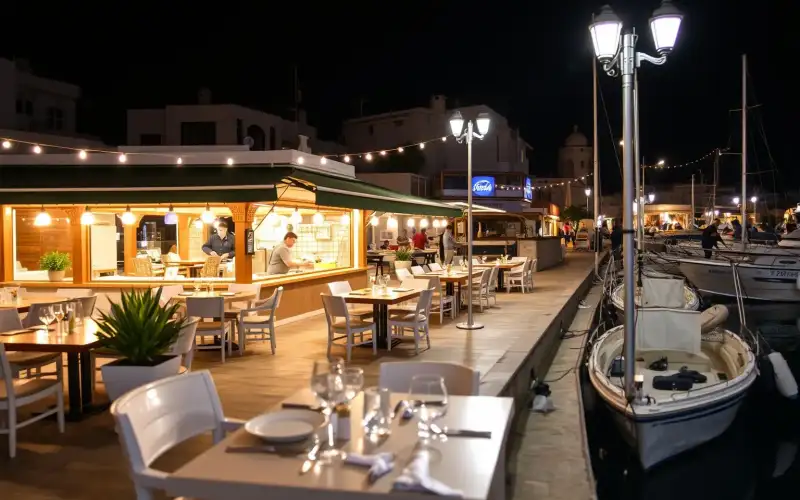
To be fair to the harbourside restaurants, you are paying for something. You're paying for the view, the convenience, the polished service, and the certainty that you won't have a bad experience. You're also paying for the infrastructure: trained staff in clean uniforms, a professional kitchen, a wine list with variety, air conditioning that works, and toilets that are spotless.
There's nothing inherently wrong with any of that. If you're on holiday and you want to sit by the water, watch the sunset, and not worry about whether the kitchen is clean, the harbourside restaurants deliver. The problem is when the food quality doesn't match the price. A €32 fish plate should be exceptional. It usually isn't.
The other issue is repetition. If you're staying in Paphos for two weeks and eat at harbourside restaurants every night, you'll notice the menus are nearly identical. Every place serves the same meze, the same grilled fish, the same souvlaki. There's no variety, no discovery, no sense of eating at a unique place. You could be in Larnaca, Limassol, or Ayia Napa.
Where to Find the Hidden Tavernas: Practical Directions
The best neighbourhood tavernas in Paphos aren't hidden because they're secret—they're hidden because they're not in the tourist guidebooks. Here's how to find them:
Ask your hotel staff. Not the receptionist—ask the cleaner, the kitchen staff, the person who actually lives in Paphos. They'll know. They'll give you a name, an address, and often a phone number. They might even call ahead and tell the owner to expect you.
Wander the residential streets. Paphos Town (the area inland from the harbour, around Grivas Dhigenis Street and the market area) has dozens of small tavernas. Walk around at lunchtime or early evening. If you see locals eating, follow them. If a place has a queue of Cypriot families at 7 p.m., it's worth waiting for.
Check the market area. The central market in Paphos Town (open mornings, closed by 2 p.m.) is surrounded by small tavernas and kafeneia. These places cater to market traders and locals. The food is cheap, fresh, and authentic.
Ask other British residents. If you're staying in a villa or apartment, befriend a neighbour who's been here more than five years. They'll have a list of favourite places. British expats in Paphos have collectively done the research. Tap into that knowledge.
Look for family names on the sign. A taverna called "Yiannis" or "Sophia's Place" is almost certainly family-run. A taverna called "The Olive Garden" or "Mediterranean Sunset" is probably a tourist place.
A Practical Comparison: Two Meals, Two Worlds
Let me give you a concrete example. Last month, I took two friends—both visiting from England for the first time—to dinner. We split the evening: first stop, a harbourside restaurant; second stop, a neighbourhood taverna.
Harbourside restaurant (near the castle): We ordered a meze for two (€34), grilled sea bass (€32), and a bottle of local white wine (€28). The meze included saganaki, calamari, a few vegetables, and some dips. It was fine. The fish was well-cooked but small. The wine was decent. Total bill: €94 plus tip. The view was lovely. The service was professional. The experience felt like dining in a nice restaurant anywhere in Europe.
Neighbourhood taverna (in Paphos Town, five minutes' drive inland): We ordered a proper meze for two (€16), lamb chops (€12), grilled fish (€10), and a local wine (€4 per glass, three glasses). The meze was enormous—seven different dishes, all made that morning. The lamb chops were perfectly charred, flavourful, tender. The fish was larger than the harbourside version and fresher. The wine was honest and dry. Total bill: €52 plus tip. The atmosphere was noisy, full of families, genuinely Cypriot. The experience felt like being invited to dinner at someone's home.
Both meals were good. One cost nearly twice as much. My friends still talk about the taverna meal. They've forgotten the details of the harbourside one.
Strategic Dining: How to Eat Well and Spend Wisely
If you want to enjoy Paphos dining without overspending, adopt this strategy:
Lunch at neighbourhood tavernas, dinner at harbourside. Lunch is the main meal in Cyprus. Tavernas are full of locals eating a proper midday meal. Prices are lower (many places offer a lunch special around €8–€10). The food is fresher because the kitchen has been running since 11 a.m. You eat well, spend little, and experience local life. Save the harbourside dinner for one or two special occasions.
Eat fish on Fridays. Friday is when the fishermen bring in the catch. Friday is when fish is cheapest and freshest. Avoid fish on Mondays and Tuesdays—it's been sitting in storage. At a neighbourhood taverna, ask what came in that day. At a harbourside place, the fish is frozen anyway, so timing doesn't matter.
Order the specials. Every taverna has a specials board. The specials exist because the owner bought too much, or his family cooked something special, or he's trying to move stock. The specials are always good value and almost always fresher than the regular menu.
Skip the wine markup. Buy a bottle at a supermarket (€5–€8) and ask the restaurant if you can bring your own. Many will allow it for a small corkage fee (€2–€3). This alone can save you €15–€20 per meal. Alternatively, order local wine by the glass. It's cheaper and you avoid committing to a full bottle.
Eat where you see families. This is the golden rule. If a restaurant is full of Cypriot families with children, eating and laughing, it's good. If it's full of tourists consulting guidebooks, it's not. Your instinct will be right.
What's Changed Since 2020: The Paphos Dining Landscape in 2026
The gap between tourist restaurants and local tavernas has widened noticeably in the past few years. Pre-pandemic, a decent harbourside fish dinner cost €20–€24. In 2026, it's €28–€35. Meanwhile, neighbourhood taverna prices have risen more modestly, from €8–€12 to €10–€15. The divergence is real and accelerating.
Several factors explain this. Tourism has rebounded strongly post-pandemic, and Paphos has become more popular with package tourists and cruise ship visitors. Competition for tourist euros has intensified. Meanwhile, local tavernas face pressure from rising ingredient costs and energy bills, but they can't raise prices dramatically without pricing out their regular customers, so they absorb the costs and operate on tighter margins.
The other change: more harbourside restaurants have opened, and many are chains or franchises rather than independent family operations. This has made the tourist restaurant scene more homogeneous and less interesting. The good news is that the neighbourhood taverna scene remains robust. Family-run places are still the norm in residential areas. These places have weathered the pandemic and the inflation that followed. They're still cooking the way they always have.
Final Thoughts: Eat Like You Live Here
The best advice I can give you is simple: eat like you live here. Not because you're trying to be authentic or adventurous, but because that's where the good food is. The restaurants that survive in Paphos by cooking for locals are cooking well, cooking honestly, and cooking affordably. They don't need to impress tourists because they don't depend on them.
You'll spend less, eat better, and have a more genuine experience. You'll also support the places that actually contribute to Paphos's food culture rather than just extract money from visitors. That matters, especially if you're planning to return—and most people who come to Paphos do.
Comments (3 comments)