
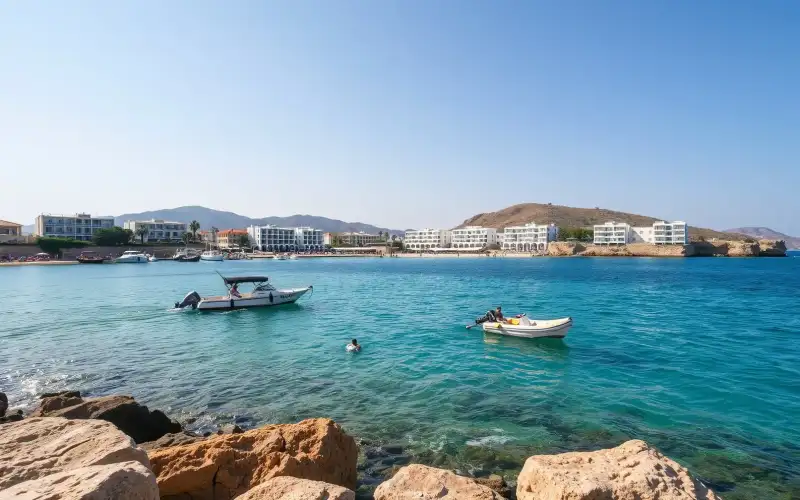
Three summers ago, I watched a British couple arrive at Coral Bay armed with the kind of determination usually reserved for storming Normandy. They'd hired a jet ski for the first time in their lives, consulted a laminated instruction sheet for ninety seconds, and promptly vanished toward the horizon with grins that suggested they'd just discovered the Fountain of Youth. By lunchtime, they were back, sunburned and exhilarated, asking if they could book again for the following week. That encounter crystallised something I'd been thinking for months: Coral Bay isn't just a pleasant stretch of sand—it's the watersports capital of Paphos, and most visitors never realise it.
I arrived in Paphos in 2014, fresh from a career teaching Tudor history and armed with the assumption that I knew Mediterranean beaches. I was spectacularly wrong. The first summer, I dutifully visited every famous strand: Lara Beach with its loggerhead turtles (stunning, utterly unsuitable for paddleboarding), Coral Beach (photogenic, chaotic), and Tombs of the Kings beach (archaeologically magnificent, practically non-existent for watersports). It took me three years and roughly forty beach visits to stop chasing Instagram moments and start asking locals the right questions. The answer kept coming back: Coral Bay.
What Makes Coral Bay Different
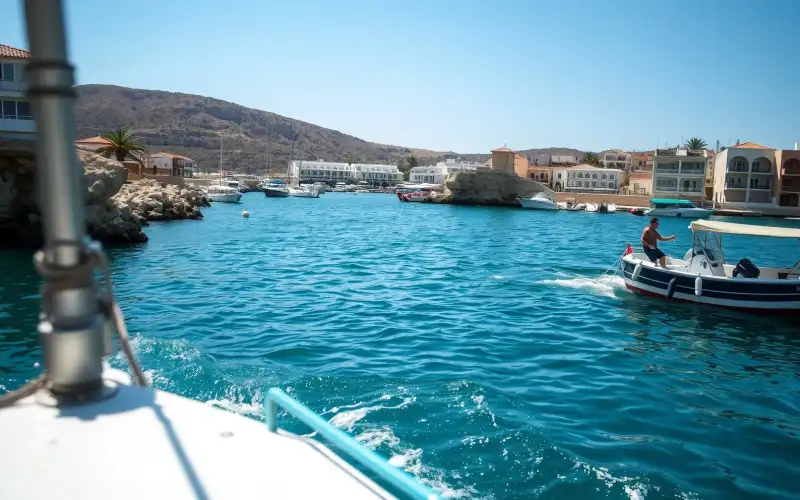
Coral Bay sits about 12 kilometres north of Paphos town, tucked into a natural amphitheatre of limestone cliffs that shelter it from the prevailing winds and create the kind of calm, translucent water that makes watersports operators weep with joy. Unlike Coral Beach—and yes, the names are confusing, a fact that delights absolutely no one—Coral Bay is wider, deeper, and blessed with facilities that actually work.
The beach itself stretches for roughly 300 metres of fine sand, backed by a promenade with restaurants, sun lounger rental, and crucially, three separate watersports operators who've been running their businesses for over a decade. In 2026, that consistency matters. These aren't fly-by-night operations that vanish when the season ends. The main operators—Coral Bay Water Sports and its competitors—are staffed by people who've actually lived in Paphos, speak English fluently, and treat safety with the seriousness it deserves.
The bay's orientation is another crucial factor. It faces almost due north, which means it catches the morning sun perfectly and remains calm until well into the afternoon, even on days when the rest of the coast is choppy. I've been here on days when Coral Beach, just a few kilometres away, was unsuitable for anything more ambitious than a paddle, while Coral Bay remained glassy enough to read a newspaper on the water.
The Watersports Arsenal: What You Can Actually Do
Let me be specific about what's available, because generalisations don't pay the bills of watersports operators or answer the questions of visitors trying to plan a day.
Jet Ski Hire
This is where Coral Bay genuinely excels. In 2026, a single jet ski rental for 30 minutes costs approximately €70–€85, depending on the operator and season. A full hour runs €130–€155. These prices are honestly competitive with Coral Beach (€75–€90 for 30 minutes) and substantially cheaper than the operations at Latchi, on the other side of the peninsula, where you're looking at €95–€110 for thirty minutes. You're not just paying for the machine; you're paying for the bay's inherent calmness, which makes it safer and more enjoyable for first-timers.
The operators provide a brief safety briefing—roughly ten minutes, covering throttle control, turning, and the absolute non-negotiability of staying within the marked zone. The marked zone is generous, stretching well out into the bay but respecting the fishing boats and leisure swimmers. I've never seen a serious incident here, though I've watched operators shut down operations immediately if conditions deteriorated, even when it cost them money.
One practical note: arrive early. Peak season (July and August) sees queues by mid-morning. If you want a jet ski on your own schedule, get there by 9:30 a.m., or book ahead by phone the day before. The operators' contact numbers are posted on the beach, and they'll hold a reservation for you.
Banana Boat Rides
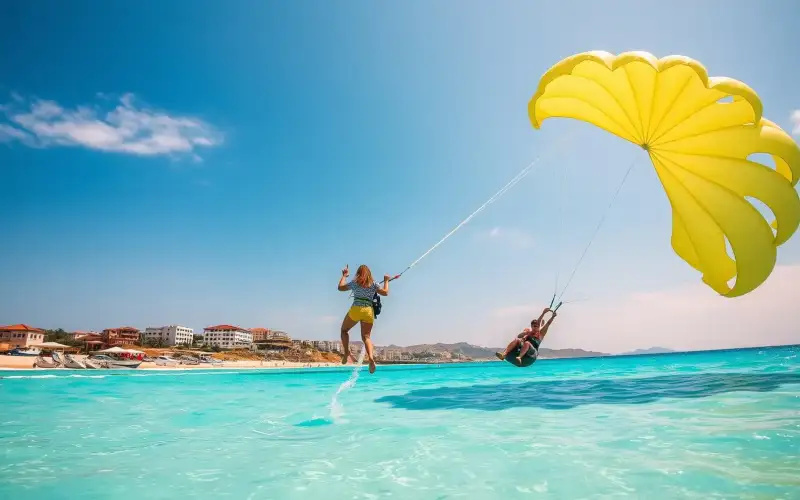
The banana boat—that inflatable torpedo dragged behind a speedboat—is perhaps the most underrated activity in Paphos. It's perfect for groups, families with teenagers, and anyone who wants excitement without the responsibility of operating machinery. Coral Bay's operators run banana boats from late May through September, typically in two-person or four-person configurations, though larger groups can book private runs.
Pricing runs €20–€30 per person for a 15-minute ride, though you'll find discounts if you're booking for four or more people. Compare this to Coral Beach (€25–€35 per person, usually) and you're already ahead. But the real advantage is the calm water. The banana boat experience at Coral Bay is thrilling without being genuinely frightening, which makes it accessible to older visitors who might be hesitant about speed boats.
I watched a woman in her late sixties take her first banana boat ride at Coral Bay last August. She was terrified, gripping the handles like they might flee. By the end of the 15 minutes, she was laughing so hard she could barely stand. That's the difference between a bay designed for watersports and a beach where watersports are an afterthought.
Paddleboarding and Kayaking
This is where Coral Bay becomes genuinely special. The calm water and shallow entry make it ideal for beginners, yet the bay is large enough that experienced paddleboarders can venture further out and find real exploration. Stand-up paddleboard (SUP) rental costs €15–€20 per hour, with discounts for full-day hire (typically €40–€50). Kayak hire is similarly priced.
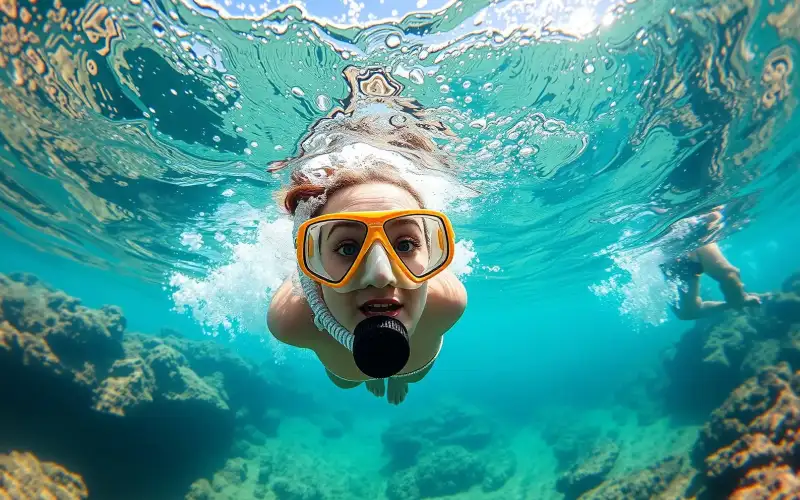
What matters here is the entry experience. At Coral Bay, you can literally walk into the water, get on your board, and find yourself in calm, clear water within seconds. The visibility is typically 8–12 metres, which means you can see the sea bed and the small fish darting around. This transforms paddleboarding from exercise into exploration.
Several operators offer guided paddleboard tours to the sea caves along the western cliff face, roughly a 45-minute paddle from the main beach. These tours cost €35–€45 per person and operate most mornings in summer. I've done this four times, and it never gets routine. The caves are genuinely striking—limestone formations that catch the morning light in ways that make you understand why the ancient Cypriots considered them sacred.
Crowd Timing and Practical Considerations
Coral Bay's growing reputation means it's no longer a secret, but it's still less crowded than the alternatives. Here's what I've learned about timing:
- June and September are sweet spots—warm enough for comfortable water sports, but not so packed that you're queuing for equipment. Morning visits are almost always quieter than afternoons.
- July and August are peak season. If you're visiting then, aim for 8:00–10:00 a.m. or wait until after 4:00 p.m. The midday crush is real.
- Weekdays are noticeably quieter than weekends, even in peak season. If your schedule allows, this is the single most useful booking strategy.
- The water is warmest in August and September, peaking at around 27°C (81°F). By May, it's still refreshing at 21°C (70°F), which is fine for activity but might be chilly for swimming.
Parking is straightforward—there's a large car park directly behind the beach, costing €2–€3 for the day in 2026. It fills on weekends and high season afternoons, but there's usually overflow parking up the road.
How Coral Bay Compares to Alternatives
Let me be honest about the other options, because this isn't about dismissing them wholesale. It's about understanding what you're trading off.
Coral Beach
Coral Beach is the postcard Paphos. It's stunning, lined with restaurants, and genuinely beautiful. But it's also the most crowded beach in the area. Watersports here are available and professional, but you'll pay premium prices (roughly 10–15% more than Coral Bay) and wait longer. The beach is narrower, the parking situation is nightmarish in summer, and the water clarity, while good, isn't quite as exceptional as Coral Bay's.
Latchi Beach
Latchi, on the Akamas Peninsula's east side, is serious watersports territory. It's where you go for diving, advanced water sports instruction, and if you want to rent a boat. It's also windier, further from town, and more expensive. For casual visitors, it's overkill.
Lara Beach
Lara is magnificent for wildlife and swimming, but it's a nature reserve with limited facilities and no real watersports infrastructure. Don't go there expecting to hire a jet ski.
Geroskipou Beach
Closer to town and often overlooked, Geroskipou is pleasant but smaller and less well-equipped. It's fine for a casual day, but if you want variety, it's limited.
The Practical Logistics
Getting to Coral Bay is straightforward. If you're driving from Paphos town, take the Pafos-Polis road northbound for about 12 kilometres. The turn-off is clearly signed. Journey time is roughly 20 minutes from the town centre. Public transport (buses 631 and 632 from the central bus station) runs regularly in summer, taking about 40 minutes and costing €3.50–€4.50 per ticket.
Once there, bring cash for parking and initial purchases, though most watersports operators now accept cards. Sun protection is non-negotiable—the UV index in summer is fierce, and the reflection off the water intensifies it further. I've seen visitors who thought one application of SPF 30 would suffice. They were wrong, spectacularly so.
Eat after your watersports activities, not before. I learned this the hard way on my second year here. The restaurants along the promenade are decent—meze platters run €12–€18 per person, fresh fish is usually €18–€25 per kilogramme. The wine list is basic but honest. None of these places will astonish you, but they won't disappoint you either.
Why This Matters to Visitors in 2026
If you're the kind of visitor who comes to Paphos for the archaeology and UNESCO sites, you're missing something. Paphos isn't just ancient tombs and mosaics. It's also a Mediterranean coast where the water is warm, clear, and genuinely inviting. Coral Bay is where that water becomes accessible, enjoyable, and varied enough that you can spend a full day there without repetition.
I've spent twelve years here, and I still visit Coral Bay regularly. I paddleboard most weeks in summer, usually early morning before the crowds arrive. I've taken visiting friends and family there dozens of times, and I can't recall a single occasion when someone didn't have a genuinely good day.
The beach beats its competitors not through marketing or hype, but through the simple fact that it's better designed for what you actually want to do. The bay is calmer, the operators are more professional, the prices are fairer, and the experience is more pleasant. That's not opinion dressed as fact. That's twelve years of observation and comparison.
If you're planning a watersports day in Paphos, go to Coral Bay. If you're staying longer, visit other beaches for their own merits. But when you want to actually do something in the water—not just photograph it—Coral Bay is where the sensible money goes.
Comments (4 comments)