
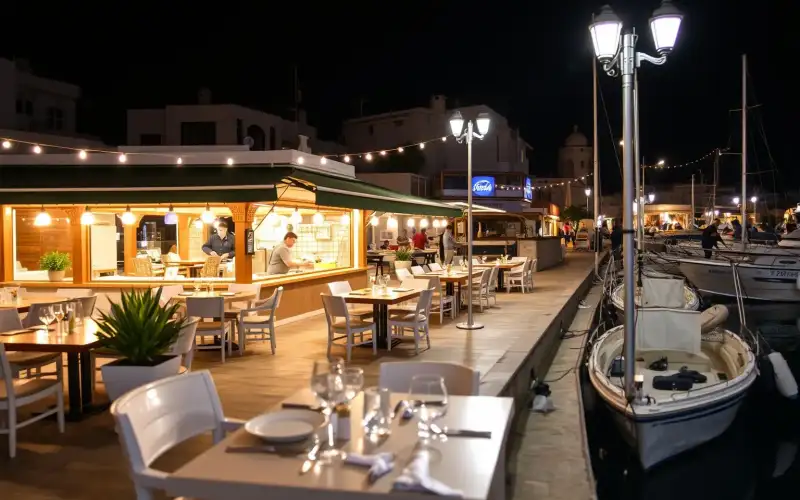
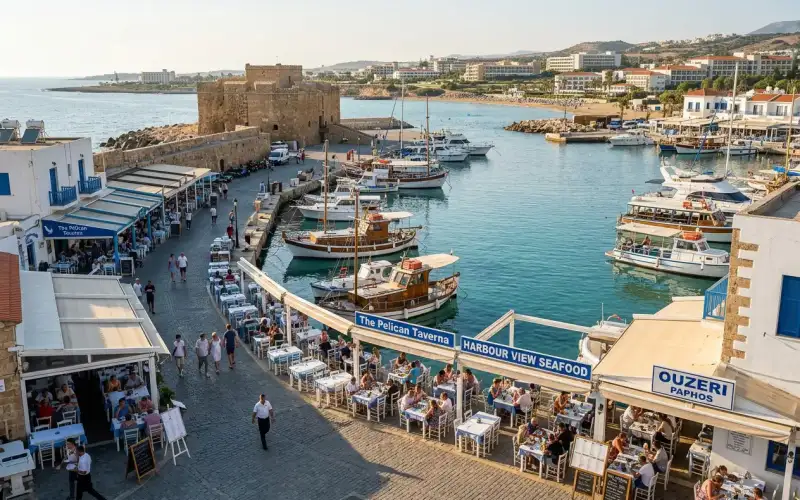
I sat at a wobbly plastic table on the Paphos waterfront last March, watching a pelican steal calamari from a tourist's plate while the owner laughed and poured complimentary retsina. That moment—chaotic, unscripted, utterly Cypriot—encapsulates what makes harbour dining here either brilliant or maddening. After twenty-plus years and roughly three hundred harbour meals, I've learned to distinguish between the two.
The Paphos Harbour has transformed considerably since 2020. COVID shuttered the weak operators, renovations brought better kitchens, and the casual arrival of younger chefs has lifted standards without destroying authenticity. Yet the trap remains obvious: proximity to water and tourists doesn't guarantee edible fish. I've paid €38 for sea bream that tasted like it died of old age.
This is my unvarnished assessment of where to eat seafood in Paphos Harbour during 2026, organised by budget and honest about what you'll actually get.
1. Pelican Restaurant—The Consistent Performer
Pelican sits at the eastern end of the harbour, directly opposite the medieval castle. The dining room is split between waterfront tables (noisy, touristy, excellent people-watching) and interior seating (quieter, marginally better for conversation). I've eaten here perhaps forty times across two decades, and the consistency is remarkable for a harbour restaurant.
The grilled octopus (€16) remains the benchmark dish. Owner Christos sources from the same supplier—a fisherman named Yiorgos who works out of Latchi—and the difference shows immediately. The flesh is tender without being mushy, charred properly at the edges, finished with lemon and olive oil that tastes like it cost more than the octopus itself. The sea bream (€28 for two) is reliable: whole fish, grilled over charcoal, properly salted, served with boiled potatoes and village salad. No pretence, no foam, no microgreens.
Pelican's weakness is their mussels. The kitchen occasionally oversalts them, and I've had two occasions where they tasted faintly metallic—suggesting poor storage or sourcing. Avoid them unless you've seen the daily catch board and Christos personally recommends them. Their fish soup (€12) is genuinely excellent in winter months (November to March); in summer it's thin and forgettable.
Prices are fair. A two-person meal with fish, salad, bread, and wine costs €45–55. Service is attentive without hovering. Tables are booked by 7:30 p.m. in summer; walk-ins queue from 8 p.m. onwards.
2. Demitri's Taverna—The Locals' Choice
Demitri's occupies a corner position on the western side, partially hidden behind the fish market. Most tourists never find it, which is precisely why locals eat there. The dining room is cramped, the chairs don't match, and the owner—Demitri himself, now seventy-eight—still insists on personally greeting regulars whilst simultaneously arguing with his son about kitchen procedures.
The fish here is exceptional value. Their grilled red mullet (€14 for two fish) is the best I've eaten in Paphos Harbour. The flesh is delicate, the skin crisps beautifully, and the sourcing is impeccable—Demitri buys directly from boats at 6 a.m. three times weekly. Their clams saganaki (fried in cheese batter, €9) are indulgent nonsense, but they work. The mussels here are superior to Pelican's—smaller, sweeter, properly stored.
What you won't find at Demitri's: refinement, wine pairings, or staff who speak fluent English. The wine list consists of three local reds, two whites, and retsina. The menu is handwritten on a board in Greek and broken English. This is precisely why it's excellent.
A full meal—fish, meze, salad, wine, coffee—costs €30–38 per person. Booking is essential in summer; the restaurant seats perhaps thirty people and turns over once nightly. Demitri closes Mondays and takes August off entirely.
3. Nereida—The Fine Dining Option
Nereida represents a different category entirely. Opened in 2023 by a chef trained in Athens and London, it's the only Michelin-tracked restaurant in the harbour (no star yet, but on the radar). The dining room is sleek without being sterile: white tablecloths, proper glassware, a sommelier who actually knows wine.
The menu changes seasonally. During my March 2026 visit, the grilled sea bass with sea urchin foam and crispy chickpea skin (€42) was genuinely innovative without descending into gimmickry. The raw fish carpaccio (€16 for starter) showcases impeccable sourcing—the fish is so fresh it tastes almost mineral. Their signature dish, a whole grilled lobster with saffron butter and roasted fennel (€58), is worth the price, though I'd argue the value proposition weakens above €40 per dish.
Nereida's weakness is inconsistency. I've had two disappointing visits where the kitchen seemed distracted. The sea urchin pasta (€28) arrived underseasoned on one occasion. Service can be slow on busy nights—I waited forty minutes between courses in July 2025. The wine list is ambitious but occasionally precious; the markup on European wines is steep.
A full fine dining experience costs €85–120 per person with wine. Booking is mandatory; they take reservations online via their website. Closed Sundays and Mondays.
4. Budget Harbour Eating—The €12-18 Range
Not every meal needs to be an occasion. Several harbourside establishments serve perfectly edible fish at working-class prices.
- Thalassa Grill (eastern end, next to the car park): Grilled fish by weight, €18–24 per kilo. The quality varies depending on the daily catch, but the grilled sea bream is reliable. Plastic chairs, no ambiance, excellent value. Closed Tuesdays.
- Yiorgos Fish Taverna (western side, near the old boat yard): Fried fish speciality. The kalamari (€12) is crispy and properly drained. The fish soup (€10) is basic but warming. Expect noise and crowds; this is where construction workers eat lunch.
- Maria's Meze House (tucked behind the main harbour): Not exclusively seafood, but their grilled octopus (€13) and shrimp saganaki (€11) are excellent. The meze platters (€28–35 for two) offer value if you want variety over specialisation.
These establishments don't take reservations. Arrive by 12:30 p.m. for lunch or after 9 p.m. for dinner to avoid peak crowds.
5. Seasonal Considerations—When to Eat What
Paphos Harbour seafood varies dramatically by season. Understanding this prevents disappointment and poor value.
| Season | Best Fish | Avoid | Price Trend |
|---|---|---|---|
| November–March | Sea bream, red mullet, grouper | Squid (poor quality) | €2–4 cheaper per dish |
| April–June | Lobster, sea bass, shrimp | Nothing particular | Fair pricing |
| July–August | Everything available | Tourist trap restaurants | €4–6 premium added |
| September–October | Octopus, cuttlefish | Mussels (poor condition) | €1–3 premium |
Winter is genuinely the best season for serious seafood eating. The catch is superior, prices are lower, and restaurants are less crowded. July and August attract package tourists and cruise ship day-trippers, pushing prices up and quality down across the board.
6. What to Avoid—The Tourist Traps
Several harbourside establishments trade on location and lazy tourism. I've eaten at them so you don't have to.
Harbour View Taverna (large, obvious, prime waterfront position): The sea bream I ate here in 2024 was frozen, poorly thawed, and tasted like cardboard. Prices are €35–45 per main course. The wine list is marked up 300%. The staff are trained to upsell. Avoid entirely.
The Captain's Table (corner position, blue awning): Adequate meze, genuinely poor fish. Their grilled octopus is rubbery; their fish soup tastes like it's been simmering for three days. The ambiance is pleasant, which is precisely why tourists sit here. You're paying for the view, not the food. Not recommended.
Sunset Grill (western end): This restaurant has changed hands three times since 2023. The current iteration serves frozen fish presented as fresh. I watched them remove fish from a freezer and grill it whilst claiming it was
Comments (4 comments)