
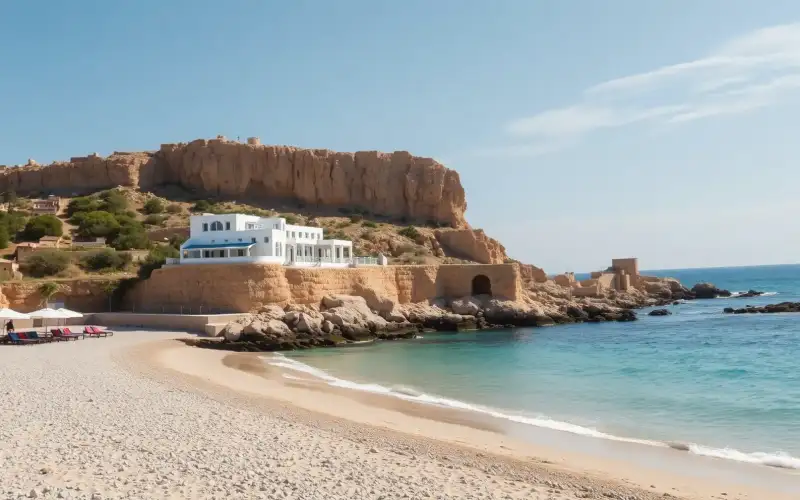
I arrived in Paphos on a grey October afternoon in 2014, clutching a folder of house-hunting particulars and absolutely no idea what I was walking into. Within a week, I'd found my villa. Within a month, I'd discovered why locals spend half their lives on the beach. Twelve years on, I've swum at nearly every accessible stretch of sand within an hour's drive, and I've watched some transform entirely—new facilities appear, others fade, Blue Flag status comes and goes like the tide itself.
The beaches near Paphos aren't all created equal. Some are heaving with sunbeds and Greek tavernas by 10am. Others sit quiet until September, when the crowds thin and the water is still warm enough to make you forget it's autumn. This ranking reflects what matters to visitors like yourselves: accessibility, water quality, facilities, and that indefinable thing—whether you'll actually want to go back.
1. Coral Bay (Peyia)
Coral Bay sits about 12 kilometres north of Paphos town centre, a curved crescent of golden sand backed by low cliffs and sheltered from the worst of the wind. It's held Blue Flag status consistently since 2010, and for good reason. The beach itself is roughly 300 metres long, wide enough that even in July you can find space without feeling wedged between strangers.
The water here is exceptionally clear—I've swum here in June and seen my feet at three metres depth. The seabed slopes gently, making it genuinely safe for older swimmers and those less confident in the water. There are proper changing facilities, showers, and a lifeguard station staffed daily from May through September. The tavernas lining the back aren't cheap—expect to pay €18–24 for a main course—but the food is competent and the views are pleasant.
Parking is straightforward: a large car park sits directly behind the beach, €2 per day in summer, free in winter. The drive from Paphos town takes about 20 minutes via the coastal road. Go early if you're visiting in July or August; by noon the beach fills up quickly. October through April is genuinely peaceful, though the water temperature drops to around 16°C by December.
2. Lara Beach (Akamas Peninsula)
Lara sits on the Akamas Peninsula, roughly 35 kilometres north of Paphos, and it's one of the few beaches in Cyprus where loggerhead and green sea turtles still nest. The beach itself is a long, wild sweep of sand backed by low dunes and virtually no development. There's a small visitor centre run by the Cypriot Wildlife and Plants Conservation Society, which operates May through October.
This isn't a beach for those seeking tavernas and sunbeds. There are no facilities beyond basic toilets and a small kiosk selling drinks. What you get instead is space, silence, and the genuine sense of being somewhere untouched. The water is clean and calm, sheltered by the peninsula's curve. In June and July, the visitor centre organises evening turtle-watching excursions—you'll pay €15 per person and stand a reasonable chance of seeing nesting females if you're patient and quiet.
The drive takes 50 minutes from Paphos town along a partly unpaved road. Four-wheel drive isn't essential, but a normal car will get dusty. There's a car park near the visitor centre (€2 in summer). The beach is best visited April through May or September through October, when temperatures are moderate and the turtles are most active. Bring water and sun protection; there's nowhere to buy either once you're there.
3. Pachyammos Beach
Pachyammos lies just south of Paphos town, a 10-minute drive or a 45-minute walk along the coastal path from the old harbour. It's a sheltered pebble and sand beach, quite small—perhaps 150 metres long—but remarkably peaceful given its proximity to town. The water is clean and calm, protected by the curve of the coast.
The beach has a single taverna, Taverna Pachyammos, which has been operating since the 1980s and serves decent fish and meze. There are basic changing facilities and showers. Parking is free and plentiful on the road above the beach. It's popular with locals rather than tourists, which tells you something about its character. The walk from town is lovely if you have time; the coastal path passes through an old cemetery and offers views across the bay to the Akamas Peninsula.
This is an ideal beach if you want to combine a morning's exploration of Paphos town with an afternoon swim. The water temperature is pleasant May through October. Winter swimming is possible but chilly.
4. Faros Beach (Paphos Lighthouse)
Faros sits at the southern edge of Paphos town, immediately beneath the old lighthouse. It's a small, sandy beach, no more than 100 metres long, backed by the lighthouse complex and a handful of tavernas. The water is exceptionally clear—the seabed here is rocky, which keeps sand out and visibility excellent.
This beach is best visited outside peak summer. In July and August it becomes congested with day-trippers and tour groups. Come in May, June, or September and you'll have a very different experience. The nearby tavernas are tourist-focused and prices reflect that—€20–28 for a main course—but the location is undeniably photogenic, especially at sunset.
There's a car park directly above the beach (€1.50 per day in summer), and you can walk from Paphos town centre in about 15 minutes. The water temperature is warm May through October, dropping below 16°C in winter. Facilities are basic but adequate.
5. Blue Lagoon, Akamas Peninsula
The Blue Lagoon sits on the western edge of the Akamas Peninsula, accessible by boat from Paphos harbour (roughly 45 minutes) or by a challenging 90-minute walk along the coastal path. The water here is an almost unbelievable shade of turquoise, particularly in June and July when the light is highest and clearest.
There are no facilities whatsoever—no tavernas, no toilets, no shade beyond what the cliff provides. You must bring everything you need. The beach itself is tiny, perhaps 50 metres long, with fine sand and clear water ideal for snorkelling. The cove is sheltered and the water remains calm even when the sea elsewhere is rough.
Most visitors arrive by boat. The main operators charge €25–35 per person for a morning or afternoon trip, usually departing around 10am. These trips typically include a stop for swimming and snorkelling. If you walk, wear proper footwear—the path is rocky and rough in places. The Blue Lagoon is best visited May through September; access becomes difficult in winter due to rough seas and weather.
6. Petra tou Romiou (Aphrodite's Rock)
Petra tou Romiou, or Aphrodite's Rock, sits roughly 25 kilometres east of Paphos, a dramatic limestone formation rising from the sea. According to mythology, this is where Aphrodite emerged from the foam. The beach itself is pebbled, roughly 200 metres long, and frames the rock beautifully.
The water is clean and the setting is genuinely spectacular. However, the beach can be windy—the open aspect means it catches the prevailing westerlies—and the pebbles are uncomfortable to lie on for extended periods. The seabed drops steeply, which some swimmers find off-putting. There are no facilities on the beach itself, though a large car park sits on the road above (€1.50 per day), with a couple of tavernas nearby.
This is more a destination for photographs and a quick swim than a full beach day. The drive from Paphos takes about 35 minutes. The beach is accessible year-round, though it's most pleasant May through September. Go early in the morning to avoid tour groups, which typically arrive mid-morning and stay until early afternoon.
7. Avaka Beach
Avaka lies on the Akamas Peninsula's southern coast, roughly 30 kilometres from Paphos town, accessed via a steep path down the cliffside. It's a small, sandy beach backed by dramatic cliffs, with clear water and minimal development. There are no facilities, no tavernas, and no crowds.
The path down takes 15–20 minutes and is steep in places—proper footwear is essential. The reward is solitude and a genuinely wild beach experience. The water is clean and sheltered by the cliff. This is an excellent choice if you want to escape the summer crowds entirely. Bring water, sun protection, and snacks.
The drive from Paphos takes about 45 minutes. Parking is available on the road above the beach. Avaka is best visited April through June or September through October, when temperatures are moderate and the path is less treacherous.
8. Geroskipou Beach
Geroskipou lies immediately south of Paphos town, a long sandy beach stretching for roughly 800 metres. It's popular with families and local residents, backed by a promenade with restaurants, cafes, and shops. The water is generally clean, though it can be a bit murky in summer when the sea is warmest and most disturbed.
The beach has full facilities: changing rooms, showers, lifeguards (May–September), and plenty of parking (€1.50 per day in summer). There are numerous tavernas along the promenade offering everything from traditional Cypriot meze to international cuisine. Prices are moderate—€12–18 for a main course. This is a good beach for families with children, as the shallow water and sandy bottom are ideal for young swimmers.
The drive from central Paphos is about 10 minutes. The beach is accessible year-round, though it's most pleasant May through October. In high summer it becomes quite busy, but the length means there's usually space to find a quiet spot.
9. Kato Paphos Beach
Kato Paphos, or Lower Paphos, sits directly adjacent to the archaeological site and the old harbour. It's a small, sandy beach, perhaps 150 metres long, backed by the waterfront promenade with its tavernas, bars, and restaurants. The water is generally clear, though it can be busy with boats in summer.
This beach works best as part of a day exploring Paphos town and the archaeological sites. You can combine a morning's sightseeing with an afternoon swim. The facilities are good—changing rooms, showers, and plenty of tavernas. Parking is available nearby (€1.50–2 per day). The beach is accessible year-round, though it's most pleasant May through October.
10. Pomos Beach
Pomos lies roughly 40 kilometres north of Paphos, on the road towards Polis. It's a long, sandy beach backed by low dunes and a handful of tavernas. The water is clean and calm, sheltered by the curve of the coast. The beach is less developed than Coral Bay or Geroskipou, giving it a quieter, more local feel.
There are basic facilities: changing rooms, showers, and a couple of tavernas. Parking is free on the road above the beach. The drive from Paphos takes about 50 minutes. Pomos is best visited outside peak summer; in July and August it can become quite busy. May, June, September, and October are ideal months.
How We Chose
This ranking prioritises several factors: water quality (measured by Blue Flag status where awarded, and visual clarity), accessibility (parking, distance from Paphos, condition of roads), facilities (changing rooms, showers, lifeguards, nearby food and drink), and what I call the character factor—whether a beach feels worth returning to.
Blue Flag status matters, but it's not everything. A beach loses Blue Flag status for various reasons—sometimes bureaucratic, sometimes due to temporary issues. Equally, some excellent beaches lack the formal designation because they're too remote or lack the infrastructure Blue Flag requires. I've weighted water clarity, safety, and the practical experience of visiting more heavily than the label itself.
Distance from Paphos town matters to most visitors. Beaches within 20 kilometres are easily accessible for a half-day visit. Those between 20 and 40 kilometres suit a full day. Beyond 40 kilometres, you're committing to a significant drive, which works for some but not others.
Facilities vary dramatically. Some visitors want sunbeds, tavernas, and changing rooms. Others actively avoid them. This ranking acknowledges both camps—the top entries offer good facilities, while lower entries include wilder, quieter alternatives.
Honorable Mentions
Several beaches didn't quite make the top 10 but deserve mention. Latchi, roughly 50 kilometres north, is a working fishing village with a small beach and excellent seafood tavernas—worth the drive if you want authenticity over facilities. Pafos Beach, directly south of Paphos town, is convenient and popular with families but less distinctive than Geroskipou. Chrysochou Bay, near Polis, offers long sandy beaches and a more laid-back atmosphere than the main Paphos beaches, though the drive is substantial.
Final Thoughts
The beaches near Paphos offer something for everyone: Blue Flag facilities and clear water for those seeking comfort and safety; wild, remote coves for those seeking solitude; and everything in between. The ranking shifts slightly year to year as facilities improve or decline, as Blue Flag status changes, and as the sea itself behaves differently.
The best beach, ultimately, is the one that suits your mood and circumstances on the day you visit. I've swum at all of these regularly over 12 years, and I still discover new reasons to return to each one. The Akamas Peninsula beaches teach you something about wildness and effort; Coral Bay reminds you why tourists come; Pachyammos shows you how locals actually spend their time. That variety, that range of experiences within an hour's drive, is what makes the Paphos coast genuinely special.
Visit in May or September if you can. The water is warm, the crowds are manageable, and the light is perfect. Bring proper sun protection—the Mediterranean sun is deceptive—and water shoes if you're planning to snorkel. Most importantly, go early. The difference between arriving at 9am and 11am in summer is the difference between a pleasant morning and a crowded afternoon.

Comments (4 comments)