
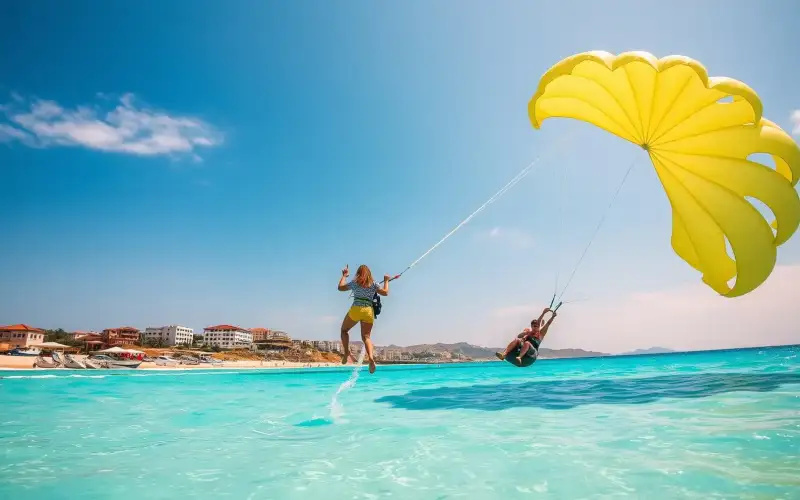
I watched a middle-aged couple from Surrey attempt parasailing for the first time last summer, their faces a mixture of terror and exhilaration as they lifted 150 metres above Paphos Bay. By the time they splashed down, they were already booking the same experience again. That moment encapsulates what makes Paphos such a compelling destination for water sports enthusiasts—the combination of Mediterranean warmth, reliable conditions, and operators who've perfected their craft over decades.
Paphos has transformed into one of Cyprus's premier watersports hubs, offering everything from casual banana boat rides to technical scuba diving expeditions. Yet many British visitors arrive without understanding the pricing structure, seasonal variations, or which operators genuinely prioritise safety over turnover. This guide addresses those gaps, drawing on two decades of observing how these activities actually operate on the ground.
What You'll Learn in This Guide
By the end of this article, you'll understand the complete landscape of watersports in Paphos, from parasailing and jet skiing to scuba diving and windsurfing. You'll know realistic pricing for 2026, which locations offer the best value and conditions, how to select reputable operators, and what safety standards you should expect. More importantly, you'll grasp the seasonal rhythms that determine when certain activities run smoothly and when they become problematic.
The guide covers both the obvious tourist activities and less-publicised options that serious water enthusiasts often discover only through local knowledge. You'll also find practical information about equipment rental, certification requirements, and how to avoid the pitfalls that catch unprepared visitors off guard.
Prerequisites and Essential Information
Before booking any watersport in Paphos, understand these fundamental requirements and considerations:
- Age and fitness requirements: Most activities have minimum age limits (typically 5-8 years for banana boats, 16-18 for jet skiing, 10+ for parasailing). Medical conditions affecting your heart, lungs, or joints require medical clearance before diving or high-impact activities.
- Swimming ability: You don't need to be Olympic-standard, but genuine comfort in water is essential. Operators conducting proper safety briefings will assess this honestly; if they skip it, walk away.
- Certification for diving: Recreational scuba requires Open Water certification (PADI or equivalent). Operators offer beginner courses (typically €120-180), but these take 3-4 days. Discover dives (supervised shallow dives for non-certified swimmers) cost €60-90 and don't require certification.
- Seasonal considerations: May to September offers calm seas and warm water (25-28°C). October to April brings rougher conditions, though winter diving is actually excellent for experienced divers. Many operators reduce services November to February.
- Booking strategy: Book directly with operators rather than through hotel concierge services, which add 20-30% markup. Reputable operators have their own websites and take online bookings.
- Insurance and liability: Most operators include basic accident insurance, but verify this. Travel insurance covering water sports activities is strongly recommended, particularly for diving and jet skiing.
- Currency and payment: Prices quoted here are in euros. Most operators accept card payments, but smaller outfits may demand cash (no discount offered, despite what some tourists assume).
- Equipment standards: Check that life jackets fit properly and that wetsuits (if provided) aren't threadbare. Rental equipment should be visibly maintained and recently serviced.
- Language considerations: English is widely spoken by watersports operators in Paphos, but learning basic Greek phrases for safety instructions is sensible.
- Sun protection: The Cypriot sun reflects intensely off water. SPF 50+ sunscreen applied every two hours is non-negotiable, even for short activities.
- Timing for booking: Book parasailing, jet skiing, and banana boats 1-2 days in advance during peak season (July-August). Diving trips should be booked the day before to check weather conditions.
- Transportation to sites: Most operators offer hotel pickup for €5-8 per person, or you can drive/taxi independently. Parking at Paphos harbour costs €1.50 per hour.
Step-by-Step Guide to Each Watersport
Step 1: Parasailing – The Paphos Classic
Parasailing dominates the Paphos watersports scene, with around 15 licensed operators running from the main harbour and Coral Beach. The experience involves being towed behind a speedboat while suspended from a parachute, typically at heights of 60-150 metres.
Location and operators: Paphos Harbour is the primary hub, with Paphos Water Sports and Aqua Sports operating the largest fleets. Coral Beach (north of Paphos town) offers a quieter alternative with fewer crowds. Both areas have identical conditions and pricing.
Pricing for 2026: Standard 12-15 minute parasailing costs €50-65 per person. Tandem flights (two people on one parachute) run €90-120. Premium options including photo packages and longer flight times reach €80-100. Prices rise 10-15% during July-August peak season.
What to expect: Arrive 15 minutes early for safety briefing and life jacket fitting. The boat ride to launch point takes 10-15 minutes. Ascent is gradual; most people feel secure within the first minute. Descent is equally controlled. Total experience duration is 30-45 minutes including boat time.
Safety considerations: Reputable operators use modern parachutes inspected monthly and speedboats serviced weekly. Ask about the operator's safety record and insurance coverage. Avoid operators rushing through briefings or using visibly worn equipment. Wind conditions matter—operations cease when sustained winds exceed 25 knots, usually mid-afternoon in summer.
Step 2: Jet Skiing – Speed and Control
Jet ski rentals operate from Paphos Harbour and Coral Beach, with guided tours and self-drive options available. This is the most adrenaline-intensive mainstream watersport in Paphos.
Location and operators: Paphos Water Sports (Harbour) and Aqua Sports (Coral Beach) dominate the market. Both maintain modern Yamaha and Sea-Doo machines, typically 2-3 years old. Smaller operators exist but often skimp on maintenance.
Pricing structure: Self-drive jet ski rental costs €60-80 for 30 minutes, €100-140 for one hour. Guided tours (you ride as passenger) cost €50-70 for 30 minutes. Fuel surcharges may apply if you rent for extended periods. Two-person machines cost 20% more than single-rider models.
Requirements and process: You must be 16+ years old (18+ for solo riding at some operators), hold a valid driving licence, and sign liability waivers. A 15-minute safety briefing covers throttle control, emergency procedures, and designated riding zones. The riding area extends roughly 2 kilometres offshore, with buoys marking boundaries.
Realistic experience: First-time riders should start with 30 minutes. The machine responds instantly to throttle input, which surprises many people accustomed to cars. Speed reaches 40-50 knots easily, generating substantial spray. Most riders develop confidence within 10 minutes and push harder thereafter. Fatigue is real—arms and shoulders tire noticeably.
Safety essentials: Life jackets are mandatory and properly fitted. Operators should brief you on what to do if you fall off (you will, statistically). Modern jet skis have engine cutoff switches attached to your wrist, killing the engine if you're separated from the machine. Collision risk with other jet skis is minimal due to designated zones, but watch for fishing boats near the harbour.
Step 3: Banana Boat Rides – Family Fun
Banana boats are inflatable tubes towed behind speedboats, accommodating 4-8 passengers. This is the most accessible watersport, suitable for ages 5-75 with basic swimming ability.
Locations: Every beach with watersports infrastructure offers banana boat rides. Paphos Harbour, Coral Beach, Lara Beach, and Chloraka Beach all have operators. Harbour location is most convenient for town-centre accommodation.
Pricing: Standard 15-minute rides cost €20-30 per person. Group discounts apply for 6+ people (typically 10% reduction). Premium rides with experienced drivers attempting tricks (sharp turns, brief air time) cost €35-45. Family packages bundling banana boat with parasailing or jet ski rental offer 15-20% savings.
What happens: You board the banana boat at the beach, secure yourself with handles, and the speedboat accelerates gradually. Initial acceleration is gentle, building to speeds creating spray and bouncing. Experienced drivers execute coordinated turns that slide the tube sideways—thrilling but not dangerous. Rides rarely exceed 15 knots sustained speed.
Safety profile: Banana boats have an excellent safety record. Life jackets are provided and mandatory. The main risk is falling off, which is intentional fun rather than genuine danger. Operators should brief you on proper seating and handle-holding. Children under 8 should sit between adults, not on the edges.
Step 4: Scuba Diving – Technical but Accessible
Paphos offers exceptional diving, with reefs, wrecks, and underwater caves within 15-30 minutes of the harbour. The area suits beginners and advanced divers equally.
Certification requirements: Open Water certification (PADI or equivalent) is required for independent diving. Operators offer certification courses over 3-4 days for €150-220, including classroom, confined water, and open water dives. Discover dives (non-certified) cost €70-100 and involve supervised shallow dives (max 12 metres) with an instructor.
Dive sites and pricing: Popular sites include the Paphos Reef (shallow, abundant fish), Wreck of the Akamas (45 metres, advanced), and Caves of Peyia (30 metres, scenic). Guided dives cost €60-90 per person including equipment rental. Dive packages (3-5 dives) reduce per-dive cost to €50-70.
Operators: Paphos Diving Centre and Nautilus Diving are the established operators with excellent safety records. Both operate modern equipment (regulators, tanks, BCDs serviced monthly) and employ experienced instructors. Smaller operators exist but verify their credentials.
Seasonal considerations: Summer diving (May-September) offers warm water (25-28°C) and excellent visibility (30+ metres). Winter (October-April) brings cooler water (15-18°C) requiring 5mm wetsuits, but visibility remains good and marine life is more active. Autumn (September-October) is optimal—warm water and reduced crowds.
Safety standards: Reputable operators conduct thorough pre-dive briefings, check your certification level, and assess your fitness. They maintain conservative depth limits for beginners and never rush dives. Ask about their incident history and insurance coverage. Avoid operators pressuring you to dive beyond your comfort level.
Step 5: Windsurfing and Stand-Up Paddleboarding
Paphos's northern beaches offer reliable wind conditions for windsurfing, while calmer southern beaches suit paddleboarding.
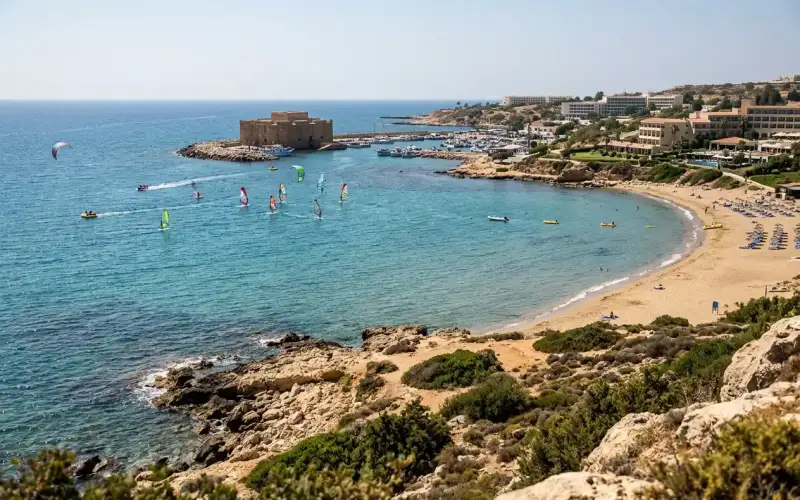
Windsurfing: Coral Beach and Lara Beach attract windsurfing enthusiasts, particularly April-October when thermal winds develop. Equipment rental costs €40-60 for 2 hours, €70-100 for full day. Lessons from qualified instructors run €50-80 per hour. Intermediate to advanced riders dominate; beginners should expect a steep learning curve.
Stand-up paddleboarding (SUP): Available at most beaches, SUP suits all fitness levels. Equipment rental costs €25-40 for 2 hours, €50-70 for full day. Guided tours exploring coastal caves and rock formations cost €60-90 per person and last 2-3 hours. This is the most meditative watersport option and increasingly popular with 50+ visitors.
Conditions and timing: Morning sessions (7-11am) offer calmest water and fewest crowds. Afternoon winds strengthen, benefiting windsurfers but challenging SUP paddlers. Book both activities in advance during July-August.
Troubleshooting Common Issues
Rough seas and cancellations: Watersports operators cancel activities when seas exceed safe limits. This happens 5-10 days annually, typically February-March. Reputable operators reschedule you free of charge; avoid those demanding payment for rescheduled dates. Check cancellation policies before booking.
Equipment problems: Faulty life jackets, leaking wetsuits, or poorly maintained machines do occur. Inspect equipment before committing to payment. Request replacements without argument; operators should accommodate this immediately.
Operator disputes: If an operator behaves unsafely or acts unprofessionally, report them to the Cyprus Tourism Organisation. Document incidents with photos and names. The tourism board takes complaints seriously and investigates.
Physical discomfort: Jet skiing causes arm fatigue; banana boats cause lower back strain from impact; diving causes ear pressure issues. Communicate discomfort to operators immediately. They can adjust your experience or offer refunds.
Seasickness: 10-15% of participants experience nausea during boat-based activities. Eat light meals 2-3 hours before activities, take ginger supplements, and focus on the horizon during initial acceleration. Seasickness medication (dramamine) taken 30 minutes prior helps significantly.
Conclusion: Planning Your Paphos Watersports Experience
Paphos delivers genuine watersports variety at reasonable European pricing. The key to a satisfying experience lies in selecting reputable operators, understanding what each activity genuinely involves, and matching activities to your actual fitness and comfort levels. That Surrey couple I mentioned earlier spent €340 total on their parasailing, jet skiing, and banana boat afternoon—memorable value for experiences they'll discuss for years.
Book activities directly with operators rather than through intermediaries, inspect equipment before committing, and never feel pressured to exceed your comfort limits. The Mediterranean doesn't reward bravado, but it generously rewards sensible preparation. Start with banana boats or SUP paddleboarding if you're uncertain about water comfort, graduate to parasailing or guided diving once you've built confidence. Paphos's operators have refined these experiences to the point where they're simultaneously thrilling and reassuringly safe—which is precisely why so many British visitors return year after year.
Comments (2 comments)