

I spent my first week in Paphos in 2013 in a four-star hotel near the harbour, and I remember thinking: lovely views, but I'm paying £180 a night to eat breakfast with forty strangers. By week two, I'd moved into a small villa in Tala, five kilometres inland, and suddenly I had a kitchen, a garden, and quiet mornings. That single decision reshaped how I've travelled ever since. The choice between a villa and a hotel isn't trivial—it affects not just your comfort but your entire experience of Cyprus.
For British visitors planning a Paphos holiday in 2026, the accommodation question has become genuinely complex. The villa rental market has exploded over the past decade, and standards vary wildly. Hotels, meanwhile, have evolved too. Some are now offering serviced apartments. Others have shrunk their all-inclusive packages. This guide cuts through the noise and helps you decide what actually suits your trip.
Understanding the Core Difference
A hotel is a transactional relationship. You pay for a room, housekeeping, and access to facilities. Staff manage everything. You're not responsible for anything beyond your belongings. A villa or apartment is semi-autonomous. You have your own space, your own kitchen, and significantly more control. You're also responsible for more—how you keep the place, when you collect keys, how you handle problems.
The psychological difference matters more than people realise. In a hotel, you're a guest in someone else's business. In a villa, you're temporarily a resident. Some people find that liberation; others find it exhausting. Neither is wrong.
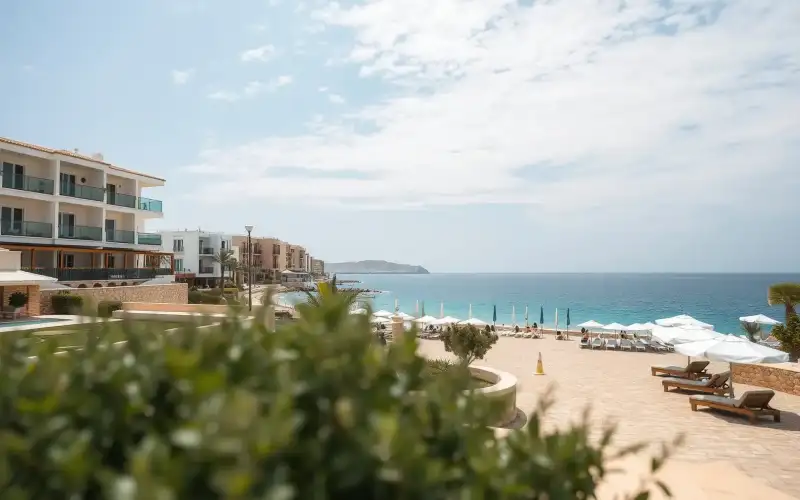
Hotels in Paphos range from budget chains (Coral Beach, around £60–90 per night for a double) to luxury resorts (Annabelle, Elysium, pushing £250–400 per night). Villas typically run £400–1,200 per week for a two-bedroom property, which breaks down to roughly £57–170 per night depending on season and location. That's deceptively similar to hotel pricing, but the maths change dramatically once you factor in group size and meal costs.
The Financial Reality: When Villas Actually Save Money
Let's be concrete. A couple spending two weeks in Paphos in June 2026:
- Hotel scenario: £120 per night × 14 nights = £1,680. Breakfast included. Lunch and dinner out: conservatively £35 per person per day × 2 people × 14 days = £980. Total: £2,660.
- Villa scenario: £700 per week × 2 = £1,400. Groceries for breakfast and lunch at home, dinner out 4 nights per week: roughly £25 per person per day × 2 × 14 = £700. Total: £2,100.
The villa saves £560, or 21%. But that assumes you actually cook. If you eat out every night, the villa saves nothing and costs more because you're paying rent on an unused kitchen.
For a family of four, the advantage grows. A two-bedroom villa sleeps four comfortably; a hotel requires two rooms at £240+ per night. The villa at £700 per week suddenly looks very sensible. For a single traveller, hotels are almost always cheaper.
Here's what people often miss: villa rentals don't include utilities, Wi-Fi, or cleaning fees. A typical villa adds £80–150 per week in these charges. Some agencies bundle them; others don't. Always ask for the total, not just the nightly rate.
Privacy, Space and the Hotel Alternative
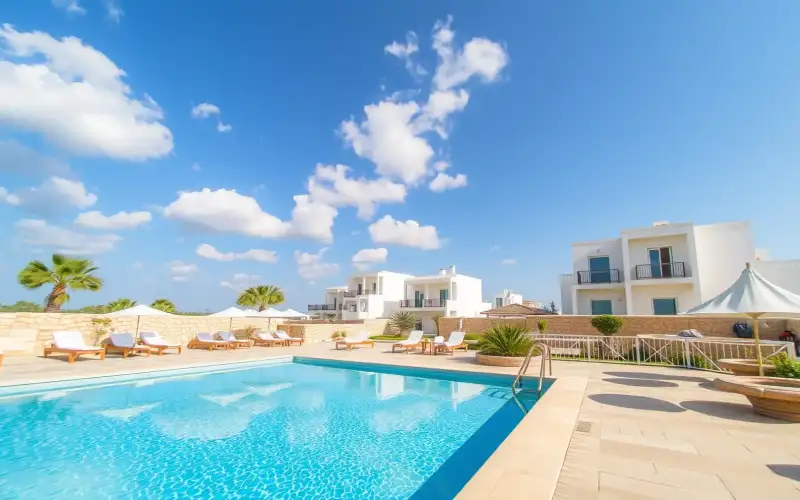
If privacy is your priority, a villa wins decisively. You have your own pool (usually), your own entrance, and nobody checking in next door. Hotel rooms, even suites, feel cramped after day three. You share walls, elevators, and common areas with dozens of strangers.
But hotels have hidden privacy advantages. Someone else cleans your bathroom. Someone else changes your sheets. You're not responsible for reporting a broken dishwasher at 9 p.m. on a Sunday. If you're tired, that matters.
A compromise exists: serviced apartments. The Paphos Arsinoe offers one-bedroom apartments with kitchens and weekly housekeeping for around £90–140 per night. You get space and some independence without full villa responsibility. They're less glamorous than villas but less lonely than hotels.
Practical Logistics: What Nobody Tells You
Here's where villa rentals reveal their hidden costs and complications.
Getting keys and checking in. Hotels: you arrive, show your passport, get a key card. Villas: you need to collect keys from an agent, often in a specific location during specific hours. If you arrive on a Sunday evening, you might be stuck. Some agencies charge £25–40 for out-of-hours key delivery. Check this before booking.
Breakdowns and emergencies. Your hotel's air conditioning fails? Reception sends someone within an hour. Your villa's air conditioning fails? You ring the agency. They ring a technician. The technician comes Tuesday. You've just spent two nights sweating. I've lived here twelve years and I've learned to test every appliance the moment I arrive—pool pump, dishwasher, heating, the lot.
Cleaning and linen. Hotels clean daily. Villas? That depends on your rental agreement. Some include weekly cleaning; others don't. If you're renting for two weeks without cleaning, you'll need to do laundry. The villa will have a washing machine, but it's your time and effort. Most people underestimate how much they'll care about this by day nine.
Location and transport. Many villas sit in residential areas—Tala, Chlorakas, Coral Bay—not on the beach or near restaurants. A hotel in Kato Paphos puts you within walking distance of tavernas and the harbour. A villa in Tala means you'll need a car or taxi to eat out. Taxis from Tala to Kato Paphos cost £7–10 each way. Over two weeks, that adds up.
The Reputation Problem: Vetting Villa Agencies
This is where I'll be blunt. The villa rental market in Paphos is partially unregulated. Some agencies are professional and transparent. Others are chaotic or dishonest. I've heard stories of people arriving to find a villa that looks nothing like the photos, or discovering undisclosed cleaning fees at check-in.
Hotels have accountability. They're registered, inspected, and reviewed by tourism boards. A bad hotel loses its rating and suffers. A bad villa agency can rebrand and disappear.
If you choose a villa, vet the agency ruthlessly:
- Check Google reviews and TripAdvisor for patterns. One bad review might be an outlier; five bad reviews about the same issue is a red flag.
- Look for how long the agency has been operating. Agencies that have been trading for 10+ years are usually safer than those that appeared last year.
- Read the cancellation policy carefully. Reputable agencies allow cancellation up to 30 days before arrival; dodgy ones demand full payment non-refundable.
- Ask for references—contact details of people who've rented the specific villa. Most agencies will provide them if asked.
- Verify the agency has a physical office in Paphos, not just a website. Visit it if possible.
- Check whether the agency is a member of ABTA (Association of British Travel Agents) or ATOL (Air Travel Organisers' Licensing). This offers some protection if things go wrong.
Reputable Paphos villa agencies include Paphos Villas (established 2001), Sunvil Holidays (UK-based, 40+ years), and Kalypso Villas. None of these are perfect, but they have track records and customer service structures. They'll answer your email within 24 hours. Dodgy agencies take days to respond, or respond with vague answers.
Seasonal Considerations: When Each Option Shines
Paphos has three seasons for British visitors: winter (November–March), shoulder (April–May, September–October), and summer (June–August).
Winter. Hotels dominate. The weather is mild (15–18°C) but unpredictable. You'll want daily housekeeping and reliable heating. Villas often lack proper winter insulation. Rental prices drop sharply—hotels offer deals, villas become cheaper—but the villa advantage shrinks because you're not using the pool or garden.
Shoulder seasons. Villas peak. The weather is perfect (22–28°C), the garden is usable, and the prices are reasonable. Hotels are busy but not rammed. This is the sweet spot for villa rentals.
Summer. Hotels have the edge again. June–August temperatures reach 32–35°C. Your villa's air conditioning becomes critical. If it fails, you're miserable. Hotels have backup systems. Villa prices also spike (sometimes double), and many British people prefer the structure of a hotel when it's scorching hot and crowded.
Group Dynamics: Size Matters
A couple or single traveller: hotel usually wins. You don't need a kitchen, you don't want to manage a property, and the hotel's daily service is worth the cost.
A family of four or five: villa wins. Two hotel rooms are expensive and awkward. A villa with a pool and kitchen is genuinely better value and more comfortable.
A large group (six or more): villa is almost mandatory. You'll need multiple hotel rooms, which becomes absurd. A large villa (three-bedroom, sleeping six to eight) costs £1,000–1,500 per week but splits across multiple people. For eight people, that's £125–190 per person per week—unbeatable value.
Friends travelling together often underestimate how much they'll appreciate shared kitchen space. You can cook one meal together, split the cost, and eat better than any restaurant offers. After three days in a hotel, groups often wish they'd rented a villa.
The Intangible Factors
Some things resist spreadsheet analysis. Hotels offer predictability and anonymity. You know exactly what you're getting. You don't have to worry about anything. For people who travel to rest, not to manage logistics, that's invaluable.
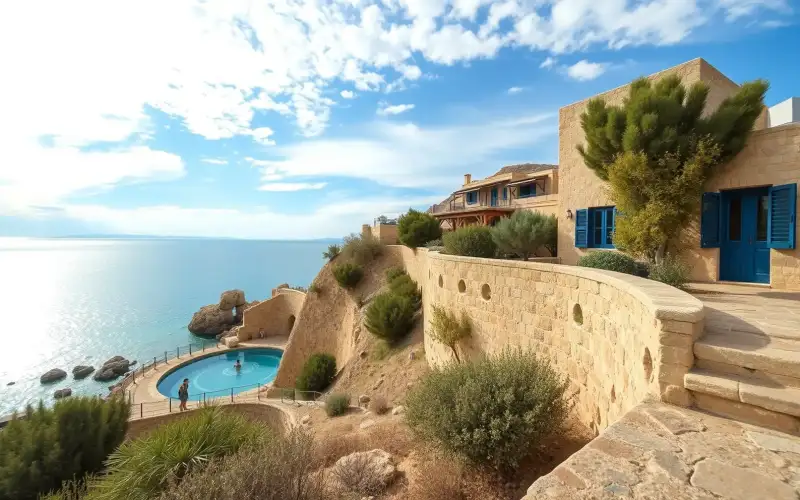
Villas offer immersion. You shop at local supermarkets, you interact with the property owner, you feel less like a tourist and more like a temporary resident. You can sit on your own terrace at 6 a.m. with a coffee and watch the sun rise over the Akamas Peninsula without another soul nearby. That matters to people who've retired or who travel slowly.
Hotels offer social connection if you want it. You'll meet other guests at breakfast, at the pool, in the bar. Villas are isolating if you're travelling alone or if you're the type who prefers solitude.
The Honest Conclusion
There's no universal answer. If you're visiting Paphos for the first time, staying two weeks, travelling as a couple, and want to experience local life, rent a villa in Tala or Chlorakas. You'll save money, gain space, and understand the place better. If you're visiting for four days, you're travelling solo, or you hate managing logistics, book a decent three-star hotel in Kato Paphos. You'll spend less time organising and more time enjoying.
The real lesson I've learned over twelve years is this: the best accommodation is the one that matches your travel personality, not the one that looks best in photos or saves the most money. Test yourself honestly. Then book accordingly.
Comments (4 comments)