
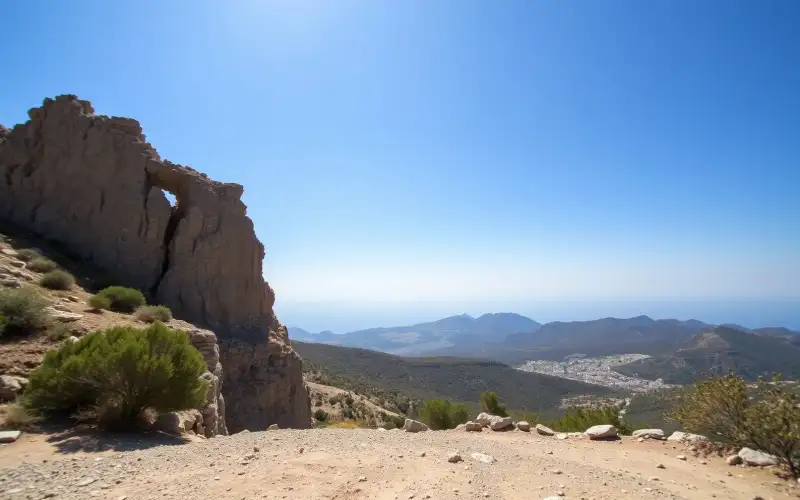
Last spring, I stood at the edge of Platres village at sunrise, watching mist roll off the Troodos peaks while a coachload of tourists was still an hour away. That's the magic of getting up early in the mountains—you get them almost to yourself. For anyone based in Paphos, whether you own a villa or visit annually, the Troodos range is your escape route when sea-level heat becomes unbearable. At 1,951 metres, Mount Olympus isn't Snowdon, but it's high enough to drop the temperature by 10°C, and the pine forests, Byzantine monasteries, and mountain villages offer something genuinely different from coastal life.
The challenge isn't finding things to do in Troodos—it's deciding whether to hire a car and explore independently, or join an organised tour and let someone else handle the mountain roads. Both have merit. I've done both ways, and I'll walk you through the actual trade-offs, not the tourism board version.
Option A: Self-Drive Troodos Adventure
Renting a car from Paphos puts you in control. The drive takes 90 minutes to reach Kykkos Monastery (the main hub), or 75 minutes to Platres if you're heading to hiking trails. You'll pay €45–€65 per day for a small automatic—standard rates in 2026—plus €8–€12 for fuel to get up and back down.
Route Planning & Logistics
The main route from Paphos is straightforward: head inland on the A6 towards Limassol, then peel off at Pano Panagia onto the E912 towards the mountains. The road quality is good—modern tarmac, clear signage in English. But here's what matters: the mountain roads themselves are narrow, winding, and occasionally steep. If you're not confident with hairpins or driving on the right, this might tip you towards a tour. Parking at major sites is free and plentiful. Kykkos Monastery has a large car park; Platres village has street parking and a small lot near the main square.
Timing is crucial. Leave Paphos between 7 and 8 a.m. if you want daylight at the top. Roads can get congested on weekends—Cypriot families head to the mountains for lunch, especially on Sundays. Weekday trips are noticeably quieter. Mobile phone signal is patchy above 1,200 metres, so download offline maps before you go. I use Google Maps offline; it's saved me more than once when trying to find a trailhead.
Kykkos Monastery & Village Exploration
Kykkos sits at 1,318 metres and is Cyprus's richest and most visited monastery. Entry is €5 per person (2026 rate). You'll spend 45 minutes to an hour inside—the main church is stunning, with Byzantine mosaics and a gold-leaf interior that's genuinely impressive. The museum wing has robes, manuscripts, and ecclesiastical silverware. Dress code: covered shoulders and knees. Trousers or long skirts; no shorts.
The real advantage of self-driving here is timing. Organised tours arrive in a block between 11 a.m. and 1 p.m. If you get there by 9:30, you'll have the courtyards nearly to yourself. The monks serve coffee and loukoumades (honey donuts) in a small café—€3 for both. It's worth lingering.
From Kykkos, drive 20 minutes downhill to Pedoulas, a traditional village with stone houses, a small folk museum (€2, worth it for the weaving looms), and a couple of tavernas serving proper mountain food. Grilled halloumi, stifado (beef stew), fresh salads. Mains run €8–€14. Then head to Moutoullas, another 15 minutes on, where there's a 12th-century church and a village square where locals actually sit—not a tourist trap.
Hiking Trails from Platres
Platres is the hiking capital of Troodos. It sits at 1,200 metres in a pine forest, and the village itself has character—proper kafeneia (coffee houses), a small supermarket, and several family-run tavernas. This is where I'd base a self-drive day if hiking is the priority.
The Caledonia Waterfall trail is the most popular: 2.5 km round trip, moderate difficulty, takes 90 minutes including stops. The path is well-marked, mostly shaded, and ends at a small waterfall and pool. Bring a swimsuit if it's warm; the water is cold but refreshing. The trail starts from a car park 500 metres north of the village centre.
For something more challenging, the Madari Ridge Walk offers panoramic views: 4 km, 2.5 hours, steep in sections. You'll reach 1,613 metres and see across to the Akamas peninsula on clear days. Start early—afternoon clouds roll in fast.
An easier option is the village walk itself: park in the square, wander the stone lanes, stop at a taverna for meze (€12–€16 for two people). No navigation required, no fitness threshold. Just atmosphere.
Seasonal Swimming & Timing
If you're visiting June to September, the mountain pools and streams are swimmable. Caledonia Waterfall has a small pool. There are also natural rock pools near Troodos village itself, 15 minutes from Platres. Water temperature peaks in August (around 18°C), which is cold but bearable if you're active. Winter (November to March) brings occasional snow above 1,400 metres—stunning but unpredictable. Spring (April–May) is ideal: warm days, cool mornings, wildflowers, and no crowds.
Self-driving costs: €50–€70 total (car rental + fuel + Kykkos entry + one meal). Time investment: 9–10 hours from Paphos, including driving. Flexibility: high. You stop where you want, eat when you want, hike or skip hikes as mood dictates.
Option B: Organised Troodos Tours
Several operators in Paphos run Troodos day trips. Prices range from €55–€85 per person, including transport, a guide, and usually Kykkos Monastery entry. Tours run daily in summer, 3–4 times per week in winter. They pick you up from your hotel around 8 a.m. and return by 5 p.m.
What's Included & What Isn't
A typical itinerary covers Kykkos Monastery (1 hour), one or two village stops (Pedoulas, sometimes Moutoullas), a short walk or viewpoint, and lunch at a taverna. Lunch is usually not included in the quoted price—budget an extra €10–€15 for a main course. Guides are knowledgeable about history and flora, and they handle all navigation. You sit back and listen.
What you don't get: flexibility. If you want to spend three hours hiking instead of 45 minutes at a viewpoint, tough. If the group wants lunch at 12:30 but you'd prefer 1 p.m., you adapt. The pace is dictated by the slowest walker and the tightest schedule. Tours also tend to hit the same spots—Kykkos, Pedoulas, maybe Troodos village—so if you've done one, you've largely done them all.
Pros of Organised Tours
No driving stress. Mountain roads are winding; some visitors find them tiring or anxiety-inducing. A coach driver does the work. No navigation required. No need to download maps or worry about mobile signal. You're on a schedule, which some people prefer—it removes decision fatigue. And if you're staying in a hotel without a car, it's your only practical option (unless you hire a taxi, which costs €80–€120 for the day).
The guide adds value if they're good. A knowledgeable guide explains the history of Kykkos (founded 1100 AD, built on a supposed icon painted by St. Luke), points out endemic plants, and tells you which villages are worth returning to. Some guides are excellent; others are rote. It's a lottery.
Cons of Organised Tours
You're locked into a schedule. Tours leave at a set time; if you oversleep or want an extra 20 minutes at a viewpoint, that's your problem. The pace suits the middle ground—too fast for the unfit, too slow for serious hikers. And you're paying per person. A family of four pays €220–€340; a self-drive car rental plus fuel and entry costs €70–€100 total. The maths favour self-driving for groups.
Lunch is often at a tourist taverna with inflated prices and mediocre food. I've been on tours where the

Comments (4 comments)