
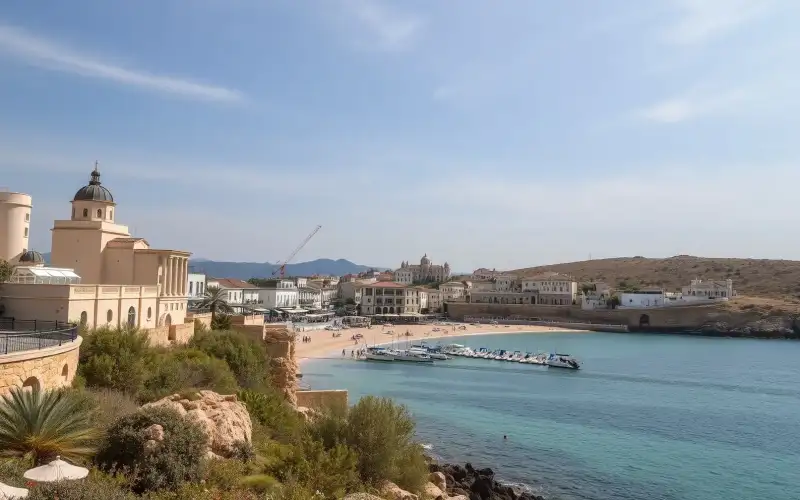
Last spring, I was sitting in a taverna near the Paphos waterfront when a British couple asked me whether they needed a visa to visit Cyprus. They'd been planning their trip for months yet hadn't checked the basics. By the end of the conversation, they had three pages of notes and a far clearer picture of what their fortnight would look like. That exchange prompted me to compile the questions I hear most often from visitors arriving at this remarkable corner of the Mediterranean. Whether you're booking flights today or still in the planning stages, these answers should smooth your path considerably.
Visa Requirements for British Travellers in 2026
This is the first question everyone asks, and the answer is straightforward if you hold a British passport. You do not need a visa to enter Cyprus for tourism purposes. You can stay for up to 90 days within a 180-day rolling period without any advance paperwork. Simply present your passport, valid for at least six months beyond your intended departure date, at the airport. Cypriot border officials are generally efficient and polite; the process at Larnaca Airport typically takes 10–15 minutes.
If you're planning to stay longer than 90 days—perhaps you're considering purchasing property or spending several months here—you'll need to apply for a residence permit. This is where things become more involved. You'll need to register with the local District Office (in Paphos, that's on Evagoras Avenue near the town centre) and provide proof of accommodation, financial means (roughly €500 per month per person), and health insurance covering Cyprus. Many British expats I know have made this transition; it's bureaucratic but entirely manageable.
One detail that catches people out: your passport must have at least two blank pages for entry and exit stamps, though in practice Cyprus often doesn't stamp on entry anymore. Still, it's worth checking before you travel.
Currency, Money and Getting the Best Exchange Rates
Cyprus uses the euro, which has been the official currency since 2008. This is one less thing to worry about if you're accustomed to eurozone travel. However, the exchange rate between sterling and the euro fluctuates, so you'll want to time your currency exchange thoughtfully.
I'd recommend ordering euros before you leave the UK rather than exchanging money at the airport. Larnaca Airport, the main entry point for Paphos-bound visitors (it's about 140 kilometres south), offers reasonable rates, but high street banks and specialist currency services like Wise or OFX typically offer better value. If you order through Wise, you can lock in the rate several days ahead, which removes uncertainty. The euro trades around €1.08 to the pound sterling as of early 2026, though this varies daily.
Once in Paphos, ATMs are abundant. Virtually every bank branch and many supermarkets have machines accepting British cards. Withdrawing cash directly often gives you a better rate than exchanging physical currency. That said, keep an eye on your bank's foreign transaction fees; some charge 2–3% per withdrawal, which adds up quickly.
Credit and debit cards are accepted almost everywhere—restaurants, hotels, shops, even some beach vendors. Contactless payments work seamlessly. However, I'd still recommend carrying some cash, particularly if you're planning to visit smaller villages or traditional tavernas away from the main tourist strips. Some family-run establishments in places like Yeroskipou or Kouklia prefer cash or offer modest discounts for it.
Understanding Local Customs and Cultural Etiquette
Paphos is welcoming to British visitors, and after 12 years here I can tell you the Cypriot temperament is generally warm and tolerant. That said, a few cultural norms are worth respecting.
Greeks and Cypriots are Orthodox Christian, and religion remains important in daily life. If you visit churches or monasteries—and I'd urge you to, given the extraordinary Byzantine heritage here—dress modestly. Women should cover shoulders and knees; men should remove hats. Some churches ask that you remove shoes; look for signs or follow the lead of locals. Photography is often prohibited inside churches, so check before you snap.
Greeting customs are more physical than in Britain. Men shake hands firmly; among friends, a kiss on both cheeks is standard. When meeting shop owners or hotel staff repeatedly, a warm greeting—even a simple




Comments (4 comments)