
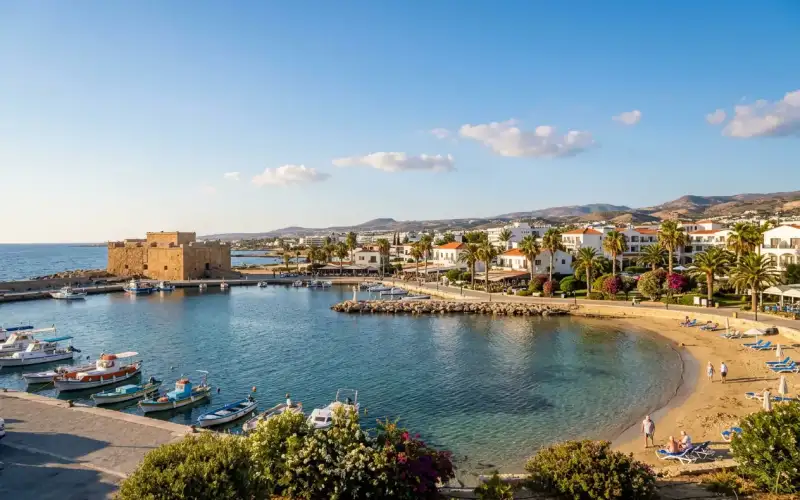
I arrived in Paphos on a grey January morning in 2014, suitcase in hand, thinking I'd spend three months here before returning to Bath. Twelve years later, I'm still here—and so are roughly 8,000 other British expats, many of them retirees who made the same leap. The irony is that Paphos wasn't on anyone's radar back then the way it is now. Today, the town has become one of Cyprus's most sought-after destinations for British pensioners, yet the reality of retirement here remains wildly misunderstood.
The question I hear most often from friends back home is simple: "Isn't it just beaches and tavernas?" The answer is both yes and no. Paphos offers something genuinely valuable for retirees—a manageable cost of living, excellent healthcare access, and a genuine sense of community among expats—but it also demands practical planning, honest conversations about isolation, and a clear-eyed assessment of your needs before you commit. This guide addresses the real questions British retirees face when considering a move or extended stay.
The Problem: Confusion About What Retirement in Paphos Actually Means
The British media paints retirement in Cyprus in broad strokes: sun, sangria, and stress-free living. Estate agents promise golden visas and property appreciation. Holiday brochures show blue waters and taverna meals. What they don't show is the 48-year-old woman I met at the Paphos Municipal Hospital who'd moved here alone, found the healthcare system bewildering, and spent her first winter in tears. Or the couple who bought a villa sight unseen, only to discover it was 45 minutes from any decent shop or medical facility.
The core problem is this: Paphos retirement planning requires solving multiple interconnected puzzles simultaneously. You need to understand residency rules that changed in 2023 and keep changing. You need to assess healthcare options that work differently than the NHS. You need to calculate a realistic cost of living—not the fantasy version estate agents quote. You need to evaluate whether you'll actually enjoy the social landscape, which is real but also somewhat insular. And you need to do all this before making a financial and emotional commitment that's difficult to reverse.
Most retirees arrive with incomplete information, make decisions based on holiday experiences rather than daily reality, and only discover the gaps when they're already committed.
Why This Matters: The Stakes Are Significant
Retirement relocation isn't like booking a holiday. You're potentially spending your final decades in a new country, managing your health, accessing your pension, and building a life from scratch in a place where you don't speak the language fluently and the systems work entirely differently.
The financial stakes are real. A villa purchase in Paphos ranges from €250,000 for a modest property inland to €800,000+ for waterfront properties in Kato Paphos (2026 prices). Rental costs for a two-bedroom apartment run €500–€900 monthly depending on location and season. If you're on a fixed pension, this matters profoundly. Healthcare costs, while lower than the UK, still accumulate—private healthcare for routine care costs €40–€80 per visit, and prescriptions aren't free.
The emotional stakes matter equally. Retirement is supposed to be about freedom and enjoyment, not regret and isolation. I've watched retirees thrive here—genuinely, visibly happier than they were in the UK—and I've watched others deteriorate into loneliness, stuck in a place they chose but don't actually like. The difference usually comes down to whether they made informed decisions or romantic ones.
The legal stakes are also significant. Residency permits, tax implications, property ownership rules, and healthcare eligibility all have real consequences. Getting these wrong costs money and creates stress.
Solution 1: Understanding Residency and Legal Status in 2026
Let's start with the framework that everything else hangs on: your legal right to be here.
As of 2026, British citizens (post-Brexit) no longer have automatic EU residency rights. You now have three main pathways to legal residency in Cyprus:
- The Temporary Residence Permit (TRP): Valid for one year, renewable annually. You need to show proof of income (currently €2,000 monthly for a single person, €2,500 for couples) and health insurance. This is the most accessible route for most retirees. Application costs roughly €100 and takes 4–6 weeks through the Civil Registry.
- The Permanent Residence Permit: Requires demonstrating €30,000 annual income (or €500,000 in property/savings) and continuous health insurance. It's permanent but requires renewal every five years. Most retirees with pensions qualify here.
- The Golden Visa (Investment Residency): Requires a €300,000 property purchase (minimum) or €500,000 investment in a business. It offers permanent residency and is marketed heavily but involves higher costs and ongoing property maintenance obligations.
My honest assessment: most British retirees should aim for the Permanent Residence Permit. It's straightforward, doesn't require massive property investment, and gives genuine security. The Golden Visa appeals to property investors more than traditional retirees.
Here's what matters: your residency status determines your access to healthcare, your tax obligations, and your ability to stay. Get it wrong and you're vulnerable to deportation or sudden cost increases. Work with a Cypriot lawyer (€300–€500 for residency paperwork) rather than trying to navigate this alone.
Tax and Pension Implications
Cyprus taxes UK pensions at a flat 0% if you're a non-resident. Once you establish residency, you'll pay Cyprus income tax (0% on the first €19,500 for single people, higher for couples). Your UK State Pension becomes taxable in Cyprus once you're resident, but at favorable rates. Private pensions and ISA withdrawals have their own rules.
This is where a tax accountant becomes essential. A good one (€400–€600 annually) saves you thousands by properly structuring your income sources. I've watched retirees pay double what they should because they didn't understand the difference between Cyprus-source income and UK-source income.
Solution 2: Healthcare—The System That Surprises Everyone
Here's what British retirees expect: healthcare similar to the NHS, free or nearly free, available instantly. Here's what they actually find: a hybrid system that's excellent but requires navigation and private insurance.
Cyprus has a public healthcare system (Gesy), introduced in 2019. As a permanent resident, you can register with Gesy, which costs roughly €100 monthly and covers basic care, hospital treatment, and prescription subsidies. The catch: waiting times for non-emergency procedures run 6–12 weeks, and the system is under strain. For routine care, most expats use private healthcare.
A private GP visit costs €40–€60. Specialists run €60–€100. A private health insurance policy (essential for expats) costs €80–€150 monthly depending on age and coverage. I use Interamerican, which is reliable and widely accepted, but Allianz and Vitas are solid alternatives.
Paphos Medical Infrastructure
Paphos Hospital (public, modern, opened 2016) handles serious cases competently. For routine care, you'll visit private clinics. Clinics like Dr. Stylianou's practice in Kato Paphos and the Paphos Medical Centre offer English-speaking doctors and reasonable prices. Pharmacies are everywhere—every neighborhood has 2–3—and prescriptions are affordable (€5–€15 for most medications).
What catches people off guard: you pay for healthcare upfront, then claim back from insurance. This requires keeping receipts, submitting claims, and waiting for reimbursement (usually 2–4 weeks). It's not the automatic system the NHS provides.
Dental care is significantly cheaper than the UK (cleanings €30–€50, fillings €40–€80) and quality is high. Many British retirees schedule comprehensive dental work when they arrive.
"The healthcare system works brilliantly if you understand it and have insurance. It's frustrating if you expect the NHS. You're paying more than you would in the UK, but less than you would in many countries, and the care is genuinely good."
Solution 3: Property, Accommodation, and the Rental Market in 2026
This is where most retirees make their biggest decision, and where emotions often override practical thinking.
You have three main options: buy property, rent long-term, or split between rental and ownership.
Buying Property: The Reality Check
The Paphos property market in 2026 is stable but not booming. Prices have plateaued after the 2015–2019 surge. A modest two-bedroom villa in Paphos town costs €250,000–€350,000. The same property in Kato Paphos (seafront area) runs €450,000–€650,000. Apartments are cheaper: €150,000–€250,000 for comparable space.
Here's what matters: property ownership carries costs beyond the purchase price. Annual property tax runs 0.1–0.3% of the property's assessed value. Maintenance on older properties (and most Paphos properties are 15–30 years old) runs €2,000–€5,000 yearly. If you rent the property out, you'll owe 20% tax on rental income. If you leave the property empty, you'll still pay tax and maintenance.
I've watched retirees buy properties as "investments," expecting to rent them out and cover costs. The reality: rental income barely covers expenses, and the hassle of managing tenants remotely is genuine. Buy property if you want to live in it or if you have genuine investment capital. Don't buy it thinking it's a money-making venture.
The golden visa route (€300,000+ property purchase) appeals to some, but understand that you're buying residency, not making an investment. The property market in Cyprus doesn't appreciate reliably, and you're locked into property ownership even if you want to leave.
Renting: The Flexible Alternative
Most retirees I know rent, at least initially. It's sensible. You test the location, understand the costs, and avoid the commitment.
Long-term rental costs in Paphos (2026): €500–€700 monthly for a modest two-bedroom apartment in town, €600–€900 for a villa with a garden, €400–€600 for an older apartment inland. Furnished apartments rent higher (€700–€1,000). Utility costs (electricity, water, internet) add €100–€150 monthly.
Finding rentals requires patience. The best properties are found through local agents (try Paphos Properties, Leptos Estates, or local Facebook groups). Avoid booking directly from UK-based websites without local verification—scams exist. Always view the property in person before committing. Always check that utilities are actually included in the quoted price.
Seasonal rental is also viable. Many retirees rent October–April (winter escape) and return to the UK for summer. Monthly rates for seasonal rentals run 15–20% lower than annual rates. This approach lets you experience Paphos without full commitment.
The Neighborhoods: Where Retirees Actually Live
Kato Paphos (lower town, near harbor): touristy, walkable, expensive, good restaurants. Suits retirees who want social life and don't mind crowds.
Paphos Town (center): residential, quieter, cheaper than Kato, walking distance to shops and hospital. Where many long-term expats live.
Chloraka (north of town): residential, suburban feel, good schools, quieter. Popular with families and retirees seeking space.
Tala/Emba (inland, 15 minutes): villages with authentic Cypriot character, cheaper, quieter. Suits retirees seeking calm but requiring a car.
Kissonerga (west coast): quieter, less touristy, good for retirees seeking peace. 20 minutes from town center.
Don't buy or rent in Coral Bay or Peyia unless you genuinely want isolation. Both are beautiful but 30+ minutes from services and medical care.
Solution 4: Cost of Living and Budgeting for 2026
Here's what retirees ask: "How much do I need to live comfortably in Paphos?"
The honest answer depends on your definition of comfortable. I'll give you real numbers based on 2026 prices:
| Expense Category | Monthly Cost (€) | Annual Cost (€) |
|---|---|---|
| Apartment rent (modest, town) | 600 | 7,200 |
| Utilities (electricity, water, internet) | 120 | 1,440 |
| Health insurance (private) | 100 | 1,200 |
| Groceries (couple, modest) | 250 | 3,000 |
| Dining out (2–3 times weekly) | 150 | 1,800 |
| Car costs (fuel, insurance, maintenance) | 150 | 1,800 |
| Property tax (if owned) | 50 | 600 |
| Miscellaneous (clothes, gifts, entertainment) | 150 | 1,800 |
| Total (modest lifestyle) | 1,570 | 18,840 |
A couple living modestly in Paphos needs roughly €1,500–€1,800 monthly. A comfortable lifestyle (better apartment, regular dining out, travel within Cyprus) runs €2,200–€2,800. A luxury lifestyle (waterfront property, frequent travel, premium healthcare) runs €3,500+.
The key insight: Paphos is 30–40% cheaper than the UK for most living expenses. Rent is half what you'd pay in Bath. Dining out costs €12–€18 per person at decent restaurants. Utilities are lower. Groceries are comparable (maybe 10% cheaper). Healthcare is cheaper. The cumulative effect is significant.
Most British retirees with pensions of €1,500–€2,000 monthly live comfortably. Those with €2,000+ live very comfortably. Those with less than €1,200 monthly struggle unless they own property outright.
Solution 5: The Expat Community and Social Life
Here's what nobody tells you: retirement in Paphos isn't lonely, but it's not automatically social either. You have to build a life intentionally.
There's a genuine British expat community here. Paphos British Society organizes monthly events. The Paphos Hash House Harriers (running club, yes, really) meets weekly. Churches, gardening clubs, bridge groups, and book clubs exist. Facebook groups—Paphos Expats, Paphos Mums (even though it's not just mums), Paphos Buy and Sell—are active daily.
The catch: these communities are somewhat insular. You'll meet other British expats easily. You'll meet Cypriot locals less easily unless you make specific effort (language classes, volunteer work, neighborhood involvement). Some retirees thrive in the expat bubble. Others find it limiting.
What I've observed: retirees who join activities, take language classes, and engage with both the expat and Cypriot communities integrate well. Those who isolate themselves in villa compounds or expat-only social circles often become lonely despite being surrounded by people.
The seasonal rhythm matters too. October–April is peak season. Paphos fills with visitors and seasonal residents. May–September is quiet. If you're here year-round, you'll experience both rhythms. If you're seasonal, you'll miss the summer community.
Solution 6: Healthcare, Loneliness, and Practical Considerations
Beyond the systems and costs, retirement in Paphos involves real emotional and practical challenges that deserve honest discussion.
Distance from Family
You're 2,000 miles from the UK. Flights cost €80–€150 return (budget airlines like Ryanair). Flying home for emergencies is possible but expensive. Grandchildren visits require planning. This matters profoundly for some retirees and barely registers for others. Be honest about whether you can sustain meaningful relationships across this distance.
Language and Integration
You can live in Paphos speaking only English. Many do. But you'll miss genuine integration, local friendships, and the satisfaction of understanding your environment. Language classes (€200–€400 for a 10-week course) are worth the investment, even if you never become fluent.
Healthcare Continuity
Moving your medical care from the NHS to the Cypriot system requires transferring records, finding new doctors, and understanding different protocols. This is manageable but not automatic. Allow 2–3 months for the transition.
Driving and Mobility
Cyprus drives on the left (good for Brits), but roads are chaotic, speed limits are ignored, and insurance is mandatory. An international driving permit (€5.50 from the Post Office) and a valid UK license work. Car rentals cost €200–€400 monthly, or you can buy used cars for €3,000–€6,000. Public transport exists but is limited outside Paphos town.
Next Steps: The Practical Path Forward
If you're seriously considering retirement in Paphos, here's a realistic timeline:
- Months 1–2: Research and planning. Read official Cyprus government websites. Join Facebook groups. Contact the British High Commission in Nicosia for current visa information. Calculate your actual pension income and tax implications.
- Months 2–3: Visit and explore. Spend 2–3 weeks in Paphos, not as a tourist but as a potential resident. Stay in different neighborhoods. Visit the hospital. Meet expat groups. Eat at local restaurants. Shop at local supermarkets. Get a real sense of daily life.
- Months 3–4: Consult professionals. Meet with a Cypriot lawyer (€300–€500 for a consultation). Speak with a tax accountant familiar with British expat taxation (€200–€400 for initial advice). Get health insurance quotes. These conversations clarify your specific situation.
- Months 4–5: Test the commitment. If you're still interested, rent a property for 2–3 months (October or November is ideal—weather is good but not peak season). Live there. Don't holiday; actually live. Work out your daily routine, your costs, your social life.
- Months 5–6: Make the decision. Based on your test period, decide whether to commit long-term, rent seasonally, or pursue property ownership. If buying, work with a property lawyer and surveyor. If renting long-term, negotiate a lease. If staying seasonal, find a reliable agent.
This timeline seems long, but it's actually efficient for a decision this significant. The retirees I know who are genuinely happy made this investment in planning. Those who rushed—arriving on a whim, buying property within weeks, committing before understanding the systems—often regret it.
Paphos is genuinely excellent for many British retirees. The cost of living is manageable. The healthcare is accessible. The climate is pleasant. The social infrastructure exists. But it's not magic, and it's not for everyone. It requires planning, honest self-assessment, and willingness to engage with both the practical systems and the actual community. Do that work upfront, and you'll either have a genuine retirement home or a clear understanding that Paphos isn't for you. Either outcome beats arriving without preparation and discovering it too late.


Comments (3 comments)