
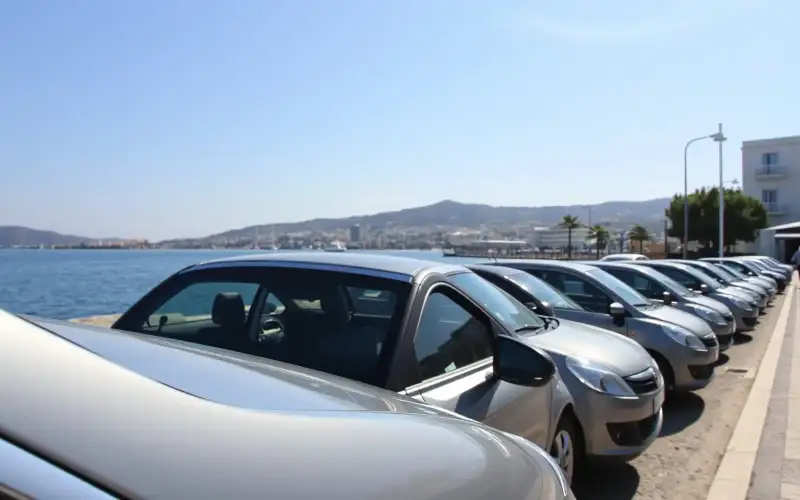
I'll never forget the moment my eldest spotted the hire car keys and declared we were finally going on a proper adventure. Three months earlier, we'd arrived at Paphos Airport with vague ideas about hiring a car, but no real plan. That afternoon, armed with a battered Hyundai i10 and a phone full of screenshots, we drove up into the Troodos Mountains and discovered villages my guidebook hadn't mentioned. It was chaotic, occasionally terrifying, and absolutely worth it.
The truth about car hire in Paphos is this: it's straightforward if you know what to watch for, and a minefield if you don't. Too many British visitors either overpay by booking through airport desks without shopping around, or they sign rental agreements without understanding what their insurance actually covers. This guide covers the practical stuff—the companies worth trusting, the paperwork traps, and the driving realities of Cyprus.
Why Rent a Car in Paphos?
Paphos is small enough to explore on foot if you're staying in the seafront area, but it's also the gateway to some of Cyprus's best-kept corners. The Akamas Peninsula, the Troodos Mountains, and the Byzantine churches scattered across the Tillyria region are all within an hour's drive. Public transport exists—the local buses are cheap and reasonably reliable—but they run on their own schedule, not yours.
For families, car hire makes a huge difference. You're not herding three kids onto a minibus at fixed times, you can stop whenever someone needs a loo break, and you can carry beach bags, picnic supplies, and the inevitable souvenirs without juggling them on public transport. For retirees and couples, it's simply freedom. You can chase the light in the evening, take a detour because you spotted something interesting, or drive up to a taverna in the mountains and stay as long as you like.
The catch is that Cypriot roads—especially in rural areas—aren't what British drivers expect. They're narrower, the markings are sometimes optimistic, and mountain bends come faster than you'd think. But if you approach it sensibly, it's entirely manageable.
Picking a Rental Company at Paphos Airport
Paphos International Airport has a dedicated car rental area just outside the terminal, with desks from the major international chains and several local operators. The temptation is to book on the spot, but resist it. Prices at airport desks are typically 20-30% higher than advance online bookings.
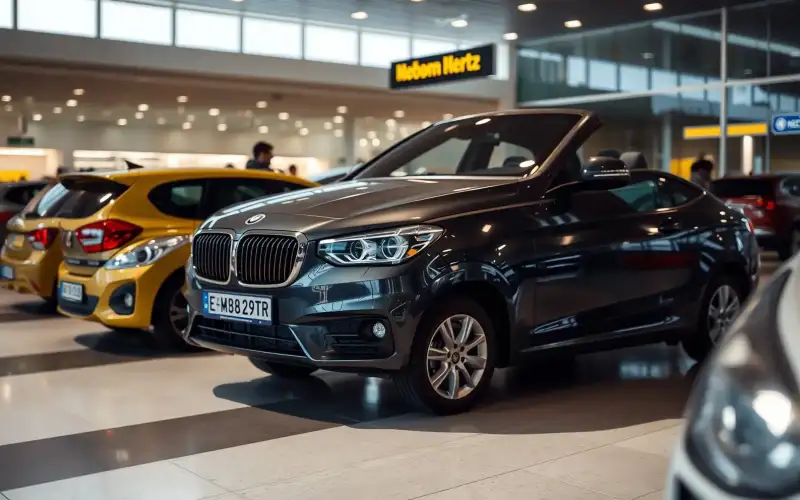
The reliable international chains are Hertz, Avis, Enterprise, and Budget. They have consistent standards, proper backup if something goes wrong, and staff who understand British drivers' needs. Hertz is probably the safest bet—their Paphos branch is professional, their cars are well-maintained, and they're genuinely helpful with paperwork. Expect to pay around €25-35 per day for a basic hatchback in shoulder season (May, September) and €40-55 in peak summer.
Local companies like Thrifty Car Rentals Cyprus, Europcar, and Firefly offer competitive rates and often have newer cars. I've used Firefly twice and had no issues—their staff are friendly and they're quicker with the paperwork than some international chains. The trade-off is that if you break down far from town, support might take longer to arrive.
Book online at least a week in advance. Use comparison sites like Rentalcars.com or go directly to company websites. The difference between booking now and walking up to the desk is substantial. A three-day hire might cost €75 online but €110 at the airport counter.
What to Check Before You Book
- Mileage: Choose unlimited mileage. Cyprus is small, but if you're exploring properly, you'll cover 500+ miles easily.
- Fuel policy: Most companies offer a full-to-full option (you pick up full, return full). This is clearer than a pre-paid fuel option.
- Age restrictions: Drivers under 25 often face surcharges (€5-10 per day). Drivers over 70 should check for restrictions—some companies won't hire to anyone over 75.
- Excess/damage waiver: This is crucial and covered below in detail.
- Airport fees: Some companies charge €5-15 for airport pickup. It's often cheaper to use a taxi to an off-airport location and rent there, though this only saves money if you're staying more than three days.
Understanding Insurance and Excess
This is where most British drivers get stung. Rental car insurance in Cyprus is different from the UK, and the paperwork is confusing on purpose.
Every rental comes with basic third-party liability insurance (required by Cypriot law). This covers damage you cause to other vehicles or property, but not damage to your rental car. For that, you need either a damage waiver or collision damage waiver (CDW). Most quotes you see online include basic CDW, which means you pay an excess (usually €500-1000) if you damage the car.
Here's the trap: that excess is per incident, and it's often not what you think. A small scratch on the bumper, a broken wing mirror, a damaged windscreen—each counts as an incident. I met a family last year who paid €800 for a cracked headlight. The hire company claimed it was a separate incident from the bumper damage, so they charged two excesses.
You have three options:
- Accept the standard excess (usually €500-1000). Cheapest upfront, risky if anything happens.
- Pay for excess reduction (€8-15 per day). Drops your excess to €100-250. Sensible for nervous drivers or families.
- Use your UK travel insurance. Some policies include car rental excess cover. Check your policy before you travel—if you're covered, you can skip the rental company's excess reduction and save money.
My recommendation: if you're a confident driver and you've got comprehensive travel insurance that covers car rental, skip the rental company's excess reduction. If you're nervous, or if you haven't checked your insurance, pay the extra €10-12 per day for excess reduction. On a two-week hire, that's €70-84 for peace of mind. It's worth it.
One more thing: take photos of the car before you leave the lot. Check the bodywork, the interior, the wheels. If there's existing damage, make sure it's noted on the rental agreement. Rental companies are professional about this, but it's your protection.
Driving on the Left: What's Actually Different
Cyprus drives on the left, like the UK, so that's not the issue. The issue is that Cypriot driving culture is... different. Speed limits are often ignored, horn-honking is a form of communication, and parking regulations are treated as suggestions.
The speed limits are: 50 km/h in towns, 100 km/h on rural roads, 130 km/h on motorways. Paphos has cameras on the main roads, and they do catch speeding. I got a fine (€85) for doing 65 in a 50 zone near Kato Paphos, and it arrived by post three weeks later. The fine is fair, but it's annoying, so stick to limits in built-up areas.
Road signs are in Greek and English, and they're generally clear. Roundabouts work the same as in the UK—give way to traffic from the right. Parking is where things get weird. In the Old Town of Paphos, there are no marked parking spaces. You just park where there's a gap, and locals will squeeze in around you. It sounds chaotic, but it works. The only rule is don't park in front of someone's garage door or you'll get blocked in.
Petrol stations are plentiful and cheap—around €1.30 per litre for unleaded. Most take card payments. Fill up in towns rather than relying on rural stations, which can be sparse in the mountains.
Mountain Driving: Troodos and Beyond
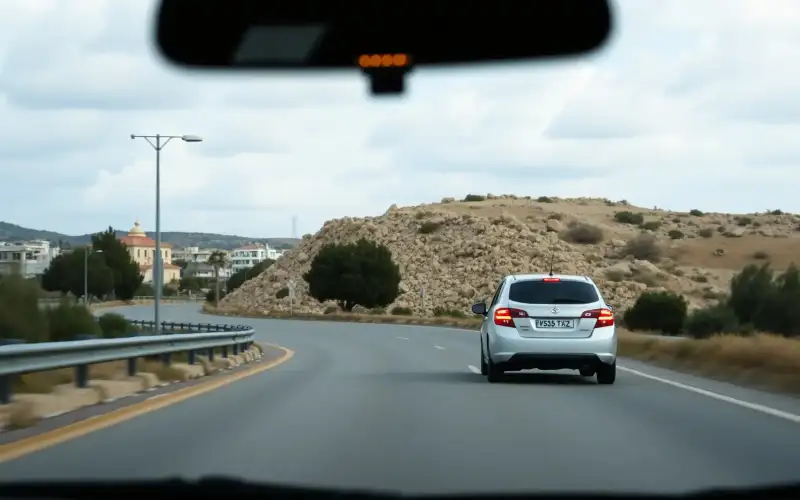
The drive up to Troodos is stunning and terrifying in equal measure. The road is well-maintained, but it's narrow, winding, and steep. If you're not used to mountain driving, take it slowly. Seriously—there's no shame in doing 40 km/h on a bend while a Cypriot in a Mercedes tailgates you.
Key points for mountain driving:
- Use low gear on steep descents. Don't ride the brakes—you'll overheat them and lose control.
- Watch for loose gravel on the road edges, especially after rain.
- Oncoming traffic on narrow sections can be aggressive. If a car flashes you, pull over and let them pass.
- Mobile signal is patchy above 1000 metres. Download offline maps before you go.
- The road to Troodos Ski Resort is closed in winter (December-March), but you can still reach the lower villages.
- Petrol stations are rare in the mountains. Fill up before you leave the coast.
My first trip up Troodos with the family, we took three hours to drive what should have been ninety minutes. My daughter was carsick, my wife was gripping the door handle, and I was sweating through my shirt. By the third time, we did it in two hours and actually enjoyed the drive. The point is: it's manageable, but respect the road.
Parking in Paphos Old Town and Beyond
The Old Town (Ktima) is a maze of narrow streets, and parking is an art form. There's a proper car park on Gladstone Street (€1.50 per hour, or €8 for the day), which is your safest bet if you're staying more than an hour. Otherwise, street parking is free, but you need to understand the rules.
In the Old Town, there are blue lines on the street, which mean paid parking (usually €1-1.50 per hour). White lines mean free parking, but there's often a time limit (usually 2-3 hours). Yellow lines mean no parking. Locals ignore all of this, but you shouldn't—parking fines are €40-80.
Kato Paphos (the seafront area) has paid car parks near the castle and the harbour. They're reasonable (€1.50 per hour) and clearly signposted. If you're visiting restaurants or shops, ask where you can park—most businesses have agreements with nearby car parks and can validate your ticket.
For day trips, parking is almost always free. Beach car parks charge €2-3 per day. Mountain village car parks are free. The only place I've had trouble is Coral Bay, where the beach car park fills up by 10 a.m. in summer. Go early or accept a longer walk from the overflow area.
Practical Tips for Your Rental Period
Before you drive away from the rental lot, make sure you have:
- The rental agreement (keep it with you always).
- An International Driving Permit (not strictly required for UK drivers, but helpful if stopped by police).
- Your UK driving licence and passport.
- The hire company's emergency number (programmed into your phone).
- A GB sticker or UK number plate identifier on the car (rental companies usually provide this).
The hire company should provide a basic map or a sat-nav. If they don't, download Google Maps or Offline Maps before you travel. Sat-nav coverage is good in towns but patchy in rural areas, so offline maps are essential.
Fuel up before you return the car. The hire company's fuel prices are extortionate—they charge €2+ per litre if they have to fill it up. Return the car clean, inside and out. Rental companies charge €30-50 for cleaning if it's dirty. It's petty, but it happens.
If you have an accident or damage, report it to the rental company immediately. Don't wait until you return the car. Take photos, get the other driver's details (if applicable), and call the company's emergency line. They'll tell you what to do next.
Long-Stay Rentals and Resident Drivers
If you're staying for a month or longer, or if you own property in Paphos and visit regularly, car hire becomes less economical. Long-term rentals (30+ days) are cheaper per day—around €15-20 per day for unlimited mileage—but you're still looking at €450-600 for a month.
Some residents buy a cheap second-hand car for €1500-3000 and sell it when they leave. The hassle is registration and insurance, but if you're staying six months or longer, it's worth it. Local companies like AA Rentals and Oceanview Rentals specialise in long-term deals and can sometimes arrange insurance more easily than you could alone.
If you're buying a car, budget €100-150 per year for insurance (third-party is cheaper than comprehensive). Road tax is around €50-80 per year. Petrol for moderate driving is €150-250 per month. So a €2000 car costs roughly €400-500 per month in running costs, which is cheaper than long-term hire if you're staying six months or more.
One caveat: if you're not a Cyprus resident, you can't legally own a car here for more than six months without residency. If you're a seasonal visitor, long-term hire is simpler.
Common Mistakes and How to Avoid Them
I've watched dozens of British tourists make the same errors. Here are the ones that cost money or stress:
Booking through the airport desk without shopping around. You'll pay 30% more. Avoid it. Book online in advance.
Not understanding the excess. Read the rental agreement carefully. Ask questions. If you don't understand what excess you're paying, don't sign.
Ignoring petrol gauges and running out of fuel on mountain roads. It happens. The nearest petrol station might be 30 km away. Keep the tank above half-full.
Parking illegally and getting a fine. Cypriot traffic police are lenient with tourists, but they do fine for parking violations. Check the lines before you park.
Driving too fast on mountain roads. You're on holiday. There's no rush. Slow down and enjoy the view. Speed cameras exist, and fines are expensive.
Not checking the car for damage before you leave the lot. Take photos. It takes five minutes and protects you completely.
Returning the car dirty. Rental companies will charge you €30-50 for cleaning. Spend ten minutes with a cloth before you return it.
The Reality of Driving in Cyprus
Cypriot drivers are fast, confident, and sometimes reckless. They overtake on blind corners, they don't indicate, and they treat speed limits as loose guidelines. This sounds scary, but it's manageable if you drive defensively. Assume every car is about to do something unexpected. Check your mirrors constantly. Don't get drawn into racing or competitive driving—you'll lose, and it's not worth the stress.
That said, the roads are safe. Serious accidents are rare. The dramatic driving is mostly posturing. If you drive at your own pace, follow the rules, and stay alert, you'll be fine.
The other reality is that hiring a car transforms your trip. You're no longer dependent on tour operators, bus schedules, or expensive taxis. You can drive up to Latchi for lunch, explore the villages around Polis, chase the sunset in the Akamas, or spend an afternoon in the Troodos Mountains without anyone else's timetable. For families especially, that freedom is invaluable. Yes, there's a bit of stress with the driving, but it's worth it.
Book early, choose a reputable company, understand your insurance, and drive sensibly. You'll have a better holiday for it.

Comments (3 comments)