
The Day I Descended Into the Silence
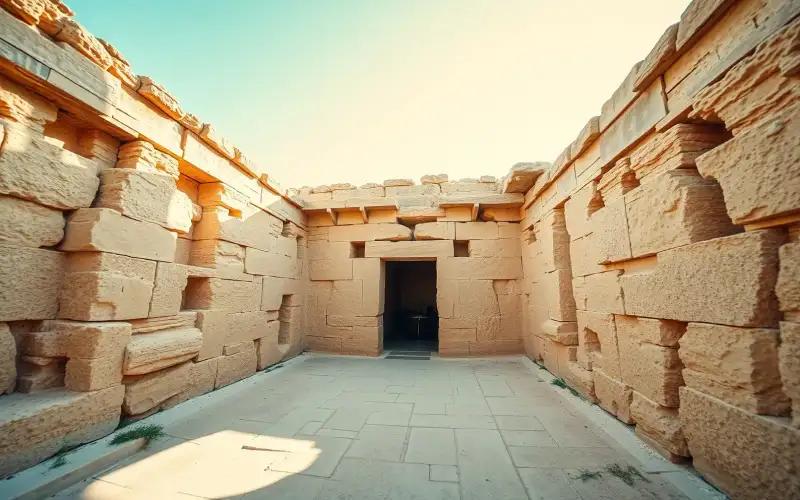
I remember the exact moment I understood why these tombs have captivated visitors for two millennia. It was a March morning in 2019, and I'd arrived at the Tombs of the Kings site near Paphos at 7:45 a.m.—fifteen minutes before opening—with barely another soul in sight. The Aegean light was still soft, almost amber, and the rock face glowed like honey. I descended the first stone staircase into Chamber One, and the temperature dropped perhaps five degrees. The air felt different down there: heavier, older, as though the limestone itself was breathing history.
That silence is what the guidebooks never quite capture. They'll tell you about Hellenistic architecture and Ptolemaic dynasties, but they don't mention how your footsteps echo off walls that haven't seen daylight in two thousand years, or how the carved pillars seem to lean toward you in the shadows. After twelve years living in Paphos, I've visited these tombs perhaps a dozen times, and that first experience—that moment of stepping out of the modern world into the ancient one—never quite fades.
What You're Actually Looking At: The Archaeology Behind the Drama
The Ptolemaic Connection and Dating
The Tombs of the Kings—or Tafoi ton Vasillon in Greek—are not, technically, royal tombs at all. That's the first misconception worth clearing up. The name is a misnomer, probably bestowed by medieval visitors who saw the monumental scale and assumed only kings could warrant such grandeur. In reality, these are the burial chambers of wealthy Hellenistic families, dating primarily to the 4th and 3rd centuries BCE, during the Ptolemaic period when Cyprus was under Egyptian rule.
The site comprises four main rock-cut chamber tombs, carved directly into soft limestone bedrock. What makes them architecturally significant is their design: each chamber mimics the layout of a Greek house, complete with a central atrium, pillars, and multiple burial niches cut into the walls. The largest, Chamber One, contains a Doric colonnade that would rival any above-ground temple. This wasn't just practical—it was a statement. These families were saying, through stone and architecture, that their status in death would match their status in life.
The Atrium Design and What It Tells Us
Walk down the stone staircase into any of the main chambers, and you'll see the atrium immediately: a sunken courtyard with a central pillar supporting the rock ceiling above. Around this open space, doorways lead to smaller burial chambers. The clever part—and this is where Hellenistic architects showed real ingenuity—is that the rock itself becomes the roof. No wooden beams, no collapse risk after two millennia. Just limestone doing what limestone does best: enduring.
The niches you see carved into the chamber walls held the deceased, either in sarcophagi or simply wrapped in linen. Some chambers have benches cut into the rock, suggesting that families gathered here for funerary rites. The pillars were never load-bearing; they were symbolic, echoing the columns of the houses these people lived in above ground. It's a neat archaeological trick: the living house became the house of the dead.
Planning Your Visit: Practical Details That Matter
Getting There and Parking
The Tombs of the Kings are located roughly 9 kilometres north of Paphos town centre, near the coastal village of Kato Paphos. If you're staying in Paphos itself, the drive takes about fifteen minutes. There's a decent-sized car park right at the entrance—free, and usually not crowded except in peak July and August. The entrance fee as of 2026 is €4.50 for adults, €2.50 for students, and free for children under six.
If you don't have a rental car, the local bus service (OSYPA) runs routes from Paphos town, though schedules are infrequent. I'd recommend renting a car for the day; it gives you flexibility to visit nearby attractions like the Paphos Archaeological Museum or the Akamas Peninsula without being tied to bus timetables. A compact car costs around €25–35 per day from local agencies.
Opening Hours and Seasonal Considerations
The site is open year-round, typically 8:30 a.m. to 5:00 p.m. (hours may extend to 6:00 p.m. in summer). There's no entrance fee for the grounds, but the main chamber tombs require a ticket. The ticket office is a small kiosk near the entrance; staff are usually helpful and speak English fluently.
Timing your visit matters enormously. March and April are ideal: temperatures hover around 18–22°C, the sun isn't punishing, and wildflowers bloom across the archaeological site. October and November are equally pleasant. July and August, conversely, are brutal—temperatures regularly exceed 35°C, and the underground chambers, while cool, feel claustrophobic when you're already overheated. I've seen visitors sprint through the tombs in August just to escape the sun, which defeats the purpose entirely.
What to Bring and How to Dress
Footwear is crucial. The stone staircases are worn smooth by millennia of feet, and they're genuinely slippery, especially if there's been any moisture (rare in summer, but it happens). Trainers with good grip are essential. I've seen visitors in flip-flops attempt the descent and regret it within seconds.
The underground chambers stay around 16–18°C year-round, which is refreshing in summer but can feel chilly in winter. Bring a light cardigan or jumper, even if it's warm outside. A torch or headlamp is genuinely useful—the chambers have minimal electric lighting, and your phone's torch will work, but a proper light source lets you examine the carved details without straining your neck.
Water is non-negotiable. There's no shop at the site, and the walk around the grounds is longer than it appears. Bring at least one litre per person. Sunscreen, a hat, and sunglasses are essential, particularly in spring and autumn when the sun feels deceptively weak but delivers a nasty burn.
The Experience: What to Expect Chamber by Chamber
Chamber One—The Showstopper
Chamber One is the largest and most impressive, and it's where most visitors spend the bulk of their time. The descent is steep—perhaps twenty stone steps—but the payoff is immediate. You emerge into a spacious atrium with a central Doric pillar, and the scale hits you. This was carved from living rock using bronze tools and sheer persistence, probably over several years. The walls around the atrium contain multiple burial niches, some still bearing traces of red ochre paint used in the original burials.
Take your time examining the pillar itself. The capitals are carved with acanthus leaves, a motif that appears throughout the site. It's not crude or primitive; it's refined work, executed by craftsmen who understood proportion and symmetry. The right-hand wall contains the largest burial chamber, a separate room with its own entrance and a bench cut into the rock—possibly for the family patriarch or matriarch.
Chambers Two, Three, and Four—The Quieter Tombs
The other chambers are progressively smaller and less ornate, but they're worth visiting. Chamber Two has an interesting feature: a secondary staircase leading down from the atrium, suggesting multiple phases of construction or expansion. Chamber Three is more modest but retains clearer traces of the original red and black paint used to decorate the walls. Chamber Four is the most intimate—small enough that you feel you're truly entering a private family space.
Most visitors rush through these after Chamber One, which is a mistake. The smaller tombs are where you get a sense of individual family stories. Some niches show signs of having been reopened in antiquity, suggesting that later generations returned to bury relatives alongside their ancestors. Others were clearly looted, their contents scattered centuries ago.
Why This Site Matters: The Broader Historical Context
Paphos Under the Ptolemies
To understand the Tombs of the Kings, you need to understand Paphos in the Hellenistic period. After Alexander the Great's death in 323 BCE, his empire fractured. Cyprus fell to Ptolemy I, one of Alexander's generals, who established a dynasty that would rule for three centuries. Paphos became a significant port city—a hub for trade between Egypt, the Levant, and the Aegean.
Wealth flowed into Paphos. Merchants, administrators, and local elites accumulated fortunes. They built houses, temples, and eventually, elaborate tombs. The Tombs of the Kings are a physical manifestation of that prosperity. These families weren't royalty, but they were the equivalent of modern millionaires—wealthy enough to commission master craftsmen and ambitious enough to want their tombs to rival the grandest structures above ground.
The Shift to Christianity and Abandonment
By the 4th century CE, Christianity had taken root in Cyprus. The old pagan burial practices fell away. The tombs, once places of active veneration and periodic family gatherings, became historical curiosities. Some were repurposed—medieval visitors left graffiti, and later travelers carved their names into the walls. By the Ottoman period, the site was largely forgotten, buried under centuries of accumulated soil and vegetation.
The tombs were properly excavated and studied only in the late 19th century, and they were designated a UNESCO World Heritage Site in 1980 as part of the broader Paphos archaeological ensemble. Today, they're one of the most visited ancient sites in Cyprus, attracting around 40,000 visitors annually.
Combining Your Visit: Nearby Attractions Worth Your Time
The Paphos Archaeological Museum
Located in Paphos town centre, about fifteen minutes' drive south, the museum holds artefacts from the tombs and other local sites. Seeing pottery, coins, and funerary objects from the Hellenistic period adds context to your tomb visit. The museum is open 8:00 a.m. to 4:00 p.m. daily (closed Mondays), and admission is €4.50. Budget ninety minutes to two hours.
Kato Paphos Beach and the Harbour
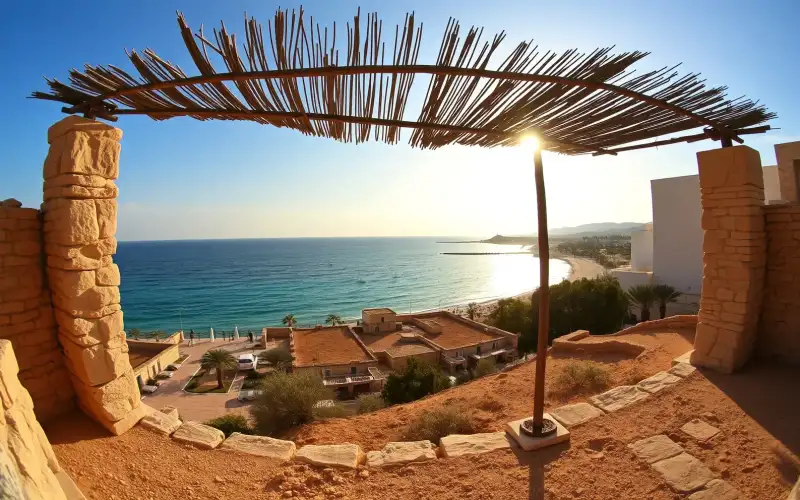
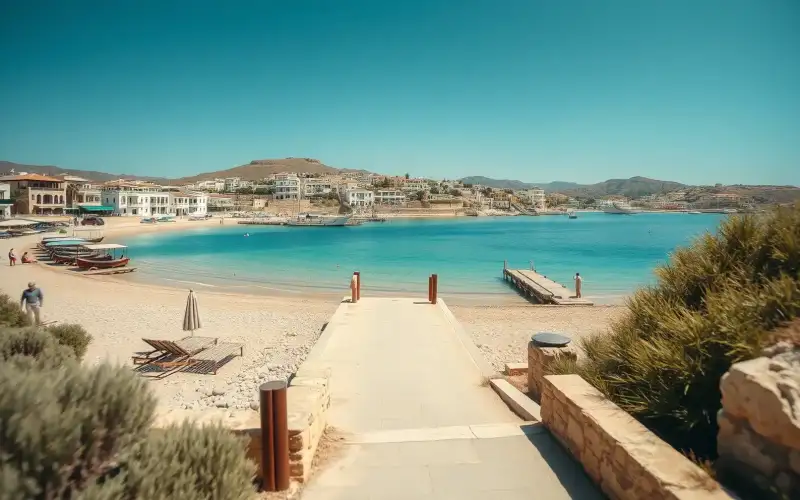
The Tombs of the Kings are within walking distance—about fifteen minutes—of Kato Paphos beach and the old Venetian harbour. After exploring the tombs, walk down to the waterfront for lunch. There are several tavernas with sea views, and you can watch fishing boats come and go while eating grilled fish or souvlaki. Prices are reasonable: a main course typically costs €12–18.
The Akamas Peninsula
If you have a full day, the Akamas Peninsula—a protected nature reserve about thirty minutes' drive north—is worth exploring. There are hiking trails, a secluded beach (Blue Lagoon), and coastal cliffs with views across to Turkey. You can combine this with the tombs for a comprehensive day trip.
Photography Tips and the Best Light
The tombs photograph beautifully, but with caveats. The underground chambers require either a high ISO setting or a long exposure, and the carved details show best in raking light—when the sun is low and shadows emphasize the relief work. Early morning (8:30–10:00 a.m.) and late afternoon (4:00–5:00 p.m.) are optimal.
March is genuinely the best month for photography. The light is soft, the shadows are dramatic, and the wildflowers blooming across the site provide natural colour contrast. Avoid July and August; the harsh overhead sun flattens the details and creates blown-out highlights that are difficult to recover in post-processing.
Inside the chambers, use a tripod if you have one. Your phone's night mode will work, but a dedicated camera with manual controls gives you far more latitude. The carved pillars and wall niches are particularly photogenic when lit from the side.
A Final Word: Why These Tombs Still Matter
After a dozen years in Paphos, I've learned that the Tombs of the Kings aren't really about the Ptolemies or Hellenistic architecture, though those elements are genuinely fascinating. They're about continuity—the human impulse to build something that lasts, to create a space where the dead can rest and the living can remember.
When you stand in Chamber One and place your hand on a pillar carved two thousand years ago, you're touching the same stone that grieving families touched. That's not sentiment; it's archaeology. It's the reason these sites matter, and why a visit here stays with you long after you've driven back to Paphos town and ordered a coffee at a harbourside café.
Go in March if you can. Wear proper shoes. Bring water. Take your time in the chambers. And if you sit quietly for a few minutes in the atrium, you might understand what I felt that first morning—that sense of stepping outside time itself.
Comments (3 comments)