
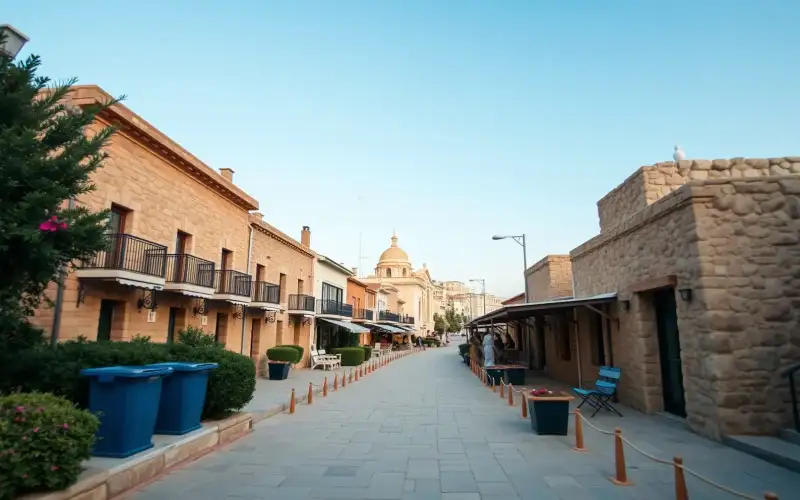
My first morning in Paphos, twelve years ago, I made the classic newcomer's mistake. I walked confidently into a kafeneion on Makarios Avenue, ordered a coffee, and sat down expecting it to arrive within two minutes in the manner of a Bath café. Forty-five minutes later, still nursing the same thimble of thick Cypriot coffee, I realised I had fundamentally misunderstood the pace of life I'd signed up for. The elderly gentleman at the next table caught my eye, smiled, and said simply: "Siga siga." Slowly, slowly. It is, I've since learned, the unofficial motto of Paphos — and the single most useful piece of advice any first-time visitor can receive.
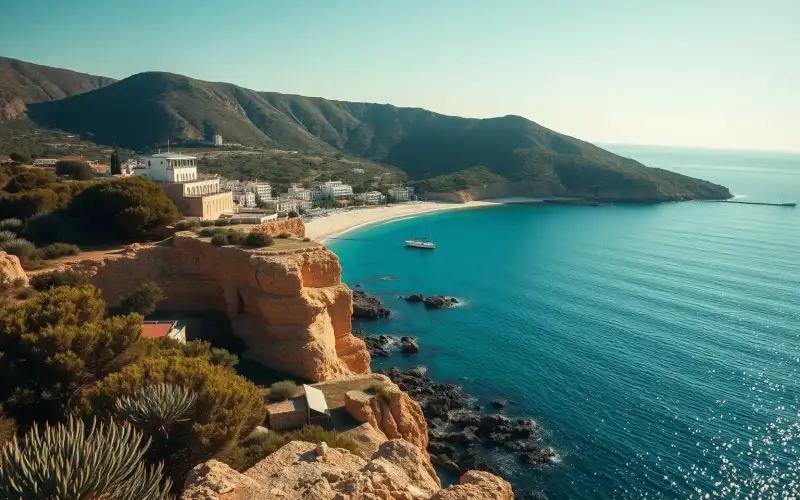
Paphos sits on the south-western tip of Cyprus, roughly 145 kilometres from Nicosia and about 50 kilometres west of Limassol. It is a UNESCO World Heritage Site, a former European Capital of Culture (2017), and home to some of the most extraordinary archaeological remains in the entire Mediterranean. It is also, increasingly, a destination that British visitors are discovering not just for a fortnight of sunshine, but as a place worth understanding properly. This guide is designed to give you that understanding before you land.
Getting Your Bearings: The Two Faces of Paphos
The first thing to know is that "Paphos" is actually two quite distinct places, and confusing them causes no end of bother. Kato Paphos — Lower Paphos — is the harbour area: the tourist hub, the Archaeological Park, the tavernas strung along the waterfront, and the majority of the hotels. This is where most first-time visitors stay, and for good reason. Everything is walkable, the atmosphere is lively without being overwhelming, and the history is quite literally under your feet.
Ktima, or Upper Paphos, sits about two kilometres uphill and is the actual town where Cypriots live, work, shop and argue about politics. It has a municipal market, a handful of excellent local restaurants, the District Museum, and a rhythm that has nothing to do with tourism. I'd strongly encourage spending at least one afternoon up there. The No. 11 bus from the harbour runs regularly and costs €1.50.
Choosing Where to Stay
Beyond Kato Paphos and Ktima, the wider municipality includes several resort strips worth knowing about. Coral Bay, about 10 kilometres north, is a family favourite with a beautiful sandy beach and a more relaxed atmosphere than the harbour area. Chloraka and Kissonerga are quieter residential villages popular with British property owners — if you're visiting friends who've bought out here, this is likely where they'll be. Peyia, perched in the hills above Coral Bay, offers cooler temperatures in summer and a genuinely local village feel.
For first-timers, I'd recommend Kato Paphos for the first visit. The convenience of walking to the Archaeological Park at 8am before the tour groups arrive is simply not to be underestimated.
Arriving and Getting Around
Paphos International Airport (PFO) is served by direct flights from most major British airports, with Ryanair, easyJet, TUI and Jet2 all operating routes in 2026. Flight time from London is approximately four hours and twenty minutes. The airport sits about 15 kilometres east of Kato Paphos — a taxi to the harbour area costs roughly €25–30 and takes around 20 minutes outside rush hour.
Public Transport: Better Than You'd Expect
Cyprus has a reputation for poor public transport, which is partly deserved and partly unfair. Within Paphos itself, the OSYPA bus network is perfectly functional for most tourist needs. Key routes for visitors include:
- Route 11: Kato Paphos harbour to Ktima town centre — runs every 20–30 minutes, €1.50 single
- Route 15: Kato Paphos to Coral Bay — runs hourly in low season, every 30 minutes in summer, €1.50 single
- Route 612: Paphos to Limassol — the intercity service, roughly €4 single, journey time about 75 minutes
- Airport Bus (Route 613): Direct service to Kato Paphos harbour, €2 single
A daily travel card costs €5 and is worth buying if you plan to make more than three journeys. That said, for day trips to places like the Troodos Mountains or Akamas Peninsula, you will need either a hire car or an organised tour. Hiring a car in Cyprus is straightforward — remember that Cypriots drive on the left, as we do, which removes one layer of stress immediately.
Money, Costs and Practical Essentials
Cyprus uses the euro, having joined the eurozone in 2008. For British visitors, this means you're dealing with a foreign currency, though ATMs are plentiful throughout Kato Paphos and Ktima. The exchange rate in early 2026 has been hovering around €1.15–1.18 to the pound, making Cyprus moderately good value compared to, say, the south of France.
"Cyprus is not cheap in the way it once was — the days of €1.50 Keo beers on the harbour are largely gone — but it remains considerably better value than comparable Mediterranean destinations, particularly if you eat where locals eat rather than where tourists are directed."
A rough daily budget guide for 2026:
| Style of Travel | Accommodation (per night) | Food & Drink | Activities | Daily Total (approx.) |
|---|---|---|---|---|
| Budget | €50–80 (guesthouse/apartment) | €25–35 | €10–15 | €85–130 |
| Mid-range | €100–160 (3–4 star hotel) | €45–65 | €20–30 | €165–255 |
| Comfortable | €180–300 (4–5 star) | €70–100 | €30–50 | €280–450 |
Tipping is customary but not compulsory. Leaving 10% in a restaurant is appreciated; rounding up a taxi fare is the norm. Credit cards are accepted almost everywhere in tourist areas, though small kafeneions in Ktima may prefer cash.
Health, Safety and Practical Matters
Cyprus is an EU member state, and British visitors should carry a UK Global Health Insurance Card (GHIC), which replaced the old EHIC after Brexit. It provides access to state healthcare at reduced cost, though private travel insurance remains advisable. Nicosia General Hospital is the main referral centre, but Paphos has its own general hospital on Neofytou Nikolaou Street, and there are several private clinics in Kato Paphos that are accustomed to treating British visitors.
The tap water in Paphos is technically safe to drink but tastes rather mineral-heavy; most residents and visitors use bottled water. Pharmacies — farmakeia — are marked with a green cross and are excellent; Cypriot pharmacists are knowledgeable and will often advise on minor ailments without requiring a doctor's appointment.
Language and Cultural Etiquette
Greek is the official language of the Republic of Cyprus, though the local dialect differs noticeably from standard Modern Greek — even Greeks from Athens sometimes struggle with it. The good news for British visitors is that English is extraordinarily widely spoken in Paphos, a legacy of British colonial rule (Cyprus was a Crown Colony until 1960) and decades of British tourism. You will encounter almost no language barrier in hotels, restaurants or tourist sites.
That said, making the effort with a few Greek phrases goes down extremely well. Kalimera (good morning), efharisto (thank you) and parakalo (please/you're welcome) will earn you genuine warmth. Attempting to pronounce a dish name from the menu, even badly, is always appreciated rather than laughed at.
A Few Cultural Notes Worth Knowing
Cyprus is a predominantly Orthodox Christian country, and this shapes daily life in ways that occasionally catch British visitors off guard. Churches are active places of worship, not merely heritage sites, and modest dress — covered shoulders and knees — is expected when entering them. This applies equally to the famous monastery of Agios Neofytos, about 9 kilometres north of Paphos, which is well worth visiting but does require appropriate attire.
Sunday trading hours are limited, and many local shops in Ktima close for a long afternoon break between roughly 1pm and 4pm on weekdays — a habit that persists despite modernisation. The pace of service in local restaurants is unhurried by design. Asking for the bill the moment you finish eating is considered slightly rude; the expectation is that you'll linger. This is the siga siga principle in action, and once you stop fighting it, it becomes one of the genuine pleasures of being here.
The History You're Standing On
I'd be failing in my duty as a former history teacher if I didn't say something about why Paphos matters beyond its beaches and tavernas. The town has been continuously inhabited since the Neolithic period — roughly 4,000 BCE — and served as the capital of Cyprus during the Hellenistic and Roman periods. The Paphos Archaeological Park in Kato Paphos contains some of the finest Roman floor mosaics in the world, dating from the 2nd to 5th centuries CE, and admission in 2026 costs €8.50 for adults.
The Tombs of the Kings, a UNESCO-listed necropolis dating from the 4th century BCE, sits about 2 kilometres north of the harbour and is open daily from 8:30am to sunset. Despite the name, no kings were actually buried there — the title reflects the grandeur of the rock-cut tombs, some of which were modelled on Macedonian royal architecture. Entry is €2.50, which must make it one of the best-value heritage sites in Europe.
"Standing inside one of those tomb chambers in the early morning, before the tour coaches arrive, with the sea visible through the carved entrance and the silence broken only by birdsong, you get a very clear sense of why people have been choosing to live on this particular stretch of coastline for six thousand years."
Day Trips: Making the Most of Your Base
Paphos is an excellent base for exploring the wider island, and I'd encourage every first-time visitor to venture beyond the resort area at least once. The distances are manageable and the rewards considerable.
The Troodos Mountains are about 60 kilometres from Paphos and make a superb full-day excursion. The painted Byzantine churches of the Troodos — ten of which are UNESCO-listed — represent some of the finest medieval art in existence. The village of Omodos, with its cobbled square and monastery, is a popular stop; Platres offers cool air and excellent trout restaurants. Organised coach tours from Paphos run from approximately €35–45 per person including lunch.
The Akamas Peninsula, Cyprus's last great wilderness, begins about 30 kilometres north of Paphos at the village of Neo Chorio. The Blue Lagoon at Akamas is reachable by boat trip from Latchi harbour (roughly €20–25 return, boats depart from 9am) or by 4WD along rough tracks. The water is an improbable turquoise and the snorkelling is excellent.
Famagusta (Gazimağusa) in the north requires crossing into the Turkish-administered part of Cyprus — a straightforward process at the Agios Dometios or Ledra Street checkpoints in Nicosia, though it does add complexity to the day. The walled city, with its Gothic cathedral converted to a mosque and the eerie ghost suburb of Varosha, is historically extraordinary and unlike anything else on the island. Allow a full day and go with some background reading.
Limassol, 50 kilometres east, is Cyprus's second city and well worth a half-day visit for its medieval castle, excellent municipal market and increasingly sophisticated restaurant scene. The intercity bus (Route 612) makes this straightforward without a car.
Before You Go: A Final Checklist
After twelve years of watching friends and acquaintances arrive in Paphos for the first time, I've noticed that the visitors who enjoy it most are invariably those who've done a small amount of preparation. Not obsessive spreadsheet-level planning — just enough to avoid the avoidable frustrations.
- Book accommodation in Kato Paphos for a first visit; the convenience genuinely matters
- Carry your GHIC card and ensure your travel insurance covers medical repatriation
- Download the OSYPA bus app before you travel — it shows real-time departures
- Book the Paphos Archaeological Park for the first slot (8:30am) to beat the heat and the crowds
- Pack at least one outfit suitable for church visits — covered shoulders and knees
- Bring a small amount of euros in cash for kafeneions, market stalls and tips
- Learn five Greek phrases; you'll use them more than you expect
Cyprus in 2026 is a remarkably easy destination for British visitors in most practical respects — the language, the left-hand driving, the familiar legal system, the long historical connection. But it rewards those who look past the familiar surface. The mosaics beneath the protective shelters in the Archaeological Park are genuinely among the most beautiful things I have ever seen, and I've been looking at them for twelve years. The coffee is still served in thimbles, the pace is still siga siga, and the elderly gentlemen in the kafeneions still have the best advice. Take it.
Comments (4 comments)