
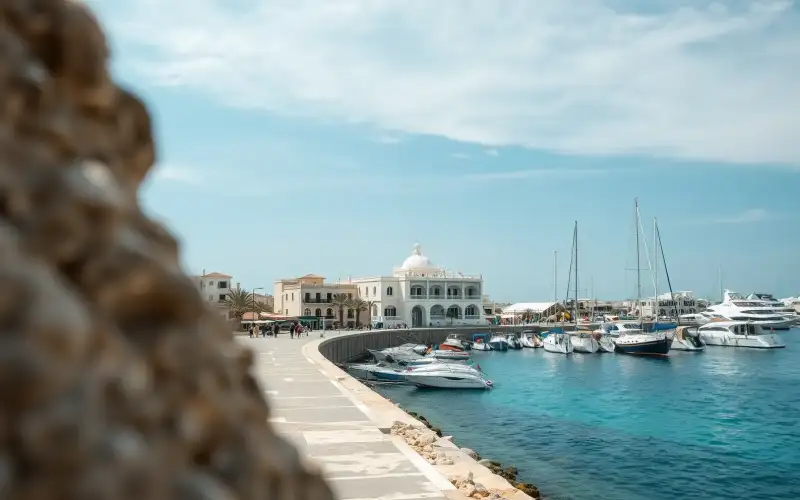
Picture this: you've landed at Paphos Airport, the hire car is loaded, and you've got a fork in the road — literally. Turn right and you're heading north up the B7 towards Coral Bay, where the beach bars are already thumping and the sand is a proper arc of pale gold. Turn left and you're dropping into Kato Paphos, where the harbour smells of fresh fish, Roman mosaics sit twenty metres from your hotel terrace, and the evening volta along the waterfront is one of the great free pleasures of Cyprus. Both are brilliant. But they are not the same holiday, and choosing the wrong one for your travel style can genuinely affect how much you enjoy the week.
I've walked the Akamas trails above Coral Bay in the early morning mist and then spent evenings nursing a Keo at the harbour. I know both areas well. So here's an honest, numbered breakdown of the key differences — practical enough to actually help you book.
1. The Beach: Sand, Sea and Practicality
Coral Bay wins this one, and it's not particularly close. The main beach — officially Corallia Beach — is a proper crescent of fine sand roughly 400 metres long, protected by low headlands that keep the water calm for most of the summer. Water clarity is excellent, there's a Blue Flag, and you can rent sunbeds for around €8–10 per person per day in 2026. Families with older kids will find it ideal: shallow entry, a handful of watersports operators, and beach bars within easy reach.
Kato Paphos, by contrast, has no real beach at the harbour itself. The nearest swimmable spots are Paphos Municipal Beach (a narrow strip about 1km east of the harbour) and the slightly better Faros Beach near the Lighthouse — both are pebbly in places and busy in peak season. They're fine for a dip, but if lying on a sun lounger with a cocktail for three hours is your idea of a perfect afternoon, Coral Bay is your answer.
"Coral Bay is what most British visitors picture when they imagine a Cyprus beach holiday. Kato Paphos is what they remember when they get home."
That said, staying in Kato Paphos doesn't mean you're beachless. The harbour area is only about 10km from Coral Bay — roughly a 15-minute drive or a €12–15 taxi ride. You can easily base yourself at the harbour and take a morning run up to Coral Bay when the beach mood strikes.
2. Dining: Tavernas, Restaurants and Evening Meals
Both areas have strong food scenes, but they feel very different. Kato Paphos harbour is lined with restaurants — some excellent, some firmly aimed at tourists who won't be back. The key is knowing where to look. Avoid the places with laminated menus and someone stood outside waving you in. Instead, head one or two streets back from the waterfront: Apostolou Pavlou Avenue and the lanes around it have proper Cypriot tavernas where meze for two costs €25–35 and the kleftiko is the real thing, slow-cooked overnight.
Coral Bay's dining scene is more compact. There are maybe a dozen decent restaurants clustered around the main strip and the beach road. Standards are generally good — you'll eat well — but variety is limited compared to Kato Paphos. If you're a foodie who wants to try different cuisines each evening, the harbour area gives you more options: Lebanese, Japanese, upscale Mediterranean and traditional Cypriot all within walking distance.
- Kato Paphos highlights: Sto Roloi (traditional Cypriot), 7 St. Georges Tavern (harbour views, fresh fish), Theo's Seafood Restaurant (local institution)
- Coral Bay highlights: Corallia Beach Restaurant (right on the sand), Yiayia's Taverna (home cooking, slightly back from the beach), Chloe's (reliable grill menu)
For self-catering, Coral Bay has a decent Lidl and an Alphamega supermarket nearby on the main road. Kato Paphos has an Alphamega on Tombs of the Kings Road and a market area near the harbour where you can buy fresh produce most mornings.
3. Nightlife and Evening Atmosphere
If nightlife is a priority, Coral Bay has the edge for the 18–35 crowd — but most readers of this guide are probably not in that bracket, and honestly, the Coral Bay strip after midnight can feel a bit relentless if you'd rather be sipping wine than dodging shots promoters. The bars are lively, the music is loud, and it's all fairly good-natured, but it's not subtle.
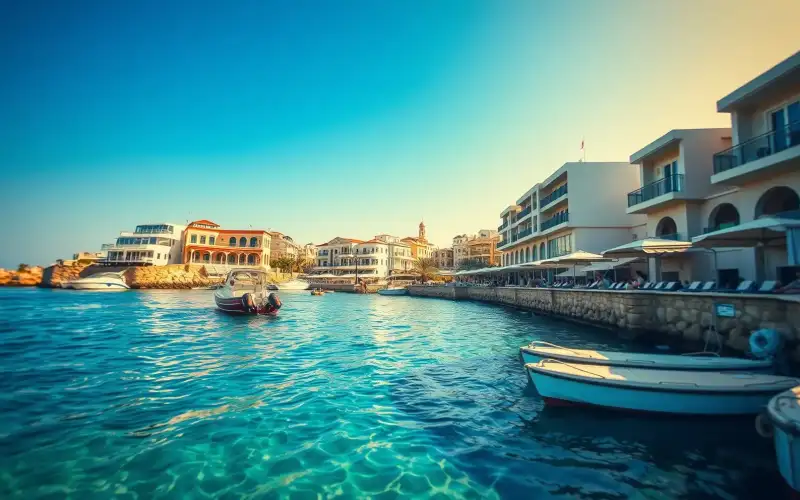
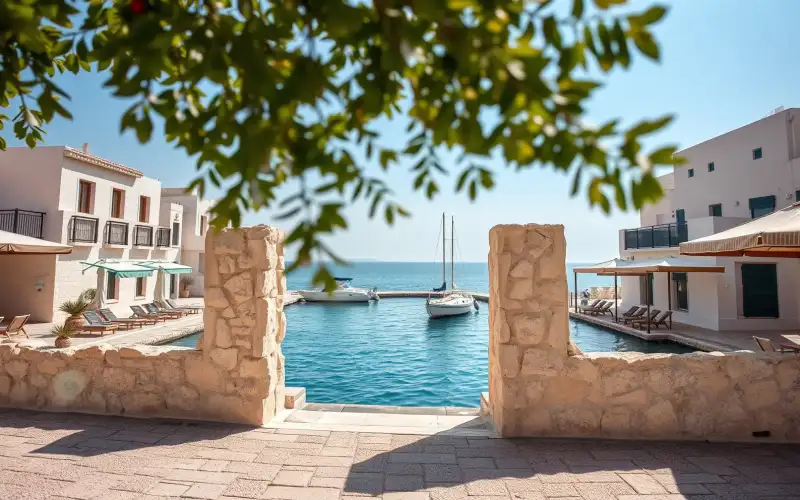
Kato Paphos has a more varied evening scene. The harbour itself transforms beautifully after sunset — the medieval castle is lit up, the fishing boats bob quietly, and the restaurants fill with a mix of tourists and local Cypriot families. There are cocktail bars, wine bars and a handful of live music venues (the Irish pub on Apostolou Pavlou is perennially popular with British visitors). It's a place where couples in their 50s and 60s feel completely at home, and that's not a criticism — it's genuinely one of the most pleasant evening atmospheres in the eastern Mediterranean.
Bar Street in Kato Paphos — the stretch around Agios Antoniou — does cater to a younger crowd if you want it, so the harbour area isn't exclusively sedate. You just have more choice.
4. Access to Paphos Attractions
This is where Kato Paphos pulls decisively ahead. The UNESCO-listed Paphos Archaeological Park — home to the famous Roman mosaics at the House of Dionysus, the Odeon, the Saranta Kolones castle ruins and the Tombs of the Kings — is essentially on the doorstep if you're staying near the harbour. The main mosaic site opens at 8:30am and closes at sunset; entry is €4.50 per adult in 2026. Walking there from a harbour hotel takes under ten minutes.
From Coral Bay, you're looking at a 20–25 minute drive to the Archaeological Park, which is fine but means you're always getting in the car. Over a week, that adds up — especially if, like me, you prefer to nip out for an early morning walk around the mosaics before the tour buses arrive at 10am.
| Attraction | Distance from Coral Bay | Distance from Kato Paphos |
|---|---|---|
| Paphos Archaeological Park (Mosaics) | ~10km, 20 min drive | ~0.5km, 8 min walk |
| Tombs of the Kings | ~7km, 15 min drive | ~2km, 25 min walk |
| Akamas Peninsula / Avakas Gorge | ~8km, 15 min drive | ~18km, 30 min drive |
| Aphrodite Hills | ~12km, 20 min drive | ~12km, 20 min drive |
| Paphos Airport | ~18km, 25 min drive | ~13km, 18 min drive |
| Coral Bay Beach | On the doorstep | ~10km, 15 min drive |
Worth noting: if the Akamas Peninsula is on your list — and it should be, the Aphrodite Trail and Avakas Gorge are genuinely spectacular — Coral Bay is the better launchpad. The gorge trailhead is only about 8km north up the coast road, and you can combine a morning hike with an afternoon on the beach without moving your car more than once.
5. Hotels and Accommodation Value
Both areas have a wide range of options, from budget studios to four-star resorts. But the character of the accommodation differs significantly.
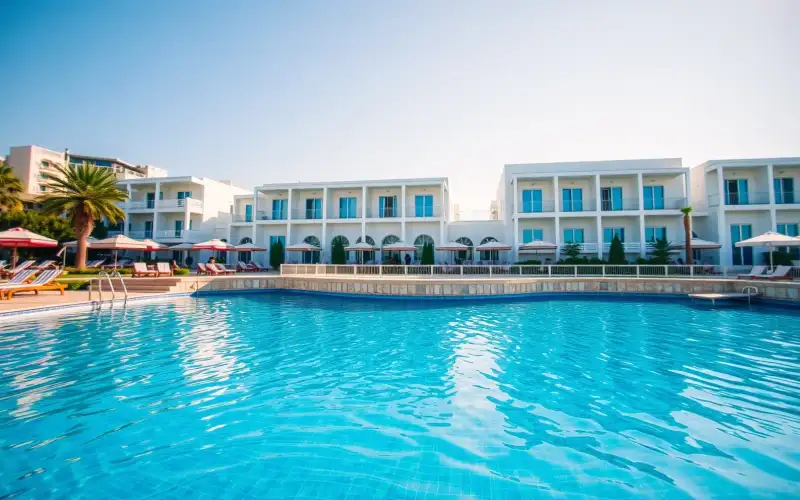
Coral Bay is dominated by apartment-style hotels and mid-range all-inclusives — the kind of places with pools, animation teams and a buffet breakfast that goes on until 10:30am. For families or couples who want everything on-site, this works brilliantly. Expect to pay £80–£150 per night for a decent hotel room in July/August 2026, or £55–£90 in shoulder season (May–June, September–October).
Kato Paphos has more variety at the upper end. The Almyra and Annabelle hotels on the waterfront are genuinely luxurious — expect to pay £200+ per night in peak season, but the location and service justify it for a special trip. There are also excellent mid-range options: the Paphos Gardens Holiday Resort and various apartment complexes on Poseidonos Avenue offer good value with easy harbour access. Budget travellers will find studio apartments from around £40–60 per night if you book early.
- Best for families: Coral Bay all-inclusives (Coral Beach Hotel, Louis Ledra Beach)
- Best for couples/history buffs: Almyra or Annabelle, Kato Paphos
- Best budget pick, harbour area: Kiniras Hotel (small, characterful, central)
- Best for walkers/hikers: Coral Bay apartments with Akamas access
6. Getting Around: Transport and Convenience
Neither area is particularly well-served by public transport, which is Cyprus's great weakness as a destination. The Number 615 bus runs between Coral Bay and Kato Paphos roughly every 30–40 minutes during the day (less frequent evenings), and the fare is €1.50 each way. It's a useful option for a day trip but not reliable enough to base your entire holiday around.
Most visitors hire a car, and I'd recommend it regardless of where you stay. In Kato Paphos, you genuinely don't need a car for day-to-day life — the harbour, mosaics, restaurants and shops are all walkable — but having one opens up the Troodos Mountains, the wine villages and the Akamas in a way that's simply not possible otherwise. Hire car prices in 2026 are running at roughly £25–40 per day for a small automatic from the airport, or cheaper if you book in advance through a local firm.
Taxis between Coral Bay and the harbour cost €12–18 depending on time of day. Bolt operates in the Paphos area and is usually cheaper than street taxis — worth downloading before you travel.
7. Vibe and Crowd: Who Actually Goes Where
Coral Bay attracts a younger demographic on average — late 20s to early 40s, groups of friends, couples on their first or second Cyprus trip. It's lively, social and unashamedly a beach resort. There's nothing wrong with that, but it has a fairly uniform feel.
Kato Paphos draws a broader mix. You'll see retired British couples who've been coming for twenty years and know the owner of their favourite taverna by name. You'll see property owners who pop over for a long weekend. You'll see history-focused travellers who want the mosaics and the castle and the Byzantine churches within walking distance. The atmosphere is more layered, more Cypriot somehow, even though it's undeniably touristy.
"After a week in Kato Paphos, you start to feel like you actually know the place. Coral Bay is wonderful, but it could be almost anywhere warm."
Families with teenagers often split the difference well: they base themselves in Coral Bay for the beach access and pool, then drive into Kato Paphos two or three evenings for dinner and a wander around the harbour. That's a perfectly sensible approach.
Bonus Tip: Consider Splitting Your Stay
If you're visiting for ten nights or more, seriously consider splitting your base. Three or four nights in Kato Paphos at the start — to do the UNESCO sites properly, get your bearings and eat your way around the harbour — followed by a move up to Coral Bay for the beach-heavy second half of the trip. It sounds like extra faff, but most Paphos hotels are flexible about luggage storage, and the move is only 15 minutes by car. You get the best of both worlds without compromise, and the change of scenery halfway through a long holiday is genuinely refreshing.
Book both in advance for summer 2026 — Paphos accommodation fills up fast between late June and early September, particularly the better harbour-front hotels which sell out months ahead.
The Verdict: Which Base Is Right for You?
There's no universally correct answer, but here's the honest summary after years of visiting both:
Choose Coral Bay if: the beach is your priority, you're travelling with family and want an all-inclusive or pool-focused hotel, you plan to hike the Akamas, or you simply want the classic Cyprus beach resort experience done well.
Choose Kato Paphos if: you care about history and culture, you want variety in dining and evening entertainment, you're travelling as a couple (especially 50+), you want to feel like you're actually in Cyprus rather than a generic Mediterranean resort, or this is your first time in Paphos and you want to understand what makes it special.
Both areas are safe, well-served and genuinely enjoyable. The difference is in what you'll be doing between 9am and 9pm — and that, in the end, is what a holiday is actually made of.
Comments (4 comments)