
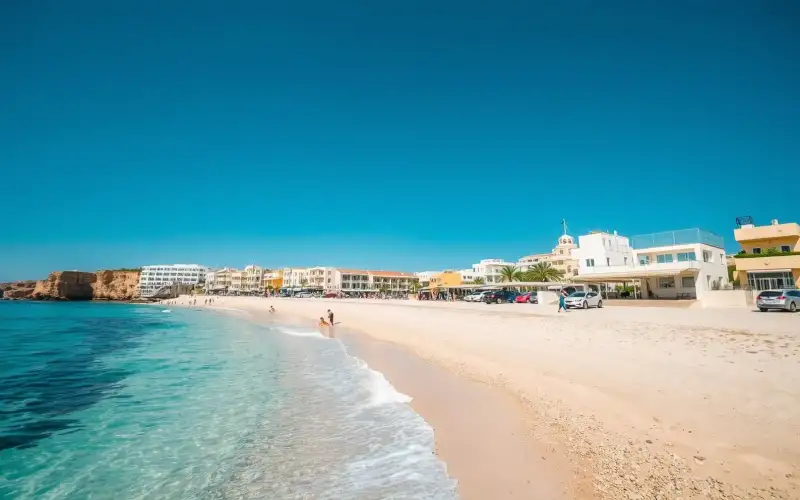
On my first visit to Paphos, roughly fifteen years ago, I made the classic mistake of heading straight to the Municipal Beach — a perfectly decent strip of sand, but hardly the revelation I'd been promised by the travel supplements. It took a local taxi driver, a man called Stavros who had opinions about everything from Cypriot wine to British foreign policy, to point me north along the B7 coastal road. An hour later I was standing at Lara Bay watching a loggerhead turtle haul herself up the sand at dusk. That, I thought, is more like it.
Paphos has a coastline that rewards exploration. The district stretches from the organised, sunbed-lined bays immediately south of the town centre all the way up to the Akamas Peninsula, where the roads dissolve into dirt tracks and the beaches remain almost entirely undeveloped. Between those two extremes you'll find Blue Flag award winners, superb snorkelling reefs, family-friendly shallows and a handful of genuinely secret coves that most package tourists never discover. What follows is the most thorough guide to Paphos beaches I've been able to compile — built on repeated visits, conversations with local beach operators, and more than a few sunburned afternoons spent doing research.
The Town Beaches: Municipal Baths and Faros
Let's start where most visitors start — the beaches within walking distance of the Paphos seafront, the harbour and the hotel strip along Poseidonos Avenue.
Municipal Beach (Paphos Town Beach)
The Municipal Beach sits roughly 800 metres east of the harbour, easily reached on foot from most Kato Paphos hotels. It's a narrow strip of coarse golden sand, perhaps 400 metres long, backed by a promenade and a row of beach bars. Blue Flag status has been maintained here consistently in recent years, which means the water quality is regularly tested and passes EU bathing water standards. Sunbeds and parasols are available from around €5 per unit per day — pair them and you're looking at €8 to €10 for a full setup. Arrive after 10am in July or August and you'll struggle to find a spot.
The beach shelves gently, making it suitable for children, and the water clarity is reasonable though not exceptional — you're in a bay with some boat traffic nearby. There's a small play area at the eastern end and public toilets adjacent to the main beach bar. Parking is the main headache: the nearest car park on Poseidonos Avenue fills quickly, and the surrounding streets operate a paid zone between 8am and 8pm at €0.50 per hour. My honest assessment: convenient, decent, but not the reason you flew to Cyprus.
Faros Beach
Faros — named for the lighthouse that stands on the headland above it — is a short drive or a 20-minute walk south-west of Kato Paphos, just beyond the Archaeological Park. It's a quieter proposition than Municipal Beach: smaller, less organised, with a mix of sand and flat rock platforms that make it popular with snorkellers. The reef immediately offshore holds sea urchins, wrasse and the occasional octopus. Bring your own mask and fins; there's no hire available on the beach itself.
Facilities are minimal — a couple of sun loungers operated by the adjacent café, and that's essentially it. The café itself serves reasonable Cypriot coffee and cold Keo beer, which is all most people need. No Blue Flag here, but the water is clean and the setting, with the lighthouse above and the sea caves of Moulia Rocks visible to the south, is genuinely atmospheric in the early morning or late afternoon.
Coral Bay: The Benchmark Beach
If you ask any British expat or regular Cyprus visitor to name the best beach near Paphos, the majority will say Coral Bay without hesitation. It sits about 11 kilometres north of Kato Paphos — a 15-minute drive up the B7, or reachable on the 615 bus from Paphos Bus Station for €1.50 — and it earns its reputation.
The bay is a near-perfect crescent of fine, pale sand, roughly 600 metres from headland to headland. The water is shallow and clear for a good 30 metres from shore, shelving gradually to about 3 metres at the outer edge of the swimming zone. It holds a Blue Flag designation and has done for many years. In 2026 the beach operator charges €6 per sunbed and €10 for a parasol, with most visitors taking a pair of beds and a parasol for around €14 to €16 total. Arrive before 9am if you want a front-row position in high season.
Facilities at Coral Bay are comprehensive: multiple beach bars and restaurants line the road behind the beach, there are showers, changing rooms, water sports hire (pedalos from €12 per hour, jet skis from €40), and a large public car park that charges €2 for a full day. The surrounding village of Coral Bay has supermarkets, pharmacies and a cluster of decent tavernas — the Corallia Beach Hotel sits on the southern headland and its poolside bar is open to non-guests for a drink with a view.
Coral Bay ticks every box for families with younger children: shallow entry, clean water, good facilities and enough tavernas within 200 metres to ensure nobody goes hungry or thirsty. It's also, frankly, where you'll encounter the largest concentration of British tourists in the entire Paphos district, which depending on your perspective is either reassuring or the very reason to look elsewhere.
Snorkelling at Coral Bay
The rocky outcrops at both ends of the bay offer the best snorkelling. The northern headland, accessible by swimming about 80 metres from the beach, drops into a small reef system with good populations of damselfish, parrotfish and bream. Water visibility on a calm day regularly exceeds 15 metres. The southern headland connects to the sea caves area, though swimming into the caves themselves requires care and is not recommended without a guide.
St George and Lara Bay: The Wild North
Beyond Coral Bay, the coast becomes progressively less developed. The road north from the village of Pegeia deteriorates in quality and eventually, past the fishing harbour of St George (Agios Georgios), becomes an unpaved track through the Akamas Peninsula. This is where Paphos beaches get genuinely interesting.
Agios Georgios Beach
The small beach at Agios Georgios harbour is a mix of sand and shingle, with crystal-clear water and a handful of tavernas serving fresh fish — the grilled sea bass at the Agios Georgios Taverna has been a reliable lunch for me on several occasions. It's not a beach for sunbathing in the traditional sense, but the snorkelling around the submerged rocks offshore is excellent, and the Byzantine ruins on the headland above give the place a historical gravitas that Coral Bay can't match. Free parking alongside the harbour.
Lara Beach Cyprus: The Turtle Sanctuary
Lara Beach is, without question, the most extraordinary stretch of coastline in the Paphos district. Reaching it requires either a 4x4 vehicle — the dirt track from Agios Georgios is deeply rutted and impassable in a standard hire car after heavy rain — or a boat trip from Latchi harbour, roughly 25 kilometres to the north. Several operators run daily excursions from Latchi to Lara for around €35 per adult, including snorkelling stops.
The beach itself is a long, sweeping arc of coarse sand backed by low dunes and scrub. No sunbeds. No beach bars. No facilities of any kind beyond a single portable toilet maintained by the Department of Fisheries during the nesting season. What Lara does have is status: it is one of the most important nesting sites in the entire Mediterranean for both loggerhead (Caretta caretta) and green (Chelonia mydas) turtles. The Department of Fisheries operates a hatchery on the beach between June and October, and wardens are present most days during peak nesting season.
Visitors are asked to observe strict rules: no driving on the beach, no fires, no camping, no dogs, and no approaching nesting turtles. Between dusk and dawn during nesting season the beach is effectively closed to human activity. During daylight hours in 2026, swimming and snorkelling remain permitted. The water here is exceptional — some of the clearest in Cyprus, with visibility regularly exceeding 20 metres over the sandy bottom.
I've watched a loggerhead turtle at Lara at close range — perhaps four metres — as she completed her nesting and turned back toward the sea. It remains one of the most affecting wildlife encounters I've had anywhere in the world. No amount of polished hotel experience quite compares to it.
The Blue Lagoon and Akamas Coast
The Blue Lagoon is not, strictly speaking, a beach — it's a sheltered cove on the western tip of the Akamas Peninsula, accessible only by boat. Every day during summer, a flotilla of trip boats departs from Latchi harbour between 9am and 10am, calling at the Blue Lagoon for a swimming stop before continuing around the peninsula. Return fares typically run €25 to €40 per adult depending on the operator and whether lunch is included.
The water colour at the Blue Lagoon is the reason people come: an almost implausible turquoise-to-cobalt gradient in a sheltered bay ringed by low white limestone cliffs. The bottom is sand and rock, visibility is extraordinary, and the snorkelling — particularly along the cliff faces to the north — is among the best accessible from Paphos. The downside is that in July and August the lagoon can hold 20 or more boats simultaneously, which rather undermines the sense of discovery. Go in May, early June or September for a more manageable experience.
Beaches South of Paphos: Evdimou and Beyond
Most visitors focus on the coast north of Paphos, but the beaches stretching south toward Limassol deserve attention, particularly for those based in the Aphrodite Hills or Kouklia areas.
Governor's Beach (Limassol District)
Technically just outside the Paphos district, Governor's Beach near Limassol is worth the 50-kilometre drive for its distinctive white chalk cliffs and dark volcanic sand — a combination unlike anything else on the island. The contrast is visually striking and the beach is considerably less crowded than the Paphos options on a typical summer weekend. Several fish tavernas operate along the beach road.
Evdimou Beach
Evdimou, roughly 35 kilometres east of Paphos along the B6, is a long, undeveloped stretch of sand popular with Cypriots rather than tourists. Facilities are minimal — a small café operates in summer — but the beach is wide, the water clean, and the sense of space on a busy August day is genuinely refreshing. Free parking in the adjacent olive grove. No Blue Flag, but water quality is consistently good.
Beach Comparison: At a Glance
| Beach | Blue Flag | Sunbeds | Family Rating | Snorkelling | Parking |
|---|---|---|---|---|---|
| Municipal Beach | Yes | €5–€10 | ★★★★ | Fair | Paid (€0.50/hr) |
| Faros Beach | No | Limited | ★★★ | Good | Free (limited) |
| Coral Bay | Yes | €6–€16 | ★★★★★ | Very Good | Paid (€2/day) |
| Agios Georgios | No | None | ★★★ | Excellent | Free |
| Lara Beach | No | None | ★★★ | Excellent | Free (4x4 req.) |
| Blue Lagoon | N/A | None | ★★★★ | Outstanding | Boat access only |
| Evdimou | No | None | ★★★ | Fair | Free |
Practical Advice for Beach Days in Paphos
A few things learned through experience rather than guidebooks:
- Water shoes are worth packing. Several of the best snorkelling spots — Faros, Agios Georgios, the Blue Lagoon cliff faces — involve rocky entry points that will make bare feet miserable.
- The 615 bus from Paphos Bus Station runs to Coral Bay roughly every 30 minutes between 6am and 8pm in summer, for €1.50 each way. It's a genuinely useful service that avoids the parking problem entirely.
- Sunbed prices are negotiable outside peak hours. Arriving after 3pm at most beaches, operators will often do a deal on remaining beds — sometimes half price or less.
- Blue Flag status in Cyprus is awarded and reviewed annually by the Cyprus Tourism Organisation in conjunction with the Foundation for Environmental Education. A Blue Flag means water quality testing has passed EU standards, facilities meet minimum requirements, and environmental education is provided on site. It does not guarantee the beach will be quiet or uncrowded.
- For Lara Beach, check the condition of the dirt track before driving. After winter rains or following a storm, sections can be impassable even in a 4x4. The boat trip from Latchi is a far more reliable option and the views of the Akamas coastline from the water are worth the fare alone.
- Jellyfish appear along the Paphos coast most commonly in late summer, particularly August and September. Mauve stingers (Pelagia noctiluca) are the most frequent culprit. Ask at the beach bar before swimming if you're unsure — locals always know.
When to Visit: Timing Your Beach Days
The Paphos beach season runs from April through to November, but the sweet spots are May to mid-June and September to October. Sea temperatures in May reach around 22°C — perfectly comfortable for swimming — while air temperatures sit in the mid-to-high 20s. Beaches are operating fully, sunbeds are available, but the crowds are a fraction of what July and August bring.
July and August are the months when Coral Bay in particular becomes genuinely hectic. Temperatures regularly exceed 35°C and the beach can hold several thousand people on a peak Saturday. If you're visiting in high summer and want space, the answer is simple: go early (before 8.30am) or go north to Lara and the Akamas coast, where the lack of facilities keeps the numbers manageable.
October is my personal preference. The sea retains summer warmth — around 26°C — the light is golden and lower in the sky, the tavernas are still open but less frenetic, and you can occasionally have Faros Beach almost entirely to yourself on a weekday morning. That, combined with a grilled fish lunch at Agios Georgios and a cold Commandaria at sunset, is about as good as the Paphos coastline gets.


Comments (5 comments)